
Learn how to measure your fitness level at home
A lot of people think that fitness is something that can only be assessed by looking in the mirror or stepping on the scales. But true physical fitness is a far more complex matter than how you look in a swimsuit. Measuring fitness at home is simpler than it might seem – and the results may surprise you, whether pleasantly or like a cold shower that finally kicks you into making a change.
You don't need access to sophisticated equipment at a fitness centre or to pay for expensive examinations with a sports doctor. Most of the tests that professional trainers use as basic reference indicators can be carried out in your living room, garden or park. The important thing is knowing what to measure, how to correctly interpret the results, and what to do with them afterwards.
Try our natural products





What does fitness actually mean and why measure it?
Fitness isn't just about whether you can manage two flights of stairs without getting out of breath. Physical fitness consists of several interconnected components: cardiovascular endurance, muscular strength, muscular endurance, flexibility and body composition. Only by looking at all these areas together does a meaningful picture emerge of how your body is actually doing.
Why measure it at all? Because without a starting point, you cannot track progress. Imagine Tomáš, a forty-year-old accountant who, after years of sedentary work, decided to start running. In the first week he was convinced he was in terrible shape and gave up. Had he done a simple test beforehand, he would have found that his resting heart rate was 68 beats per minute – completely within the normal range – and that his starting point wasn't as bad as he thought. Concrete numbers have a motivational power that feelings simply don't.
The World Health Organization (WHO), in its recommendations for physical activity in adults, states that every adult should complete at least 150 minutes of moderate-intensity physical activity per week. Measuring your fitness will help you find out whether you are on track to meet these recommendations or whether you need to do more.
The good news is that testing fitness at home requires no specialist knowledge. All you need is a little patience, a watch or stopwatch, and the willingness to be honest with yourself. Write down your results – you'll want to come back to them in a month or two to see how things have changed.
Practical tests you can do on your own
The best way to start is to divide the testing according to the individual components of fitness. Each test focuses on a different area and together they will give you a fairly accurate overview of your physical condition.
The cardiovascular fitness test is the cornerstone of the entire assessment. One of the simplest methods is the so-called three-step stair test or Cooper's walk-run test. The Cooper test involves trying to cover as great a distance as possible in 12 minutes by running or walking. You then compare the results with normative tables according to age and sex. For example, a woman aged 30–39 who achieves more than 2.2 km is rated as fit, while a result below 1.5 km signals a low level of cardiovascular fitness. Cooper's tables are freely available online and have served as a reliable reference tool since the 1960s.
Another excellent method is measuring your resting heart rate, which tells you a great deal about the efficiency of your heart. In the morning after waking, before you get out of bed, measure your pulse for one minute. The average value in an adult is between 60 and 100 beats per minute, while athletes often have significantly lower values – sometimes around 40 beats. The lower the resting heart rate (within reasonable limits, of course), the more efficiently the heart is working. By measuring regularly over the course of weeks, you will see how this value gradually decreases with training.
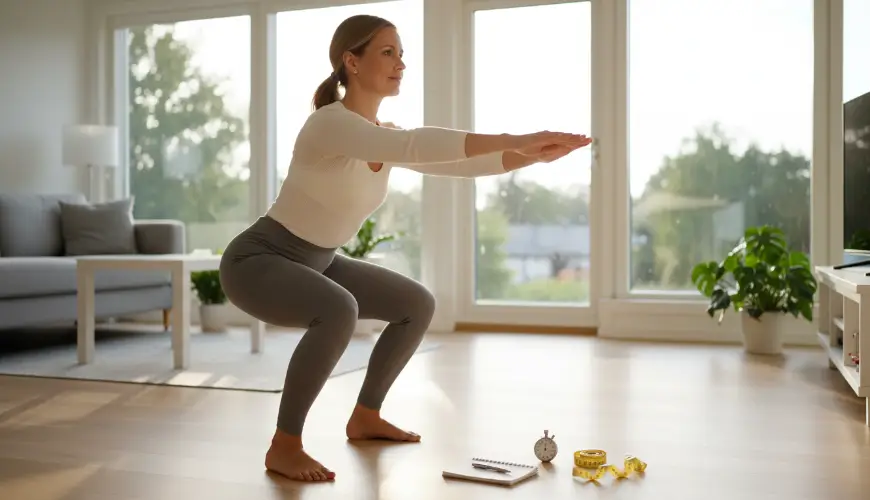
Muscular strength and endurance are easy to test using press-ups and squats. The press-up is a classic – get into a press-up position (or a modified version with your knees on the ground if that is too demanding) and do as many repetitions as you can without a break, maintaining correct technique. The average man aged 40–49 should be able to manage at least 14–16 press-ups, and a woman in the same age group 10–12. An unweighted squat, performed 30 times in one minute, tests the endurance of the lower body as well as hip joint dynamics.
The flexibility test is the component that people most often forget – and then wonder why their back hurts. The simplest home flexibility test is the seated forward bend. Sit on the floor with your legs straight out in front of you, feet together, and slowly lean forward as far as possible. Measure the distance from your fingertips to your toes, or, if you can reach them, how far beyond them you can extend. Flexibility varies considerably with age and sex, but the general rule is: the further beyond your toes you can reach, the better.
A balance test also serves as a supplementary fitness indicator. Stand on one leg with your eyes closed and measure how long you can maintain your balance. A healthy adult should be able to manage at least 10 seconds. If you are wobbling after five seconds, this is a signal that your body's proprioceptive system needs a little attention. Balance plays a key role in preventing falls, especially as we get older.
Body composition is another important variable. Although accurate measurement requires specialist equipment such as a bioimpedance scale, you can measure your waist circumference at home as a simple indicator of metabolic disease risk. According to the European Society of Cardiology, waist circumference in men should not exceed 94 cm and in women 80 cm. Exceeding these values is associated with an increased risk of cardiovascular disease and type 2 diabetes.
How to correctly interpret the results and what to do next
Numbers alone, without context, don't mean very much. What matters is comparing results with norms for your age group and sex, tracking progress over time, and approaching the whole thing as a process rather than a one-off assessment. As American physiologist and fitness research pioneer Kenneth Cooper said: "Exercise is the best medicine ever invented." And for the medicine to work, you need to know what dose you require.
If you performed worse in some tests than you expected, that is not a reason to panic – it is a reason to act. Low cardiovascular fitness will improve with regular aerobic activity, such as brisk walking or cycling. Poor muscular endurance responds well to bodyweight strength training, which requires no equipment. Poor flexibility is addressed through regular stretching or yoga, ideally for at least 10–15 minutes every day.
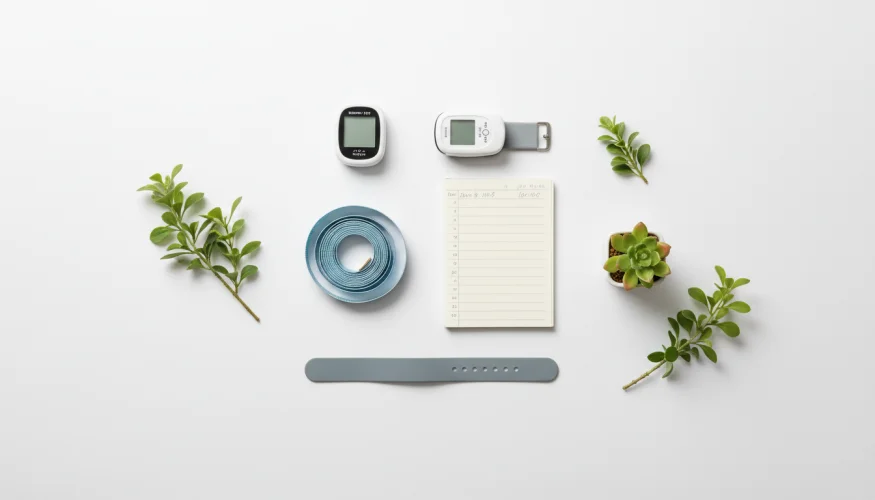
Record your test results in a simple diary or spreadsheet. It is recommended to repeat the measurements every four to six weeks in order to track genuine progress. A shorter interval does not give the body enough time to adapt and results may be skewed. A longer interval, on the other hand, reduces motivation, as you lose track of whether your efforts are paying off.
When testing, it is also important to ensure that conditions are as similar as possible each time. Test at the same time of day, after the same amount of rest, and ideally without any intense physical activity the day before. Only then will the results be comparable and genuinely reflect changes in your fitness, rather than how hard you worked in the garden the previous day.
Alongside physical tests, it is also worth mentioning the subjective perception of exertion, which experts refer to as the Borg Rating of Perceived Exertion scale. This is a simple scale from 6 to 20, where 6 means no exertion and 20 means maximum exhaustion. If walking uphill feels like a 16–17, whereas after a month of training it feels like just a 12, that is clear evidence of improvement – even without any equipment.
A healthy lifestyle is a complex matter and fitness is only one part of it. Sleep quality, nutrition, stress management and your overall attitude towards your body all play a role. Products that support recovery – such as quality yoga mats, resistance bands for home strength training or natural dietary supplements – can be a useful addition on the path to improving physical fitness. The key, however, is always consistency and patience – fitness is not built overnight.
Measuring fitness at home is therefore not just about numbers. It is a way of building a deeper relationship with your own body, understanding its signals and responding to them in an informed way. Whether you are a beginner just finding your feet or an experienced athlete looking for new challenges, regular testing will give you the most valuable thing that exists in physical activity – a clear picture of where you are and where you are heading. And that is the foundation on which everything can be built.