
# Carpet Maintenance Against Mites and Dust Step by Step
Carpets are among those home accessories that can transform a cold room into a cosy space in an instant. They are pleasant to the touch, muffle noise, and add warmth and character to an interior. Yet this very quality – their dense and soft structure – makes them an ideal refuge for microscopic organisms that we don't want in our homes. Dust mites and particles settle in carpets far more easily than most people realise, and their presence can significantly affect the quality of the air we breathe at home.
This is not a negligible problem. According to the World Health Organization, indoor air pollution is one of the most significant health risks of modern times – and carpets are one of the main sources of allergens in enclosed spaces. House dust mites, whose scientific names are Dermatophagoides pteronyssinus and Dermatophagoides farinae, are invisible to the naked eye, but their faeces and body remnants cause allergic reactions, asthma attacks, and chronic respiratory problems in millions of people worldwide.
Nevertheless, it is not necessary to remove carpets from the home entirely. The key is regular and properly performed maintenance, which prevents mites and dust from having a chance to accumulate.
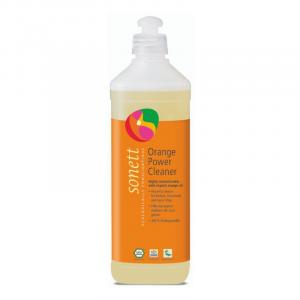
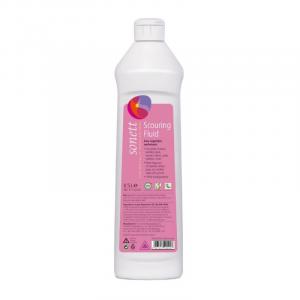
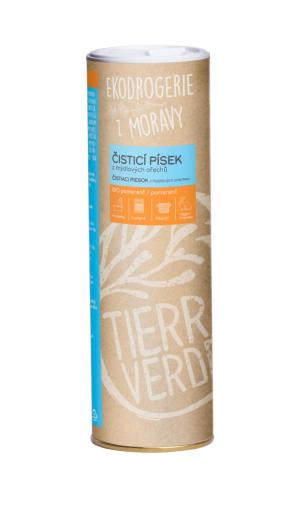
Try our natural products
Why carpets are so prone to harbouring dust mites
In order to combat the problem effectively, it is worth first understanding why it occurs in the first place. Dust mites are microscopic arachnids that feed on shed human skin – and there is a surprisingly large amount of this in every home. The average person sheds approximately 1.5 grams of skin every day, providing mites with a rich food source. Carpets with a high pile or dense structure then offer them ideal conditions for reproduction – warmth, moisture, and protection from direct light.
Dust particles accumulate in carpets in a similar way. With every step, dust, pollen, food remnants, and other dirt are pushed deeper into the fibres, where ordinary sweeping or surface vacuuming cannot capture them. The result is that a carpet that looks clean to the eye may be hiding entire ecosystems of allergens deep within its fibres.
The situation is further worsened by inappropriate air humidity. Dust mites multiply most effectively at a relative humidity above 50 percent and a temperature between 20 and 30 degrees Celsius – precisely the conditions that prevail in most living rooms. Wet carpets that have not fully dried out are then quite literally paradise for mites.
Consider an everyday example: a family with young children who spend hours playing on the carpet in the living room. The children roll around, eat snacks, and bring dirt from all over the flat in on their socks. The carpet meanwhile receives a standard vacuum once a week. Such a carpet may contain hundreds of thousands of mites after six months – even if the household is cared for with diligence and regularity.
How to maintain carpets effectively, step by step
The good news is that regular and properly performed carpet care can significantly reduce the mite population while also improving air quality throughout the home. There is no great science to it – it simply requires following a few principles that will over time become a natural part of the domestic routine.
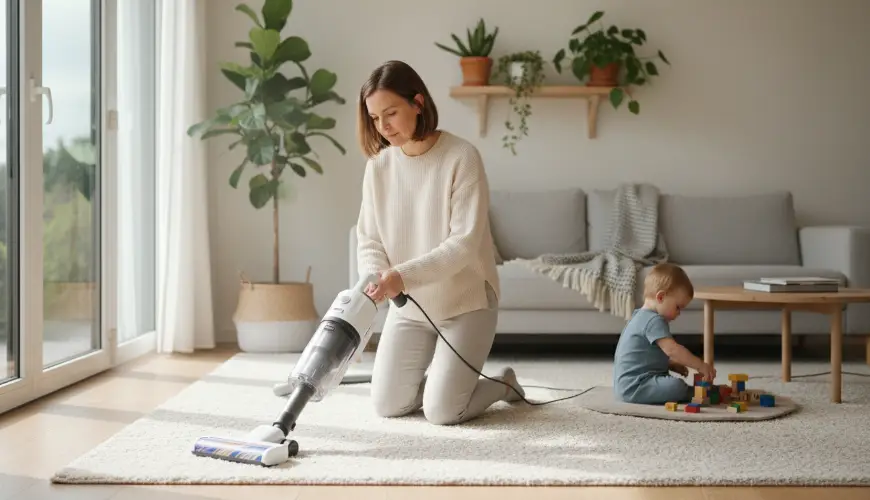
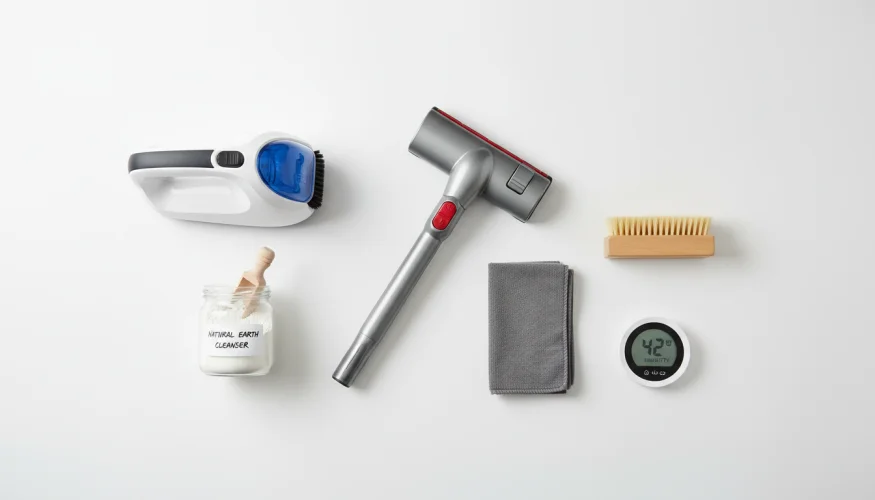
The foundation is vacuuming, but not just any kind. Ordinary vacuum cleaners with paper or fabric filters can capture larger particles of dirt, but microscopic dust particles and allergens pass through them easily back into the air. Vacuum cleaners with HEPA filters make a crucial difference, as they are capable of capturing particles as small as 0.3 micrometres – including mite faeces and dust mites themselves. Where possible, it is worth investing in such a device, or alternatively fitting an existing vacuum cleaner with a HEPA filter.
Vacuuming frequency is equally important. Allergologists recommend vacuuming carpets in living areas at least twice a week, with each area being covered slowly and repeatedly – ideally in several different directions. A quick pass over the carpet every now and then is not sufficient, because the fibres are interwoven and hold dust firmly.
Another effective tool is regular deep cleaning, which should take place at least once every six months, and more frequently in households with allergy sufferers or pets. Wet cleaning using a steam cleaner or carpet shampooing can remove dirt from the fibres that a vacuum cleaner cannot reach. Steam at temperatures above 55 degrees Celsius kills mites directly, making steam cleaning not only hygienic but also very effective in the fight against allergens. It is important, however, to ensure the carpet dries thoroughly after wet cleaning – a damp carpet could paradoxically worsen the situation.
In addition to mechanical cleaning, there are also chemical preparations called acaricides, which are designed specifically to kill mites in carpets. Their use should be discussed with a specialist, particularly if there are young children or pets in the household. A natural alternative is the application of diatomaceous earth – a fine powder made from fossilised algae that mechanically damages the outer shell of mites. Diatomaceous earth is non-toxic to humans and animals, but highly effective against insects and mites.
Regular ventilation also plays a significant role. Fresh air reduces moisture levels in a room and simultaneously helps to carry dust particles outside. Carpets should ideally be taken outdoors and beaten – an old-fashioned method that modern households have abandoned, but which still ranks among the most effective ways of mechanically removing dust from fibres.
Prevention as the best strategy
Carpet care is not only about reactive maintenance – that is, what we do after dust and mites have already settled. Equally important, if not more so, is a preventive approach that denies mites favourable living conditions from the outset.
The first step is controlling air humidity in the home. Maintaining relative humidity below 50 percent significantly limits the ability of mites to reproduce. Dehumidifiers serve this purpose and are now available in various price ranges and performance classes. Regular ventilation, particularly in bathrooms and kitchens where humidity naturally rises, also contributes to overall balance.
Another preventive measure is choosing the right type of carpet. Carpets with a short or low-cut pile are less prone to accumulating dust and mites than thick, long-pile models. Natural materials such as wool have a natural ability to regulate moisture, while synthetic fibres are generally less porous and easier to clean. When purchasing a new carpet, it is also worth considering certifications such as Oeko-Tex Standard 100, which guarantees that the product contains no harmful substances and was manufactured with the health of users in mind.
As allergologist and indoor air quality expert Professor Thomas Platts-Mills once said: "The most effective treatment for dust mite allergy is reducing their numbers in the environment where the patient lives." This seemingly simple statement contains a profound truth – no antihistamines or other medications can replace a clean home environment.
Entrance mats and the habit of removing shoes at the door are also practical aids in everyday prevention. A large proportion of dust, pollen, and dirt enters the home from outside on the soles of shoes. A good-quality entrance mat will capture the first layer of dirt, but it is only the removal of shoes before entering rooms with carpets that truly prevents their transfer. This simple habit can reduce the amount of dirt brought in by up to 80 percent, as studies published in specialist hygiene journals have shown.
In households with allergy sufferers or asthmatics, it is also worth considering the use of special anti-mite covers for mattresses and pillows, since beds are the second largest source of mites after carpets. A comprehensive approach to the entire home is always more effective than focusing on just one surface.
Finally, the role of pets is also worth mentioning. Animal fur and skin are just as attractive a food source for mites as human skin, and pets also bring their own allergens into carpets. If animals are present in the household, the frequency of carpet cleaning should be increased, and animals should not be allowed into bedrooms, where contact with allergens during the night is most intensive.
Caring for carpets is therefore essentially caring for the health of the entire household. It is not a matter of aesthetics or tidiness – it is a conscious decision to create an environment in which breathing is easier, sleep is more restful, and life is healthier. And that is worth every minute that regular cleaning takes.