
# Why Is There Always Dust at Home and What to Do About It ## Where Does Household Dust Come From?
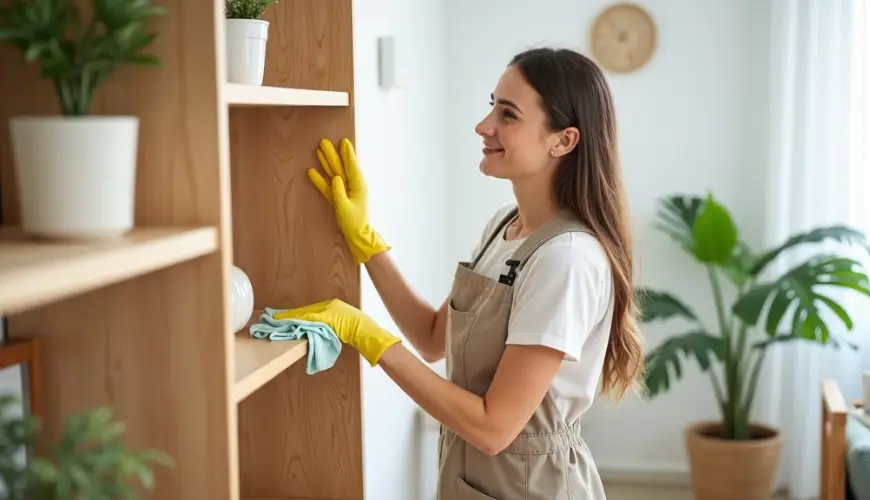
Everyone knows it. You've just polished the shelf to a shine, put everything back in its place, and two days later it's all covered in a thin layer of grey dust again. Frustrating? Undoubtedly. But even more concerning is the realisation that household dust isn't merely an aesthetic problem – it's a complex mixture of substances that can have a direct impact on the health of the entire family. Before you reach for a cloth, however, it's worth understanding where that dust actually comes from and why it seems there's never an end to it.
Household dust is inherently unavoidable. It consists of dozens of different components – dead skin cells from people and animals, textile fibres, pollen grains, mould spores, particles from polluted outdoor air that enter through windows and doors, and not least dust mites – microscopic arachnids whose faeces are among the most common triggers of indoor allergies. According to the World Health Organization, people spend on average more than 90% of their time indoors, making indoor air quality an absolutely crucial public health issue.
But why does dust return so quickly? The answer lies in a combination of factors that most households don't perceive as a problem – until someone in the family starts coughing, has a blocked nose, or wakes up feeling as though they slept in a dusty warehouse.
Try our natural products
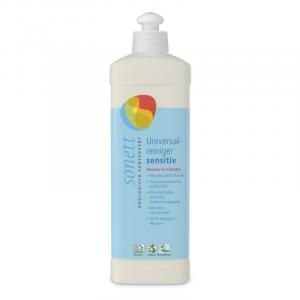
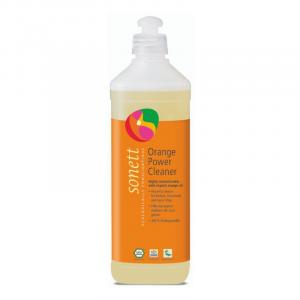
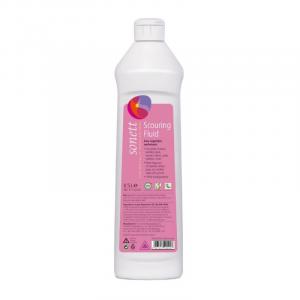
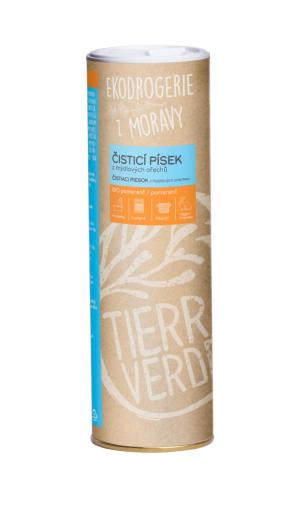
Where dust actually comes from and why there's never enough of it gone
One of the main yet overlooked sources of dust is the building itself. Older homes produce enormous amounts of dust from walls, ceilings and floors – plaster crumbles imperceptibly, wooden floors wear down, and insulation materials release fibres. Modern new-builds are not much better, because during construction and the subsequent settling of the house, large quantities of fine particles are generated that linger in the spaces for literally years.
Another culprit is textiles. Carpets, curtains, cushions, duvets, soft toys – all of these are reservoirs of dust and mites. Every movement around the room stirs up the air and sends settled particles back into it. Consider a specific example: a family with a small child that has a large carpet in the living room and a sofa with cushions. The child plays on the floor, the dog lies on the sofa and the window is open during the day. In such a home, the air is literally constantly laden with dust particles that settle after an hour – and the whole cycle begins again.
Dust also accumulates significantly where there is insufficient air circulation. Room corners, the space behind furniture, the areas under beds or wardrobes are places where air doesn't move and dust builds up in layers. Paradoxically, conventional ventilation by opening a window makes the situation worse – along with fresh air comes pollen, exhaust fumes and industrial particles from the outdoor environment.
Humidity also plays a considerable role. A dry environment causes dust particles to float more easily in the air and remain there longer. Conversely, excessively high humidity promotes the growth of mould and mites, which are themselves a source of further organic dust. The ideal indoor humidity should be between 40 and 60 percent – a range that limits both dust dispersal and the development of biological contaminants.
People also rarely realise how much dust they bring into the home on themselves. Clothing, hair, shoes – every return from outside is a small invasion of dirt. This is why Japanese households have a tradition of removing shoes at the door, and it's not merely a cultural custom – it's a practical hygiene measure that significantly reduces the amount of dirt carried into the interior.
What to realistically do about it: from habits to equipment
The good news is that even though dust will never disappear entirely, its quantity in the home can be significantly reduced – without the need for a daily deep clean. The key is a combination of the right habits, appropriate equipment and a considered approach to the interior itself.
The first and most important step is to reconsider the way you clean. An ordinary dry cloth or broom doesn't move dust away – it merely relocates it from one place to another and sends a large portion of it back into the air. Wiping surfaces with a damp cloth is significantly more effective, because it captures dust particles and actually removes them. Microfibre cloths are considerably better in this regard than traditional cotton fabrics, as they have electrostatic properties and genuinely attract fine particles to themselves.
The vacuum cleaner is another point worth pausing at. Not every vacuum cleaner is the same. Models without a HEPA filter do suck up visible dust, but return fine particles and allergens back into the air through the exhaust. Research published in the specialist journal Indoor Air repeatedly shows that vacuum cleaners with a certified HEPA filter capture up to 99.97% of particles larger than 0.3 micrometres – including the smallest allergens, which are the most dangerous to health.
An air purifier is an investment that genuinely pays off in dusty homes. Modern devices combining a HEPA filter and activated carbon can continuously clean the air of dust, pollen, mites and odours. It's important to choose a device with sufficient capacity for the given room – an underpowered purifier in too large a room will have almost no effect. Performance is usually expressed as CADR (Clean Air Delivery Rate), and for a bedroom of approximately 20 square metres it should be at least 150 to 200 m³/h.
A humidifier can be a natural ally in the fight against dust when used in combination with an air purifier. As mentioned above, dry air causes fine particles to float more readily – slightly humidified air, by contrast, "pulls" them downwards. Here, however, the golden mean applies: excessive humidity brings other problems.
When it comes to the arrangement of the home itself, less is truly more in this case. Every object in the flat is a potential dust reservoir – figurines on shelves, piles of books, decorative cushions, heavy-fabric curtains. This doesn't mean one must live in an empty minimalist space, but consciously reducing the number of hard-to-clean decorations can significantly lower the overall dustiness of the home. Open shelving is more demanding from this perspective than closed cupboards – dust settles on them much faster and more visibly.
Carpets and textile floor coverings are a chapter in themselves. They are home to mites and reservoirs of dust, from which fine particles are released with every step. This doesn't mean carpets need to be thrown out immediately – but regular cleaning with a steam cleaner or professional deep cleaning several times a year is a genuine necessity, not merely a recommendation. As an alternative to traditional carpets, natural materials such as jute or cotton rugs can be considered, as they are less prone to accumulating mites and are easier to wash.
As allergist and science communicator Dr Zdeněk Pelikan once said: "Household dust is not just dirt – it is a living ecosystem, and if we want to fight it effectively, we must also perceive it as such." This perspective changes the entire approach to cleaning – it's not just about aesthetics, but about consciously creating a healthy environment.
The bedroom deserves special attention. We spend a third of our lives there, and yet it is often the dustiest room in the flat. Mattresses, pillows and duvets are ideal environments for mites – warmth, moisture and a constant supply of food in the form of dead skin cells. Protective covers for mattresses and pillows with a tight weave that mites cannot penetrate are a simple and effective solution. Bed linen should be washed at least once every two weeks at a temperature of at least 60 degrees Celsius, as lower temperatures will not kill mites.
Plants are another topic surrounded by many myths. The popular notion that houseplants clean the air of dust and toxins stems from an older NASA study whose results were significantly overstated in real domestic conditions. More recent research published in the Journal of Exposure Science & Environmental Epidemiology shows that for a truly measurable effect on air quality, hundreds of plants would be needed in a small space. This does not mean that plants are harmful – on the contrary, they contribute to a sense of wellbeing and air humidity. They simply should not be seen as a substitute for an air purifier or regular cleaning.
Ventilation is a topic that deserves a nuanced perspective. Regular air exchange is essential for a healthy indoor environment, but the method of ventilation depends on location and season. During periods of high pollen counts or in cities with poorer air quality, it is preferable to ventilate in the early morning hours, when the concentration of outdoor pollutants is at its lowest. Heat recovery ventilation units, which are an increasingly common feature of modern new-builds, bring fresh air in through a filter – thus solving the problem of ventilation without introducing outdoor dust and pollen.
The dustiness of a home is the result of dozens of small factors that influence and reinforce one another. There is no single miracle solution that will eliminate dust once and for all – but a systematic approach that combines proper cleaning habits, appropriate equipment and a considered interior layout can significantly improve the situation. And not only from an aesthetic standpoint, but above all from the perspective of health and the quality of everyday life.