
# What Causes a Squeaky Wooden Floor or Warped Laminate
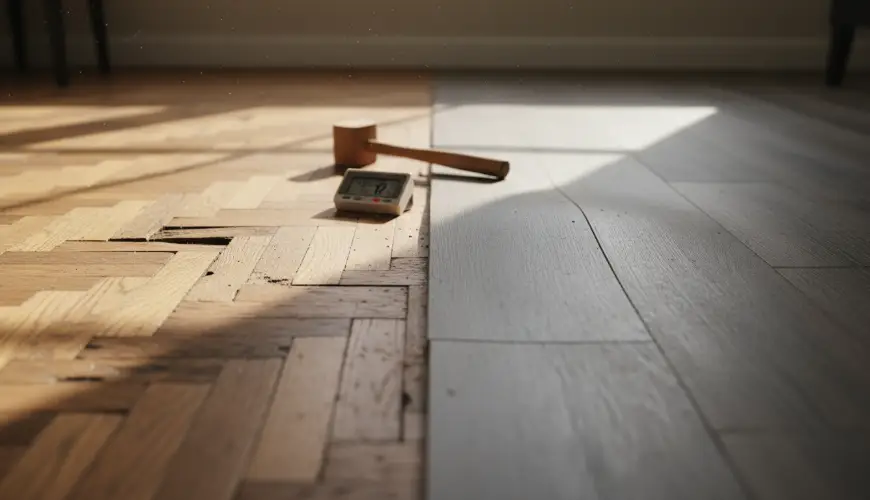
Everyone who has ever crossed a room in the silence of the night while the floor beneath them began creaking like something out of an old horror film knows how unpleasant an experience that can be. And equally frustrating is the sight of a laminate floor that begins to buckle or bulge somewhere in the middle of a room like hot chocolate in a pan. Both situations are far more common than one might think, and in most cases they have clear causes and solutions. You just need to know where to look.
Floors are one of the most overlooked elements of a home. People invest in furniture, wall colours, and lighting, but the floor remains a kind of silent foundation that only gets attention when it starts making itself heard. And creaking or deformation are precisely the kinds of signals that should not be ignored, because behind them may lie not only an aesthetic problem but also more serious structural or moisture-related issues.
Try our natural products



Why does a wooden floor creak?
Wood is a living material that responds to changes in temperature and humidity. Even after processing and installation, wooden floors adapt to the environment in which they are placed. This very quality is what makes wood beautiful, but it can also be a source of problems. Creaking in a wooden floor most commonly occurs when individual planks or parquet blocks rub against each other, against the substructure, or against the nails and screws holding them in place.
One of the most frequent causes is wood drying out. During the winter months, when heating significantly reduces indoor air humidity, wooden planks shrink and gaps form between them. When someone walks across the floor, a plank slightly dips, strikes a nail or a neighbouring element, and produces that characteristic creaking sound. Experts recommend maintaining a relative air humidity of between 45 and 65% in rooms with wooden floors, which helps minimise these seasonal movements of the wood. More information about the effect of humidity on wood and its behaviour can be found, for example, in the materials of the Wood Research Institute, which has long been dedicated to researching wood and its properties.
Another factor is the age of the floor and wear on the joints. In older wooden floors, nails gradually loosen over time, the tongue and groove connecting the planks weakens, or the subfloor batten system deforms. The result is movement that manifests as creaking with every step. It is not uncommon for a floor that was silent for twenty years to suddenly start making noise after a neighbouring flat is renovated, as the vibrations may have disturbed the existing structure.
An interesting real-life case involves a young family in Brno who purchased an older flat with its original parquet floor. The floor looked beautiful, but with every step it produced loud creaking sounds, especially during the night hours. After consulting a flooring specialist, it turned out that the subfloor batten system from the 1980s had been made from lower-quality wood that had dried out over time and was causing movement throughout the entire floor. The solution was not to tear up the beautiful parquet but to reinforce the batten system and inject a special adhesive into the problematic areas.
Creaking, however, is not always a problem confined to old floors. Even a new wooden floor can creak if it was not properly acclimatised before installation. Wood needs time to adjust to the temperature and humidity of a specific room, and if it is laid too soon after delivery, it may begin to shrink or expand after installation, creating tension that leads to exactly this kind of creaking.
A buckled laminate floor – an aesthetic problem or a serious warning sign?
Laminate flooring is a popular choice for its affordability, ease of maintenance, and visual appeal. Yet laminate is precisely the kind of material that reacts to moisture very sensitively and visibly. Buckling or rippling of a laminate floor is one of the most common problems homeowners encounter, and in most cases this phenomenon has a clear cause.
The most widespread reason for buckling is excessive moisture. This can come from several directions – from below, through a concrete slab that was not sufficiently dried or fitted with a vapour barrier, but also from the side in the form of spilled water or a leak from water pipes. Laminate boards are surface-resistant, but their core consists of a wood-fibre board that absorbs water like a sponge. When the boards become saturated, they expand and have nowhere to go but upward – and the result is that characteristic buckling in the middle of a room or along the walls.
The second very common cause is an insufficient expansion gap. Laminate is laid as a floating floor that is not anchored to the substrate but rests freely and expands with temperature changes. Around the entire perimeter of the room, a gap must be left – usually 8 to 12 millimetres – to allow for this movement. If the installer omitted this gap, or if the homeowner covered it with a skirting board fitted too tightly, the floor has nowhere to go when it expands and begins to buckle. As noted by the Czech Agency for Standardisation, the standards for laying floating floors precisely define the requirements for expansion gaps, and failure to comply with them is the most common mistake in amateur installation.
As if that were not enough, buckling can also be caused by direct sunlight. Rooms with large south- or west-facing windows can be exposed to intense sunlight during the summer months, which locally heats the floor to temperatures at which laminate expands significantly. If an insufficient expansion gap contributes to this, the result is predictable.
Italian designer and interior expert Paolo Baldini once remarked: "The floor is not just a surface we walk on. It is the foundation on which the entire feeling of a room rests." And he is right – a buckled or creaking floor can ruin the impression of even an otherwise perfectly furnished space.
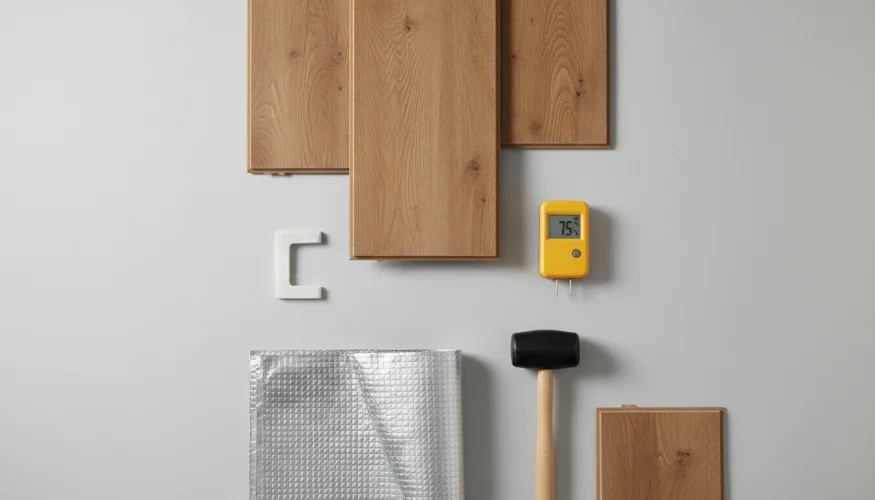
How to deal with these problems?
The approach to solving them depends on the cause and extent of the damage. With a creaking wooden floor, the first step is always diagnosis – identifying exactly where the creaking originates and what is causing it. If the issue is seasonal movement caused by dry air, a humidifier and regular monitoring of room humidity will help. If the problem lies with loose nails or joints, it is often possible to inject a special flooring adhesive into the gaps without having to dismantle the floor.
With older floors where the batten system is damaged, the situation is more complex, and a partial or complete renovation is sometimes unavoidable. It is always advisable, however, to consult a specialist before resorting to radical solutions, because an experienced flooring professional can save even a floor that appears to be beyond repair.
With a buckled laminate floor, the approach depends on whether the cause is moisture or thermal expansion. If there was a one-off water leak and the floor has not been damaged too deeply, it may partially or fully level out once it has dried. In more serious cases, the damaged laminate boards must be replaced. If the cause is an insufficient expansion gap, it is sometimes enough to adjust or replace the skirting boards and free up space for the floor to move.
An important preventive measure is a quality underlay beneath the laminate, which not only dampens sound and footsteps but also acts as a certain barrier against moisture from below. Underlays with an integrated vapour barrier are available on the market and are particularly suitable for rooms at higher risk of moisture, such as ground-floor flats or rooms above unheated spaces.
Prevention is always cheaper than remediation. The foundation is proper installation from the very start – sufficient acclimatisation of the material, a quality substrate layer, correct expansion gaps, and the use of appropriate material for the specific environment. Bathrooms and kitchens, for example, require special types of laminate with greater moisture resistance, or alternatively other types of floor coverings such as vinyl flooring or ceramic tiles.
It is also worth mentioning that the choice of flooring material has implications for sustainability as well. Solid wood floors from certified sources, when properly maintained, are capable of lasting for decades and can be sanded down and refinished repeatedly, significantly reducing the amount of waste compared to laminate floors, which generally need to be completely replaced once damaged. Certifications such as FSC (Forest Stewardship Council) guarantee that the wood comes from responsibly managed forests, making it a good choice for those who care about the environment.
Whether it is creaking parquet in a period flat or a bulge in the middle of a living room, both are problems that have solutions. The key is not to underestimate the first signs, to understand the cause, and to approach the remedy with careful consideration. A floor that serves its purpose well is quiet, level, and firm – and that is precisely the foundation on which a comfortable home can be built.