
Try making homemade waxed wrap
Everyone who has ever tried to reduce the amount of plastic waste in their household knows how frustrating it can be to find functional alternatives. Cling film is ubiquitous, practical and cheap – but we pay a high ecological price for this convenience. According to the European Environment Agency, plastic waste from households represents one of the largest categories of municipal waste in Europe, with a significant portion consisting of single-use food packaging. Fortunately, there is an elegant, centuries-tested solution that has been making its way back into modern households in recent years: beeswax food wraps.
This is nothing new. Waxed cloth was used for wrapping food long before plastic came along. Today it is enjoying a well-deserved comeback and is becoming a symbol of a practical ecological approach to life. And the best part? Anyone can make it at home, even without special skills or expensive equipment.
Try our natural products

What is a wax wrap and why does it work so well
The principle behind wax wraps is surprisingly simple. It is a piece of fabric – most often cotton – infused with beeswax, sometimes combined with natural resins or vegetable oils. The result is a semi-transparent, slightly sticky material that holds its shape thanks to the warmth of human hands. Simply press it around a bowl, wrap it around some cheese, cover half a lemon or cover leftover bread – and the wrap stays exactly where you need it.
Beeswax is naturally antibacterial, slightly repels moisture and at the same time allows food to "breathe" – unlike cling film, which creates a hermetic environment that promotes faster spoilage of certain foods, especially cheeses and baked goods. This very property makes wax wraps an excellent tool for keeping food fresh longer and more naturally.
Such a wrap can last a year or more with proper use and care. At the end of its life, it can be composted or used as fire starter – no plastic waste, no guilty conscience.
What you will need before making your own
Before you get started, it is a good idea to prepare the necessary materials and tools. There are not many of them, and you probably already have most of them at home or can easily find them.
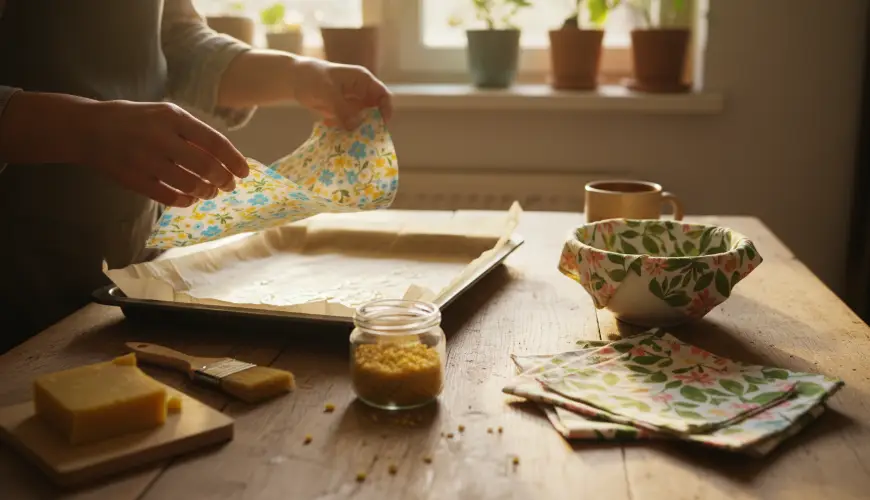
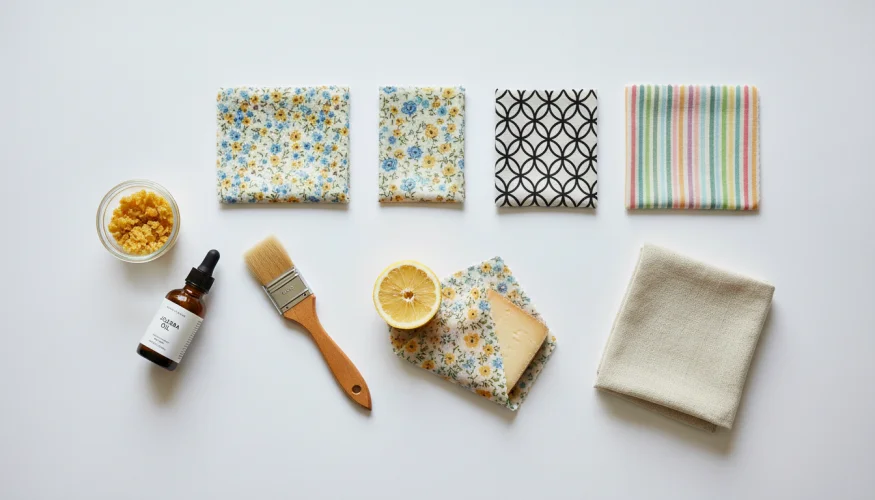
- Cotton fabric – ideally a firmer weave; an old cotton sheet or scraps from sewing work perfectly
- Beeswax – preferably in granule form or grated from a block; beeswax can be found at pharmacies, eco shops or directly from beekeepers
- Jojoba oil – an optional ingredient that increases the flexibility of the finished wrap
- Pine resin – also optional, but significantly improves the stickiness of the wrap
- Baking paper
- An old brush or pastry brush
- An oven or iron
- An old baking tray or oven liner
If you want to start as simply as possible, all you need is fabric and beeswax. The other ingredients are enhancements, not necessities.
How to make a wax wrap at home, step by step
Making a homemade beeswax food wrap takes about half an hour, and the result will pleasantly surprise you. There are two basic methods – the oven method and the iron method – and both work reliably.
The oven method is suitable for larger pieces of fabric or for making several wraps at once. Preheat the oven to approximately 80°C. Place baking paper on a tray, lay a piece of cotton fabric on top, and sprinkle grated beeswax or granules evenly across the entire surface. Place the tray in the oven and watch as the wax slowly melts and soaks into the fabric fibres. Once the entire surface is evenly covered and the wax has spread into every corner, remove the tray from the oven. Quickly lift the fabric by one corner and let it hang freely in the air for a moment – the wax will set within a few seconds and the wrap is ready.
The iron method is better suited for smaller formats and more precise control. Place the fabric on an ironing board and lay baking paper over it. Set the iron to a low temperature (no steam!) and slowly move it over the paper. The heat will melt the wax sprinkled beneath the paper and press it evenly into the fabric. This method is a little slower, but allows you to perfectly cover even the edges and corners.
The finished wrap should feel slightly waxy to the touch, be slightly stiff, and become soft and pliable when warmed in your hands. If there are spots where the wax has not covered the fibres evenly, simply add a little more wax and repeat the process.
Tips for better results and longer lifespan
One of the most common mistakes beginners make is using wax that is too thin or unsuitable fabric. Synthetic materials such as polyester or nylon are not suitable – the wax will not absorb into them properly and the result will be disappointing. Cotton, linen or hemp work best.
If you want an wrap with better stickiness, add a small amount of pine resin to the wax. A ratio of roughly 4 parts wax to 1 part resin is a good starting point. The resin makes the wrap stickier and helps it adhere better to bowls and containers. Jojoba oil adds flexibility, which is particularly useful in winter when the wax sets more quickly.
Caring for a wax wrap is very simple. Just rinse it with cold water and a little gentle soap and leave it to dry. Hot water would melt the wax and ruin the wrap, so always avoid it. Similarly, wax wraps are not suitable for use with raw meat or fish for hygiene reasons.
Remember that the more you use the wrap, the more it will "break in" and adapt to your needs. As one of the pioneers of the modern zero waste movement, Bea Johnson, says: "The best waste is the one that never gets created." A wax wrap is the perfect embodiment of this approach – it replaces hundreds of pieces of single-use cling film with one long-lasting item.
Creative options and personalisation
One of the greatest joys of making things at home is the ability to tailor the result to your own taste. Cotton fabric does not have to be white or plain. On the contrary – wraps made from patterned fabric look beautiful and turn the everyday task of wrapping food into a small aesthetic pleasure. Try fabrics with small flowers, geometric patterns or cheerful stripes. Such a wrap also makes a wonderful original gift – perhaps paired with a small jar of homemade jam or a piece of farmhouse cheese.
Imagine Petra, a teacher from the Central Bohemia region, who started making wax wraps for her whole family after discovering they were using over twenty metres of cling film every week. Today she makes wraps in various sizes – small ones for half a lemon, medium ones for cheese or vegetables, and large ones to cover an entire bowl. She also made a few as Christmas gifts for friends and was met with enormous success. She says the whole process takes her less than two hours a month and saves the family not only money, but also the feeling of unnecessary waste.
If you want to go even further, you can experiment with plant-based alternatives – candelilla wax or carnauba wax are suitable for vegans who do not want to use bee products. They work on a similar principle, although the resulting consistency differs slightly and a somewhat different ratio of ingredients may be needed.
Why making your own is better than buying ready-made wraps
There are a number of commercially produced wax wraps on the market, such as the popular Beeswax Wraps brand or domestic alternatives. They are high quality and convenient, but homemade production has several undeniable advantages. First and foremost, it is significantly cheaper – a kilogram of beeswax costs around two hundred crowns and from it you can make dozens of wraps in various sizes. Comparable quantities of commercial wraps can cost several times more.
The second advantage is complete control over the ingredients. You know exactly what the wrap contains, where the wax comes from and what fabric you used. For families with young children or people prone to allergies, this transparency is invaluable.
And finally – making your own things brings a special kind of satisfaction. It is not just about ecology or saving money. It is about the conscious decision to take things into your own hands, both literally and figuratively. Every wax wrap you make is a small victory over the culture of disposability that surrounds us on all sides.
If you are interested in exploring the topic of sustainable households further, the Czech Environmental Information Agency CENIA offers a range of overviews and data on waste production in the Czech Republic, which can serve as inspiration for further changes in your everyday life.
Wax wraps are proof that a sustainable lifestyle does not have to be complicated, expensive or self-denying. All it takes is a little beeswax, a piece of old cotton fabric and the desire to try something new. The result will convince you that some old ways are simply better than their modern plastic replacements.