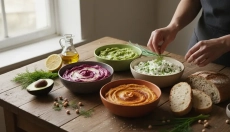

Warm salads for cold days full of seasonal vegetables
When temperatures drop outside and the days grow shorter, few people crave a bowl of cold vegetables drizzled with dressing. Yet many people worry that eating healthily in winter means missing out somehow – as if healthy food automatically meant cold, austere, and self-denying. Warm salads, however, prove that this doesn't have to be the case at all. They are dishes that combine the nutritional value of fresh vegetables with the comforting feeling of a proper meal, and anyone can prepare them.
A warm salad is not a compromise. It is a complete meal that has been enjoying a well-deserved comeback in recent years – not only in home kitchens, but also in restaurants, where more and more chefs are returning to the simplicity of seasonal ingredients. Just look at how the menus of modern bistros change during the winter months: roasted beetroot is mixed with rocket, pan-fried lentils with caramelised onions, or sautéed kale with toasted nuts. These are all warm salads – just under different names.
Try our natural products





Why warm salads are the ideal choice in winter
The body naturally craves a different kind of food in cooler weather than in summer. This is not just psychology – it is physiology. The digestive system processes warm food more easily, and furthermore, cooking certain types of vegetables actually increases the bioavailability of certain nutrients. For example, lycopene in tomatoes or beta-carotene in carrots and sweet potatoes is better absorbed after light heat treatment, as confirmed by research published on the Harvard T.H. Chan School of Public Health website. So those who think that cooking vegetables destroys everything valuable in them are not entirely right.
At the same time, warm salads fulfil something we perhaps crave most in winter: a feeling of satiety without heaviness. These are dishes that satisfy without weighing you down. A combination of roasted or sautéed vegetables, legumes, grains and healthy fats – such as avocado, good-quality olive oil or a handful of seeds – creates a nutritionally balanced meal that leaves you feeling neither guilty nor hungry again an hour later.
Take an ordinary Wednesday in January as an example. You come home from work tired, it is dark and wet outside, and the last thing you feel like doing is spending an hour in the kitchen. Yet you know you want something proper to eat. That is precisely when an oven filled with slices of sweet potato, red onion and chickpeas, roasting away for forty minutes practically on their own, comes into its own. Meanwhile, a handful of spinach is rinsed, a dressing of tahini and lemon juice is prepared, and the result is a dish that could easily feature on the menu of a health-food café. And yet the entire preparation took barely ten minutes of active work.
Seasonal ingredients as the foundation of a good warm salad
The key to a successful warm salad in winter is to respect what nature offers at that time of year. Seasonal vegetables are not just a fashionable phrase – it is a practical choice that guarantees better flavour, higher nutritional content and a lower ecological footprint. In the winter months, this means reaching primarily for root vegetables, brassicas and legumes.
Beetroot, parsnip, celeriac, carrot, turnip or parsley root – these are ingredients that are transformed beyond recognition in the oven. They caramelise, soften and develop a sweetness that contrasts with the bitterness of rocket or the sharpness of an apple cider vinegar dressing. Broccoli, kale, collard greens or Brussels sprouts also hold up surprisingly well to heat treatment and, after being pan-fried, develop a slightly nutty flavour that is entirely absent in the cold version. As British chef Yotam Ottolenghi says: "Vegetables are not a side dish. They are the star." And it is in warm salads that they have the chance to truly shine.
Legumes are the natural partner of winter vegetables. Lentils – whether green, black beluga or red – are quick to prepare, rich in protein and fibre, and work wonderfully in a warm salad. Chickpeas work similarly, transforming into crispy, satisfying morsels after being roasted in the oven with a little olive oil and smoked paprika. Beans, peas, edamame – each of these ingredients adds body and nutritional value to the salad, turning a light dish into a proper lunch or dinner.
Grains and pseudo-grains are another layer that elevates a warm salad from a snack to a main course. Quinoa, buckwheat, barley, bulgur or farro – these are ingredients that are increasingly appearing in winter salads, and for good reason. They add texture, complex carbohydrates and a feeling of fullness that simply cannot be achieved with vegetables alone.
The dressing and seasoning are then what holds the whole dish together and gives it character. Warm salads can handle bolder flavours than their cold counterparts – so do not be afraid of miso paste mixed with rice vinegar and sesame oil, mustard combined with honey and apple cider vinegar, or a simple dressing of good olive oil, the juice of a whole lemon and a pinch of sea salt. The simpler, the better – an ingredient that is at the peak of its flavour after roasting or sautéing does not need complex support.
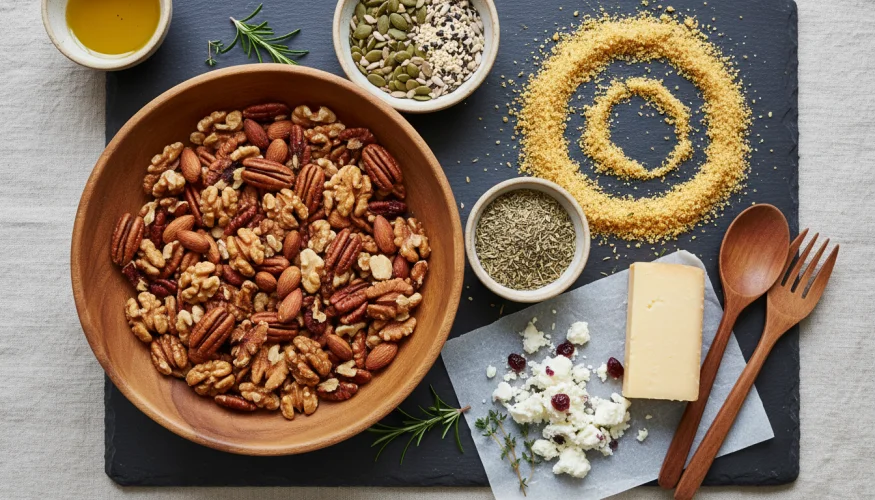
Toppings also play an important role – sprinklings that add a final layer of flavour and texture. Toasted walnuts or hazelnuts, pumpkin or sunflower seeds, crispy onion chips, a little grated hard cheese or breadcrumbs from stale bread toasted in butter. It is precisely these details that make the difference between a good and an excellent salad.
Inspiration for specific combinations
Theory is all well and good, but what should you actually cook in practice? Warm salads are not a genre with fixed rules – they are more like frameworks into which you can slot whatever is to hand. Nevertheless, there are several combinations that work reliably and repeatedly.
Roasted beetroot with beluga lentils, goat's cheese and walnuts is a classic that never disappoints. The beetroot is roasted whole in foil for about an hour, then peeled and sliced, the lentils are cooked until tender and, while still warm, mixed with a vinaigrette of red wine and Dijon mustard. The goat's cheese is added at the end – either cold, or lightly baked in the oven if you want a perfect warm contrast.
Kale sautéed in a pan with garlic and chilli, served on a bed of warm buckwheat and sprinkled with sesame seeds, is a dish that surprises with its simplicity and depth of flavour. Buckwheat lends the salad a distinctive, slightly earthy flavour that pairs beautifully with the spiciness of the kale and the lightness of the sesame.
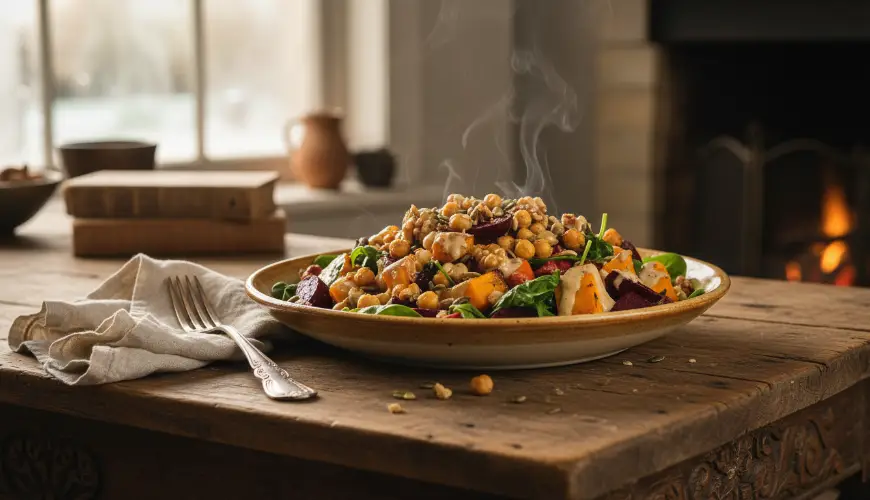
Roasted chickpeas with Hokkaido squash, spinach and a tahini and lemon dressing is perhaps the most popular winter salad of the moment – and deservedly so. The squash is roasted together with the chickpeas on a single baking tray, the spinach is added only at the end, where it gently warms through in the heat of the just-roasted ingredients, and the tahini dressing supplies the whole dish with creaminess and healthy fats.
Those looking for inspiration and wishing to delve deeper into the world of seasonal cooking can turn to recipes on BBC Good Food, which offers an extensive collection of winter salads and warm dishes made from seasonal vegetables.
It is interesting how easily people fall into a routine and repeat the same dishes over and over, even though there are countless variations available. Warm salads are, in fact, one of the most flexible genres of cooking imaginable – they change with the season, with whatever is left in the fridge, with your mood and with the time available. They are not dishes with precise weights and perfect ratios. They are dishes that adapt.
Perhaps it is precisely this freedom that attracts so many people to warm salads. At a time when cooking is increasingly associated with performance, with perfect photographs on social media and with the feeling that you must be able to do everything perfectly, a warm salad says: just open the fridge, see what is there, and start. And the result will almost always be good – because vegetables roasted to a golden colour, seasoned with care and served warm are simply delicious. Regardless of whether they are Instagram-worthy or not.
The winter months therefore need not be a time when healthy eating takes a back seat and is replaced by heavy, fatty food out of necessity to keep warm. With warm salads, you can have both – food that warms you and food that does your body good. And that is a combination worth reaching for again and again, no matter how grey it is outside.