

# How to Correctly and Without Mistakes Practice the Forearm Plank ## What Is the Forearm Plank? T
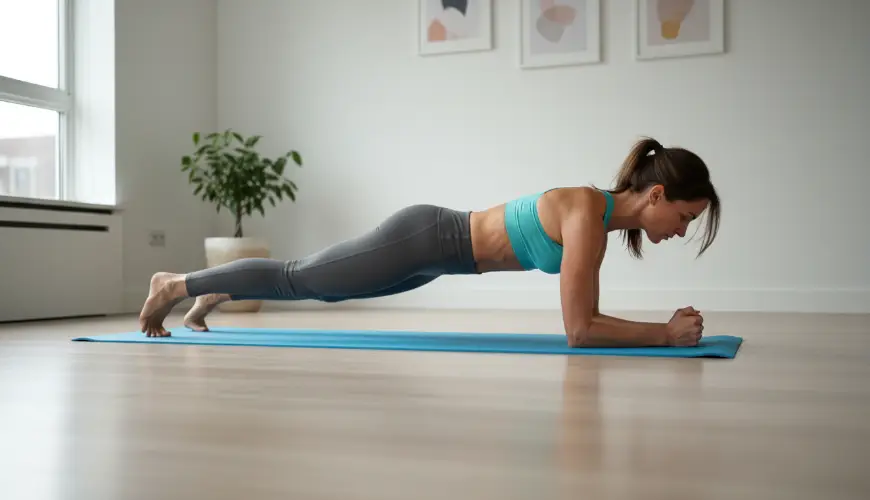
There are few exercises that look so simple yet manage to challenge beginners and experienced athletes alike. The forearm plank – sometimes also called the forearm plank position – is one of the fundamental pillars of any core-focused training. It's accessible, requires no equipment, and can be performed virtually anywhere. And yet the vast majority of people perform it incorrectly without even realizing it.
The problem isn't that the exercise is complicated. The problem is that it seems too easy. You lie down on a mat, prop yourself up on your forearms, lift your body, and wait. But it's precisely in that apparent simplicity that a whole range of pitfalls lurk – pitfalls that can lead not only to ineffective training, but also to unnecessary back, shoulder, or neck pain. So what does proper technique look like, and what should you avoid?
Try our natural products





Why the Forearm Plank Is So Effective
Before we get to the mistakes, it's worth recalling why the plank deserves your attention in the first place. It's an isometric exercise, meaning the muscles are active but not moving – they simply hold a position. And it's precisely this static load that is remarkably effective for building stable, functional strength in the abdominal, back, glute, and shoulder regions.
Unlike classic sit-ups or crunches, the forearm plank engages the entire core – not just the superficial abdominal muscles, but also the deep spinal stabilization system, which is key to healthy posture and the prevention of back pain. According to research published in the Journal of Strength and Conditioning Research, the plank ranks among the exercises with the highest trunk muscle activation at a relatively low spinal load – making it an ideal choice for people of all ages and fitness levels.
There's also a fitting thought that captures the essence of the exercise well: "Core strength isn't about how you look in the mirror – it's about how you function in everyday life." And the plank builds this functional strength better than most other exercises.
Think about carrying heavy grocery bags, lifting a child off the floor, or working long hours sitting at a computer. In all of these situations, core strength and stability play a crucial role. A weak core manifests as pain, poor posture, and an increased risk of injury. Regular forearm plank training helps prevent these problems.
Proper Forearm Plank Technique Step by Step
Before we describe the most common mistakes, it's helpful to have a clear picture of what the exercise should look like in its ideal form. A correctly performed plank isn't just about endurance – it's about consciously engaging every muscle in the body.
The starting position begins lying face down. The forearms are placed on the mat parallel to the body, with elbows directly beneath the shoulders – not in front of them, not behind them. The palms can rest flat on the mat or be clenched into fists, depending on personal comfort. The body is then lifted so that it forms one straight line from head to heels. This is the key point we will return to repeatedly.
The legs are extended and close together, with toes pressing into the mat. The glutes are actively squeezed – but not excessively, to avoid pelvic rotation. The abdomen is drawn in toward the spine, as if bracing for a punch. The shoulders are pulled down and away from the ears to prevent them from rising. The gaze is directed downward toward the mat, so the neck is a natural extension of the spine.
Sounds simple? Perhaps. But maintaining all of these elements simultaneously for thirty, sixty, or even ninety seconds – that's a challenge that will test anyone.
The Most Common Forearm Plank Mistakes
Now we get to the heart of the matter. Mistakes in the plank are not rare – they're the norm. Experts in sports medicine and personal trainers agree that the vast majority of exercisers perform the plank with at least one of the mistakes described below, and many don't even realize they're doing something wrong.
Raised or sagging hips are probably the most widespread mistake of all. Hips raised too high – the so-called "tent position" – significantly reduces core muscle engagement and shifts the load elsewhere. Conversely, sagging hips, where the belly drops toward the floor, causes excessive lumbar extension and can lead to lower back pain. Both variations are incorrect and both stem from the same source: insufficient core activation.
Another very common problem is incorrect elbow and shoulder position. Elbows shifted too far forward in front of the shoulders cause the load to transfer to the shoulders and cervical spine rather than remaining evenly distributed. Shoulders raised toward the ears signal tension and improper muscle activation. The result is often neck and shoulder pain, which many people mistakenly attribute to overexertion from other activities.
The third typical mistake concerns the head and neck. Some people drop their head down toward the chest, while others lift it and look forward. Both disrupt the natural line of the spine. The correct head position is as if the person were standing upright – the gaze is directed approximately thirty centimeters in front of the body toward the mat.
Then there's a mistake that may not seem like a problem at first glance: holding your breath. The plank is a static exercise, so it's tempting to exhale once and then simply wait. But proper breathing is part of the technique. Regular, calm inhalations and exhalations help maintain muscle activation and prevent unwanted increases in intra-abdominal pressure. If breath is being held during the plank, it's generally a sign that the intensity is too high or the technique is incorrect.
Finally, there's a mistake that is perhaps the most insidious of all: holding the position too long at the expense of proper technique. Many people try to break personal records in hold duration without paying attention to whether their position is still correct. As soon as the form begins to collapse – hips dropping, shoulders rising, body shaking uncontrollably – it's time to end the exercise or rest. Twenty seconds in the correct position is always better than a minute in a position that stresses the wrong areas.
A practical real-life example: Jana, a thirty-four-year-old accountant, started doing planks at home following videos from the internet. After three weeks, she complained of pain in her lower back. The personal trainer she visited immediately identified the problem – Jana was letting her hips drop during the plank while also excessively squeezing her glutes, causing pelvic rotation and excessive lumbar extension. Once she corrected her technique, the pain disappeared within two weeks and her core strength truly began to grow.
To make it clear what to watch out for, it's useful to have a summary of the main mistakes:
- Sagging or raised hips – disrupt the body line and reduce exercise effectiveness
- Elbows too far from the shoulders – overload the shoulders and cervical spine
- Raised or lowered head – disrupts the natural spinal position
- Holding your breath – increases tension and reduces body control
- Holding too long at the expense of proper form – increases the risk of overexertion and injury
How do you avoid these mistakes? The best strategy is to start slowly and mindfully. Shorter holds in the correct position are always more effective than long holds in an incorrect position. It can also help to practice in front of a mirror or record a short video that reveals mistakes you don't notice while exercising.
A useful tool is also the so-called bracing technique – before lifting into the plank, it's good to inhale and actively draw the abdominal wall toward the spine, as if bracing to withstand a blow. This activation helps maintain the correct spinal position throughout the exercise. Similar techniques are described by experts at the National Academy of Sports Medicine as the foundation of proper functional training.
It's also interesting that many people try to progress as quickly as possible to more difficult plank variations – with lunges, leg raises, or on an unstable surface – without having mastered the basic version. This is exactly backwards from how it should be done. The basic forearm plank, performed perfectly and mindfully, is a challenge in itself. And only when this version is truly mastered – when the body forms a perfect straight line, breathing is calm and regular, and muscles are properly activated – does it make sense to consider more progressive variations.
The forearm plank is an exercise worth practicing for life. It's not just for athletes or fitness enthusiasts – it's a movement foundation that supports healthy posture, protects the spine, and improves performance in any physical activity, from running to yoga to everyday movement. You just need to learn to do it correctly. And as it turns out, that's the hardest part.