
Proper care of a marble or stone countertop in the kitchen
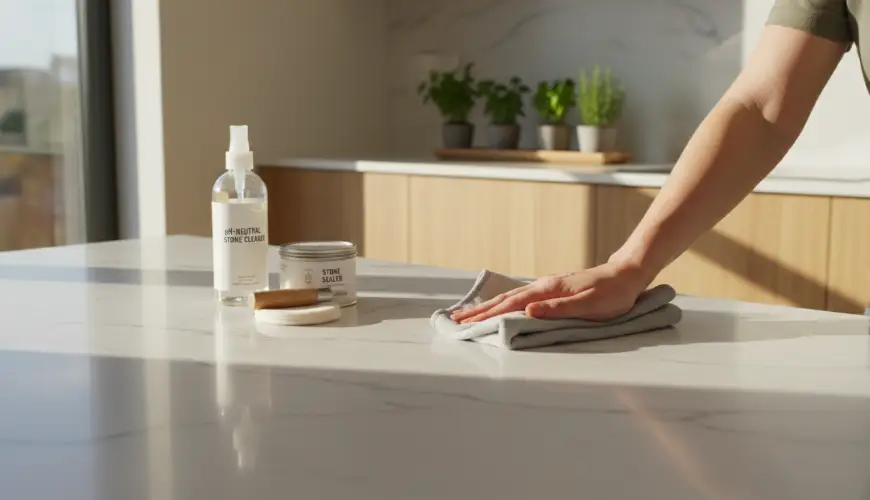
A marble or stone countertop in the kitchen is one of those elements that can transform an ordinary space into something truly exceptional. The delicate veining of marble, the rich texture of granite, or the calming tones of limestone draw attention and give an interior a character that no laminate or artificial material can fully replicate. However, natural stone comes with one disadvantage – it requires care, attention, and a little knowledge. Without these, an investment meant to last a lifetime can become a surface full of stains, dull spots, and micro-cracks.
Why is this? Natural stone is a material with memory. Every oversight, every spilled glass of wine, or forgotten lemon leaves a mark. And although there are numerous products and procedures to prevent these marks, most people only discover them once the damage is already done. This article therefore serves as a guide to help you understand how to properly care for a stone countertop – from daily routines to deep restoration.
Try our natural products

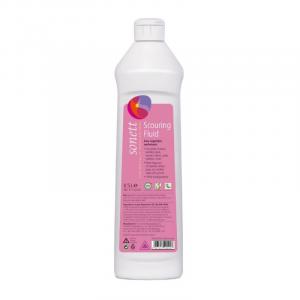
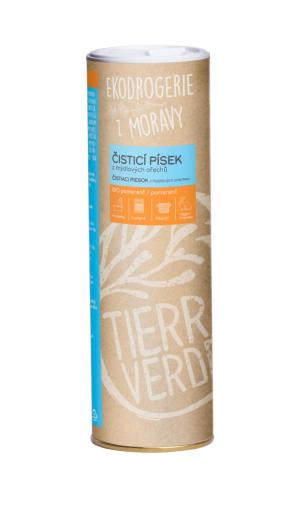
Why natural stone requires a special approach
To truly understand stone countertop care, it is first necessary to know what you are actually working with. Marble, granite, travertine, limestone, or slate – each of these materials has different porosity, hardness, and sensitivity to chemicals. Marble, for example, is composed primarily of calcium carbonate, which makes it a material very sensitive to acids. Lemon juice, vinegar, tomato sauce, or even common cleaning products with an acidic pH can cause a process called etching – a chemical reaction in which the stone surface literally loses its shine and dull stains appear that cannot be removed by simply wiping.
Granite, on the other hand, is considerably more resistant and handles acids better, yet it too is porous and without regular sealing treatment will begin to absorb oils, dyes, and moisture. According to the British natural stone institute (Stone Federation Great Britain), inadequate sealing is the most common cause of permanent damage to stone surfaces in homes. Travertine and limestone are even more sensitive than marble and require maximum caution in the kitchen.
This diversity of materials means that there is no single universal guide. What applies to granite may not apply to marble. Therefore, the first step is always to find out what specific type of stone you have at home and adapt all care accordingly.
The daily routine that determines everything
Daily care for a stone countertop does not have to be complicated, but it must be consistent. The foundation is immediately wiping up spilled liquids – and truly immediately. Natural stone absorbs moisture faster than most people realise, and acidic liquids such as wine, juices, or coffee can cause visible damage within minutes. Simply keep a clean cloth or paper towels nearby and get into the habit of not wiping spilled liquids but first gently absorbing them – wiping risks spreading the dirt over a larger area.
For regular surface cleaning, warm water and a neutral cleaning agent without acid or strong alkalis is sufficient. Many stone manufacturers recommend pH-neutral soap diluted in water. Completely unsuitable are vinegar, lemon juice, bleaching agents, and most universal cleaning sprays commonly available in supermarkets – these can irreparably damage the surface of marble or limestone, even if the result may not be immediately visible.
An interesting real-life example: One family purchased a luxurious marble countertop for their new kitchen and after three months noticed that the surface was losing its shine and dull stains were beginning to appear. The cause? Daily cleaning with a kitchen surface spray that was mildly acidic. The surface had to be repolished by a professional, with the entire repair costing several thousand crowns. Yet all it would have taken was using the right product.
Regularity is key. The countertop should ideally be wiped with a damp cloth after each cooking session, then dried with a soft microfibre cloth that leaves no streaks. This simple routine, which takes less than a minute, can significantly extend the surface's lifespan without any further intervention.
Sealing: the invisible shield that gets forgotten
If there is one thing that stone countertop owners most often forget, it is regular sealing. A sealant penetrates the pores of the stone and creates a protective barrier that prevents liquids, oils, and dirt from penetrating deep into the material. Without it, even the most expensive granite or marble countertop is essentially unprotected.
The frequency of sealing depends on the type of stone and the intensity of use. Granite with lower porosity generally requires sealing once a year, while travertine or limestone may require treatment every six months. There is a simple home test: drop a few drops of water onto the countertop surface and watch what happens. If the water beads up and does not wet the surface, the sealing is still working. If the water begins to slowly absorb and the surface darkens, it is time for a new treatment.
The application of sealant itself is not complicated. The surface must be thoroughly cleaned beforehand and completely dry. The sealant is applied evenly – either with a brush or a cloth – left to work for a certain time according to the manufacturer's instructions, and the excess is wiped off. Quality sealants for natural stone are available at specialist retailers and also in eco-friendly variants that do not contain aggressive chemicals.
Choosing the right sealant should not be underestimated. The market offers products designed specifically for marble, others for granite or for light-coloured stones where there is a risk of colour tone change. When choosing, it is worth carefully reading labels or consulting a professional.
Scratches, stains, and dull areas: what to do about them
Even with all the care in the world, a stain or minor damage may appear on a stone countertop. How to deal with it depends on its nature and depth. Surface stains from oil or grease can be treated by trying a paste made from baking soda and water – this is applied to the affected area, covered with film, and left to work for several hours or overnight. Baking soda has mildly abrasive and absorbent properties but is gentle enough not to damage the stone surface.
Dull stains caused by acids – so-called chemical etching – are a more serious problem. These stains are the result of a chemical change to the stone surface and cannot be cleaned with any cleaning product. The only option is mechanical repolishing, meaning grinding and polishing the surface to remove the damaged layer. This work generally needs to be entrusted to a professional, as an incorrect approach can deepen the damage further.
Scratches on marble are relatively common, as it is a softer stone. Minor surface scratches can sometimes be reduced with a fine polishing compound for natural stone; deeper scratches again require professional intervention. Granite is more resistant and scratches occur less easily on it, but it too is not indestructible.
Regarding heat resistance, there are many myths on this subject. Although natural stone tolerates heat better than many artificial materials, it is not advisable to place hot pots directly on a stone countertop without a trivet. A sudden change in temperature can cause thermal shock and the formation of micro-cracks that grow larger over time. Trivets under pots are therefore a basic rule even for stone countertops.
Eco-friendly care for natural stone
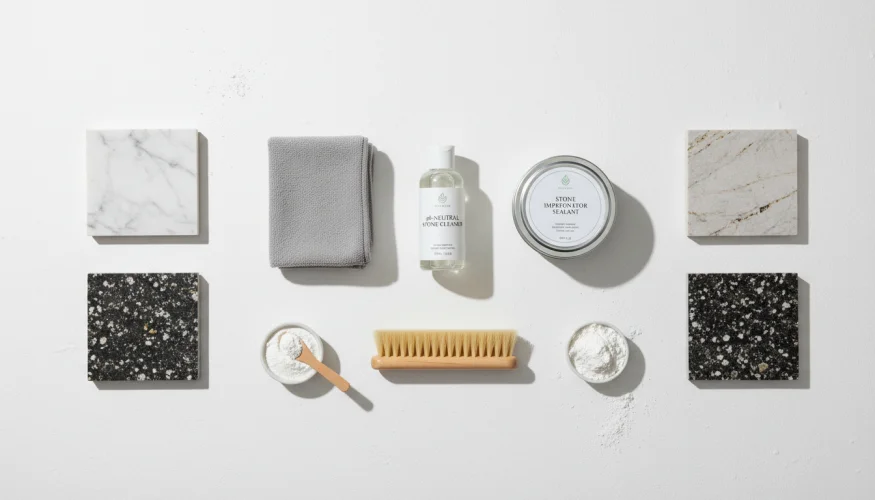
At a time when more and more households are transitioning to a more eco-friendly way of life, it is logical to ask whether it is possible to care for a stone countertop without aggressive chemicals. The answer is yes – and in many cases, natural alternatives are actually gentler on the stone itself.
Castile soap or other natural soap with a neutral pH is an excellent choice for everyday cleaning. Coconut soap diluted in water cleans the surface effectively, leaves no chemical residues, and poses no risk to the stone surface. Bio-products without synthetic additives are also safer for the whole family and for pets that move around the kitchen.
As one Italian stonemason with thirty years of experience aptly noted: "Natural stone has been part of human homes for thousands of years. It survived the ages because people cleaned it with water and soap. Modern chemistry has not helped it – quite the opposite."
Eco-friendly sealants based on natural waxes or plant oils do exist and may be sufficient for less heavily used surfaces. For kitchen countertops with intensive use, however, professionals still recommend professional silicone or fluoropolymer sealants, which offer more reliable and durable protection. A study published in the journal Construction and Building Materials shows that modern water-based sealants achieve comparable protection to solvent-based products with a significantly lower environmental impact.
Sustainability in home care does not mean compromising on quality. It means making an informed choice of products that are effective, safe, and gentle – both to the stone and to the environment.
When to call a professional
Not every problem with a stone countertop can be solved independently. There are situations where professional intervention is not only appropriate but absolutely necessary. Deep scratches, extensive acid etching, visible cracks, or a surface that has lost its shine over a large area – these are all signals that it is time to contact a natural stone specialist.
Professional companies have professional equipment for grinding, polishing, and sealing stone that home care simply cannot replace. The cost of such treatment varies according to the extent of the damage and the type of stone, but compared to the cost of replacing the entire countertop, it is generally a much more advantageous investment.
Preventive professional treatment once every few years – even without visible damage – is a way to significantly extend the lifespan of a stone countertop and preserve its original beauty. Natural stone is a material that can gain in character and value with age, but only when properly cared for. A marble or stone countertop in the kitchen is not just a work surface – it is an investment that, with the right approach, will repay itself many times over.