

Find your correct bra size
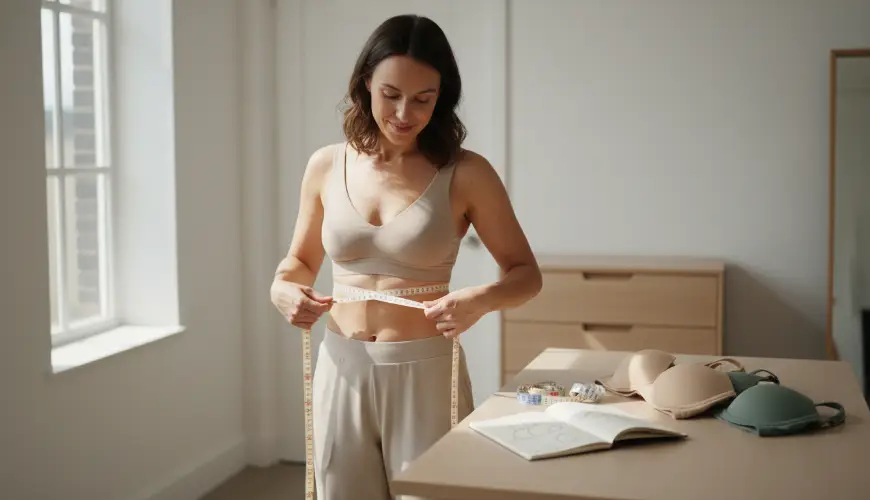
Few pieces of clothing have such an impact on a woman's comfort and confidence as a bra. Yet surveys repeatedly show that up to 80% of women wear the wrong bra size - and most of them have no idea. It's no wonder. The sizing system is confusing, it varies between brands and manufacturers, and add to that the fact that a woman's body changes throughout her life. The result is that many of us reach for a familiar size out of habit, without checking whether it still fits.
A properly fitting bra should not leave marks on the shoulders, dig into the sides, or cause breasts to look flattened or to overflow the cups. So how do you know you have the right size? And why does it actually matter so much?
Try our natural products

Why the right size matters more than you think
A bra in the wrong size is not just a matter of aesthetics. Wearing an ill-fitting bra over the long term can cause back, shoulder and neck pain, skin irritation, or even posture problems. Women with larger busts know this very well - thin straps that dig into the skin do not transfer the weight of the breasts properly to the torso, but instead the entire load falls on the shoulders. The result is often chronic pain that many attribute to a sedentary job or stress, even though the cause is literally sitting on their body every day.
The British organisation Breast Cancer Now notes in its educational materials that regular self-examination of the breasts and awareness of one's own body - including a properly fitting bra - also plays a role in overall health and the early detection of any changes. In other words, knowing your own body pays off in many ways.
The psychological dimension is equally important. A bra that truly fits boosts confidence, improves your silhouette, and allows you to move naturally. A woman who spends the whole day thinking about how to straighten her straps or why a cup is digging in cannot be fully focused on what she is doing.
How to measure your correct bra size at home
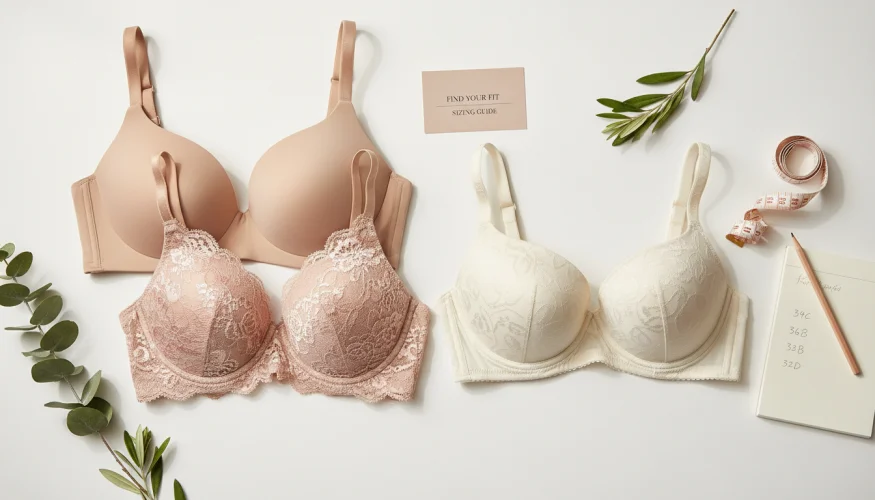
The good news is that finding the right bra size is not rocket science. All you need is a tape measure, paper and a pencil. The whole process consists of two basic measurements - the underbust circumference and the circumference across the fullest part of the breasts.
The first step is measuring the underbust circumference. Place the tape measure snugly just below the breasts, parallel to the ground, and measure the circumference in centimetres. The resulting number is the basis for determining the so-called band size - the numerical part of the size (for example 70, 75, 80 and so on). If you get an odd number, round up to the nearest even number.
The second step is measuring the circumference across the breasts. Run the tape measure across the fullest part of the breasts, again parallel to the ground. Try not to pull the tape too tight, but do not let it hang loosely either. The difference between this measurement and the underbust circumference then determines the cup size - the letter in the size designation (A, B, C, D and onwards). Every two centimetres of difference corresponds to approximately one letter: a difference of around 12 cm corresponds to an A cup, 14 cm to a B cup, 16 cm to a C cup, 18 cm to a D cup, and so on.
Imagine Martina, a thirty-four-year-old accountant from Brno, who had worn a 75B her whole life because that was the size a shop assistant measured her for when she made her first purchase at eighteen. After pregnancy and breastfeeding her figure changed, but she still reached for the same size out of habit. It was only when her back started hurting and the cups began to overflow that she had herself remeasured. The result? 75D - and a feeling like taking off tight shoes after a full day of walking.
This story is not exceptional. It is an experience shared by a surprisingly large number of women.
What to look out for when trying on a bra
Measuring yourself at home is a great start, but the real test always comes the moment you put the bra on. There are several simple signals that will tell you whether the size fits or whether you need to keep looking.
Start with the back fastening. The clasp should sit horizontally and should not ride up towards the shoulder blades. If it rides up, the bra's band size is too large. Fasten it on the loosest hook to begin with - as the bra gradually stretches with wear, you will be able to move to a tighter one.
Next, check the centre panel of the bra - the so-called gore, which connects the two cups. A properly fitting bra should have the gore lying flat against the sternum. If the gore gaps or lifts away, the cup is too small and the breasts do not fit inside it.
Straps also play an important role, but they bear less weight than most women think. The main support should be provided by the band, not the straps. This is why straps should not be pulled to their tightest - you should be able to slide them off your shoulder comfortably without the whole bra slipping down.
Also pay attention to what is happening with the cups. The breasts should be fully enclosed inside the cups, with no overflow at the top, sides or bottom. At the same time, the cups should not be too large, creating folds or air pockets. Both are a signal that you need a different size.
Interestingly, moving up to a larger cup size is often a psychological barrier for many women - the number or letter on the label seems "too big" to them. Yet the size designation is just a code, which moreover differs from brand to brand. A bra labelled 75C by one manufacturer may fit completely differently from the same size by another.
When size changes and why it is worth remeasuring
A woman's body changes many times throughout her life - and her bra size should change with it. Pregnancy and breastfeeding, changes in weight, hormonal fluctuations during the menstrual cycle, menopause, or even regular sport - all of these affect the shape and volume of the breasts as well as the band circumference. This is why experts recommend remeasuring approximately once a year or after any significant change in body shape.
It is also worth knowing that different types of bras fit differently. A seamless bra for everyday wear, a sports bra for physical activity, or a lace bra for special occasions - each type has a different cut and behaves differently on the body. What fits in one style does not necessarily fit in another, even if the size label is identical.
As fashion designer and inclusivity pioneer in the fashion industry Stella McCartney says: "Clothes should serve the body, not the body serve the clothes." This idea applies doubly to the bra - a piece of underwear that is in such close contact with the body throughout the entire day.
For those who prefer a sustainable approach to fashion and are looking for bras made from natural or organic materials, it is worth knowing that the range in this segment is growing rapidly. Bamboo, organic cotton or recycled materials offer a pleasant feel against the skin while also being gentle on the environment - and the right size is absolutely crucial for comfort in these styles too.
If you are unsure where to start, the sizing guide from the UK lingerie manufacturers' association may help - it brings together manufacturers and industry experts and offers detailed guides in an accessible format.
It is also important not to be discouraged by an initial unsuccessful attempt. Finding a bra that truly fits can sometimes take longer - different cuts, different materials, different cup shapes. Breasts are not symmetrical (which is completely normal), so you should always try a bra on both sides and be guided by how it fits on the larger breast.
A properly fitting bra should not be felt at all - that is perhaps the best way to describe it. No digging in, no chafing, no shifting throughout the day. Just quiet, reliable support that allows the body to function naturally. And that is exactly what every woman deserves - regardless of size, shape or age.