
Try dry brushing and the results will surprise you

Skin care has changed significantly in recent years. Where a shower gel and moisturiser once sufficed, people are now reaching for increasingly sophisticated rituals – and one that has truly secured a firm place in daily routines around the world is the dry brush, or dry brushing. You may have heard about it from a friend, come across it in an article about body detoxification, or spotted it in footage from some luxury wellness centre. But what actually lies behind it? Is it merely a passing trend, or does this technique have a genuine foundation?
The answer is not as straightforward as it might seem. Dry brushing has roots that stretch deep into the past – similar practices of dry rubbing and skin massage appear in Ayurvedic medicine under the name gharshana, in the Japanese tradition of kesho, and in ancient Greece, where athletes would scrape sweat and impurities from their bodies using special tools after exertion. The modern form of dry brushing spread primarily through wellness culture and an interest in natural body care methods that require no chemicals or complex procedures.
Try our natural products
What actually happens to the skin during dry brushing?
The basic principle is simple: using a brush with natural bristles, circular or straight strokes are made across dry skin, typically before showering. The mechanical friction simultaneously serves several functions. First and foremost, it acts as exfoliation – removing dead skin cells that naturally accumulate on the skin's surface and can cause roughness, dullness, or clogged pores. This effect is demonstrable and undoubtedly ranks among the most convincing arguments in favour of regular dry brushing.
Beyond the mechanical exfoliating effect, however, other benefits are also discussed – ones that are somewhat harder to substantiate but all the more widely debated. One of the most frequently mentioned is stimulation of the lymphatic system. The lymphatic system has no pump of its own like the heart and relies on muscle movement and external stimuli for lymph to circulate properly. Massaging the skin – and thus dry brushing – can support this flow, thereby contributing to the natural removal of waste substances from the body. According to experts at the Cleveland Clinic, gentle massage of the superficial lymph nodes can indeed assist their function, though it should be emphasised that dry brushing alone is not a therapeutic method.
Another frequently cited effect is improved blood circulation. The friction of the brush causes localised increased blood flow to the skin – this is in fact visible in the immediate reddening of the skin following the procedure. Improved circulation can then contribute to better delivery of nutrients and oxygen to the tissues, which has a positive effect on the overall appearance of the skin. Many women and men who practise dry brushing regularly describe their skin as feeling firmer and more vibrant – and while this is largely a subjective perception, there is a logical physiological basis behind it.
The most controversial claim associated with the dry brush is combating cellulite. The truth is that dry brushing will not eliminate cellulite – that would be an oversimplification of a complex problem rooted in subcutaneous fatty tissue and the connective structure of the skin. What it can do, however, is temporarily improve the appearance of the skin through better circulation and hydration, making cellulite less visible. It is therefore more of a visual effect than an actual elimination of the problem, but many people appreciate even this.
Consider Markéta, a thirty-year-old teacher from Brno, who discovered dry brushing while searching for natural methods to care for her increasingly dry and irritated skin. Initially she was sceptical – it seemed too simple to actually work. After three weeks of regular morning brushing, however, she noticed that her skin was smoother, less flaky, and that she felt more energised in the mornings. "I don't know whether it's the brush or the fact that I'm giving myself a few minutes to myself before the day begins," she says. And perhaps that is precisely where part of the magic lies – the ritual of self-care has its own value, regardless of what the studies say.
How to do dry brushing correctly so that it actually makes a difference
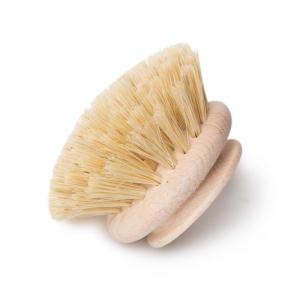
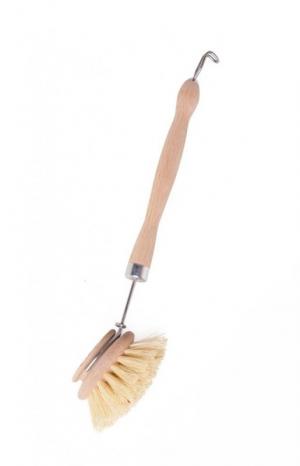
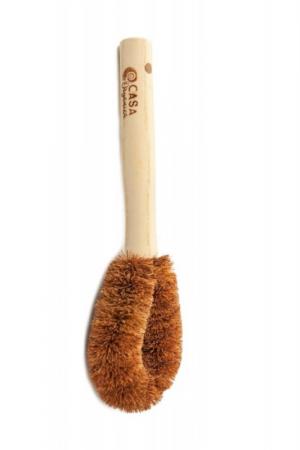
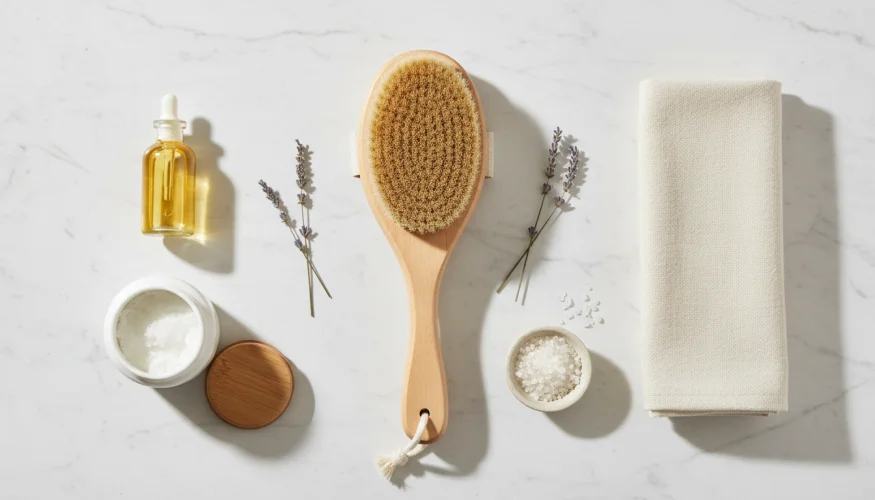
Technique and choosing the right tool are key. You should select a brush with natural bristles – ideally made from agave, sisal, or boar bristles – with a sufficiently long handle to comfortably reach your back. Synthetic bristles tend to be too hard and can irritate the skin, whereas natural materials are firm yet gentler at the same time. The stiffness should match the sensitivity of your skin: a softer option is recommended for beginners, allowing the body to gradually adjust.
The procedure itself is more intuitive than it appears. Dry brushing is performed on dry skin, always before showering, and the strokes should be directed from the periphery towards the heart – that is, from the feet upward along the legs, from the palms upward along the arms, and across the torso always towards the centre of the body. This naturally mirrors the direction of lymphatic flow. The strokes can be straight or circular, always with moderate pressure – the skin should be awakened, not hurt. Sensitive areas such as the inner thighs, the area around the breasts, or the neck require a gentler approach, and the face should not be treated with the brush at all – there are special gentle variants or other methods for that.
The entire procedure typically takes five to ten minutes, after which a shower follows – ideally with a gradual alternation of water temperature, which further enhances circulation. After the shower comes a key step that must not be skipped: thorough moisturisation of the skin. Freshly treated skin, stripped of dead cells, is at this point exceptionally well prepared to absorb active ingredients, meaning that applying body oil or cream has a far greater effect than usual. Natural oils such as jojoba, almond, or coconut are excellent choices.
Regarding frequency, dermatology specialists generally recommend starting with two to three times per week and monitoring your skin's response. People with dry or sensitive skin should be more cautious and preferably begin with once a week. Those with oilier or more resilient skin, on the other hand, can incorporate dry brushing into their daily morning routine. The important thing is to listen to your body – if the skin becomes red, starts to flake, or is painful after the procedure, this is a signal that the pressure is too strong or the frequency too high.
There are also situations when dry brushing is not appropriate. People with eczema, psoriasis, rosacea, open wounds, or very sensitive skin should consult a dermatologist before starting. Similarly, brushes should be kept away from areas with fresh scar tissue, sunburn, or sites of skin infection. Care for the brush itself is often underestimated – it should be cleaned regularly with soap and water and allowed to dry thoroughly to prevent the accumulation of bacteria.
It is interesting how dry brushing naturally connects with the broader trend of mindful body care and a sustainable lifestyle. Unlike many cosmetic products that generate plastic waste and contain synthetic ingredients, a dry brush made from natural materials is a tool that lasts for years, requires no chemical additives, and has a minimal environmental impact. This is precisely why it has been embraced by people seeking ways to care for themselves in harmony with nature. The World Health Organization and various environmental initiatives have long been highlighting the need to reduce the amount of chemicals in everyday products – and dry brushing is exactly the type of ritual that moves in this direction.
It is also noteworthy that dry brushing works wonderfully in combination with other natural body care practices. Many people complement it with oil massages, Epsom salt baths, contrast showers, or yoga exercises focused on the lymphatic system. Together they form a comprehensive approach to body care that requires no expensive equipment or specialist procedures – just a little time and a willingness to attend to oneself.
If you are therefore wondering whether to invest time and energy in dry brushing, the answer depends on what you expect from it. As a method of mechanical exfoliation of the skin, it works reliably and effectively. As support for blood circulation and the lymphatic system, it makes physiological sense, even though the degree of effect will vary from person to person. As a miracle cure for cellulite or a detoxification remedy, expectations should be approached with sobriety. And as a daily ritual that compels you to devote a few minutes to mindful care of your own body – that is perhaps the most valuable benefit of all.
A dry brush takes up little space, does not cost much, and requires no specialist knowledge. All it takes is a few minutes in the morning before the shower, the correct technique, and a degree of regularity – and the results will follow. After all, as the old saying goes: caring for your body is not a luxury, but a necessity.