

The lymphatic system wakes up more slowly in the morning, so a few gentle exercises and breathing ca
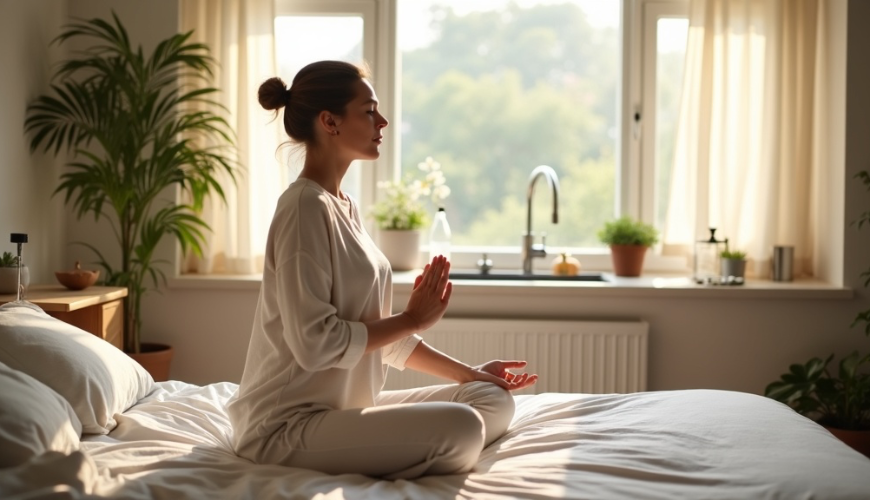
The morning can be surprisingly "quiet." Not just in the kitchen, where the coffee hasn't started bubbling yet, but also in the body: after the night, a person is stiffer, fingers may feel swollen, the face sometimes puffy, and the legs seem to need a moment before they get going. It's at this moment that the lymphatic system often reminds us of its presence – a subtle network that doesn't have its own "pump" like the heart, and therefore is more sensitive to movement and lymph support than other body systems. Just a few minutes can make a noticeable difference: lightness in the limbs, pleasant warmth, and sometimes even a better mood. Who wouldn't want to start the day feeling like their body has awakened along with their head?
Try our natural products




The Lymphatic System and How It Works: The Quiet Helper of Immunity and Fluid Balance
The functioning of the lymphatic system can be likened to a smart service network. Lymph flows through the vessels, helping to drain excess fluid from tissues back into the bloodstream, transporting some fats from the intestines, and is also a crucial part of immunity – in lymph nodes, it is "filtered" and assessed for what belongs in the body and what doesn't. If this sounds like complex biology, it actually has a very practical impact: when lymph flows smoothly, the body manages fluids more easily and can respond more swiftly to stress.
The fundamental difference compared to the circulatory system is that lymph doesn't have a central pump. Its flow is primarily supported by muscle contractions, joint movements, diaphragm work during breathing, and also "one-way" valves in the lymphatic vessels. After a night – when a person hasn't moved for several hours – it's logical to feel stiffness or slight swelling. It doesn't automatically mean a problem; often, it's just a signal that the body appreciates a gentle start.
For basic orientation, reliable sources are helpful. A good, understandable explanation of the lymphatic system's role is offered by Cleveland Clinic or a comprehensive summary on Britannica. These aren't the only truths, but they are solid reference points when one wants to ensure they're dealing with reality, not myths.
And myths around lymph exist. There's often talk of "clogged lymph" or miraculous detoxes. The body has its own natural mechanisms for removing waste products, and lymph is just one part of a complex system. It makes even more sense to rely on simple, long-term sustainable habits: movement, hydration, quality sleep, and reasonable stress. A morning mini-ritual is surprisingly powerful in this regard.
Exercises to Stimulate Lymph Flow in the Morning: Gentle but Regular
Morning exercises to stimulate lymph flow don't have to look like a workout. Quite the opposite: lymph responds well to gentle repetitive movements that "squeeze" the muscles and mobilize the joints, and to calm deep breathing. Regularity is important, as is ensuring that one doesn't overexert themselves right after waking up. The goal isn't performance but a pleasant start.
To imagine how this might work in everyday life, consider a simple example: office work, long sitting, a quick morning shower, and then jumping on a tram. A typical reader's situation: you get up, feel "heavy" legs, the ring is harder to remove from your finger than usual, and the face in the mirror looks tired. When you add five to eight minutes of movement – a few deep breaths, ankle circles, a few heel raises, gentle stretches – the body often rewards you with a feeling of lightness. Not because it has "miraculously cleaned itself," but because muscle activity increases and fluids begin to redistribute naturally.
Safety should also be kept in mind. If significant unilateral swelling, pain, sudden shortness of breath, or unusual changes occur, it is advisable to consult a doctor. Morning mobilization is a great habit but not a substitute for medical care.
Tips for Specific Exercises to 'Wake Up' Lymph
Below is a practical, simple block that can be done at home by the bed or in the living room, without any equipment. Ideally, practice slowly, smoothly, without jerks. And if the morning is hectic, even half of it is fine – two minutes still make a difference.
1) Diaphragmatic Breathing (1 minute)
Lie on your back or sit on the edge of the bed, relax your shoulders, and place one hand on your abdomen. Inhale through the nose "into the belly" (the belly rises), exhale through the mouth or nose (the belly falls). It's not about setting a record for breath length but about calm and rhythm. Diaphragm work is important for lymph because it changes the pressure in the chest and abdomen, supporting fluid flow.
2) "Pumping" Ankles (30–60 seconds each leg)
Lying or sitting, stretch the leg and alternately pull the toes towards you and push them away, as if pressing a gas pedal. Ankles are often the first place where fluids "linger," and this simple movement can do surprisingly much. It's important to feel the calf working – calf muscles function as a natural pump.
3) Wrist Circles and Opening Hands (1 minute)
Sitting or standing, circle the wrists in both directions, then clench and open the hands several times. It's a small thing, but for people who feel stiff fingers or tension in the forearms in the morning, it's a pleasant start. Moreover, it subtly mobilizes the shoulders as well.
4) Shoulder Circles and 'Angel' on the Wall (1–2 minutes)
Arms relaxed along the body, circle the shoulders backward and forward a few times. Then stand against the wall, lean your whole back against it, and slowly move your arms up and down the wall (like a snow angel), just to a comfortable range. The neck, collarbone, and armpit area is often mentioned for lymph flow because there are many nodes. It's not about pressure or massage, but about relaxation and movement in the shoulder girdle.
5) Cat-Cow (Spine Mobility) (1–2 minutes)
On all fours, hands under shoulders, knees under hips. Inhale, arch the back and lift the head (just gently), exhale, round the back and tuck the pelvis. The movement is smooth, without pain. This wakes up the whole body – and since lymph responds to movement, gentle trunk mobilization is a great foundation.
6) Heel Raises (30–60 seconds)
Stand up, ideally holding onto a chair or wall slightly. Slowly lift the heels and lower them again. For those who wish, short "bouncing" in a small range can be added but without stomping. This exercise is simple but very effective for stimulating lymph flow in the legs – calves work, ankles move, the body warms up.
7) Gentle Squats or "Sit-Stand" from a Chair (1 minute)
Instead of deep squats, just a few repetitions of sitting down on a chair and standing up again, slowly, with a straight back. Large muscle groups are engaged, and the body gets the signal: "the day has started." If knees protest, a smaller range or just shifting weight from side to side while standing is sufficient.
"The best movement is the one that can be done regularly."
This sentence applies doubly to lymph. A short daily ritual often has a greater effect than a one-off hour-long grind, which the body accepts without resistance.
How to Support Lymph Beyond Exercise: Small Habits, Big Difference
Morning exercises are a great start, but lymph isn't just a "morning issue." Its flow depends on what the whole day looks like: how much sitting occurs, how often one walks, how breathing is managed during stress, whether the body receives fluids, and whether there's space for regeneration. The good news is that support doesn't have to be complicated or expensive.
A lot can be achieved with simple walking. When talking about lymph needing movement, it often refers to regular steps. If it's possible to get off one stop earlier, take the stairs, or have a ten-minute walk after lunch, the body usually appreciates it. Sometimes even "micro-movement" helps: standing up every 45–60 minutes, stretching, doing a few heel raises. Lymph likes rhythm.
Another often underestimated factor is hydration. It's not about forcing a liter of water down in the morning but having a consistent drinking schedule. Lymph is a fluid, and the body manages fluids as a whole. When a person is chronically dehydrated, it usually shows everywhere – from energy levels to skin. It's practical to have a glass of water handy right after waking up and then drink regularly throughout the day.
Then there's stress and breathing. In tension, breathing shortens, shoulders rise, the diaphragm works less. Yet, calmer deeper breathing is one of the simplest ways to help the body. There's no need for an hour-long meditation; sometimes three conscious breaths at an open window before the morning rush are enough. The rhetorical question arises naturally: how often does one breathe deeply in the morning, not just "halfway"?
It's typical from real life that people want quick fixes – preferably "something to get rid of water retention." But the body is not a weekend project. If swelling appears mainly after long sitting, often a combination of movement and regularity helps more than drastic measures. Someone might get used to doing a short routine in the morning, getting off a stop earlier on the way to work, and putting their feet up for a while in the evening. After a few weeks, there's usually a difference not only in the feeling of lightness but also in how easy it is to get up in the morning.
The home environment also plays a role. When it's easy to do a few exercises in the morning, there's a greater chance that it becomes a habit. It helps to have comfortable clothes handy, a pleasant space, and perhaps a small motivator – a water bottle, a mat, an open window. And since Ferwer revolves around sustainable and gentle choices, it makes sense to remind that even in movement, one can live "ecologically": the most gentle training tool is often one's own body, and the most accessible "fitness" is simple walking.
When morning mobilization becomes part of the routine, it stops being a task and starts being a small comfort. Something like washing your face with cold water or opening the window to let in the air. The lymphatic system may not be visible, but it can show when given what it needs most: movement, breath, and a regular daily rhythm. And the morning is the ideal time for it – short, subtle, but surprisingly effective.