
# Signs of Poor Vision in a Child That You Can Recognize Before School Does
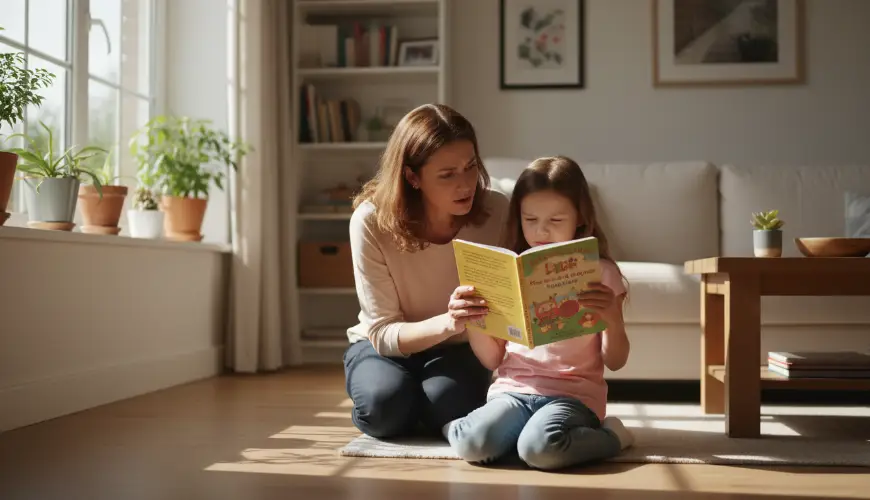
Every parent wants their child to thrive – at school, in sports, in friendships. Few people realise, however, what a crucial role vision plays in all of this. Vision problems in children are surprisingly common and at the same time surprisingly overlooked – precisely because children themselves very often have no idea that they see differently from others. They simply don't know how they should be seeing, and so they adapt as best they can.
School check-ups and preventive examinations with a paediatrician reveal a great deal – but they don't always come in time. A child may spend years sitting in a classroom squinting at the board, without any of the adults around them pausing to wonder why reading is so difficult for them or why they dislike drawing. The symptoms of vision problems are, in fact, very easily mistaken for tiredness, laziness, attention disorders, or even behavioural issues.
Try our natural products



Signals that parents easily overlook
Imagine seven-year-old Terezka, who starts first grade full of excitement. It soon becomes apparent, however, that she doesn't enjoy reading, the letters blur together, and after a short while sitting with a book she gets a headache. Her teacher thinks she is unfocused. Her parents think it's a matter of adjustment. In reality, Terezka has farsightedness that has not yet been diagnosed. Only after a visit to an eye doctor does it become clear that glasses are all she needs – and suddenly reading becomes enjoyable.
There are thousands of stories like this. The key is knowing how to recognise the warning signs before the problem affects a child's academic performance or their relationship with learning.
One of the most common symptoms is squinting or narrowing the eyes. A child who squints while watching television, looking at more distant objects, or reading the board is unconsciously trying to bring the image into focus. Equally common is tilting the head to one side or turning the head when looking at certain objects – the brain is attempting in this way to compensate for what the eye cannot process correctly.
Another signal is frequently rubbing the eyes – and not only when tired, but also in the middle of the day, while reading or drawing. Parents may easily attribute this to allergies or lack of sleep, but if the rubbing recurs regularly and in connection with visual activities, it is worth paying attention. Similarly, headaches after reading or drawing should not go unnoticed – while headaches are fairly common in children, if they are specifically linked to visual strain, this is a warning sign.
An interesting but less obvious symptom is when a child holds a book or tablet very close to their face – or, conversely, very far away. Both extremes may suggest that the eye is unable to focus at a standard distance. Similarly, if a child watching television automatically seeks out a spot as close to the screen as possible, this may be a sign of short-sightedness.
It is also worth mentioning less obvious manifestations, such as avoiding activities that require visual precision – puzzles, building sets, reading, drawing, or ball games. A child who refuses these activities or gives up on them quickly is not necessarily uninterested or restless. It may be an unconscious strategy to avoid unpleasant visual experiences that cause them discomfort or pain.
When to visit an eye doctor and not wait for a school check-up
The Czech Republic has a fairly well-established system of preventive examinations. The State Health Institute recommends regular paediatric check-ups during which vision is assessed in an orientation test. Experts warn, however, that these orientation tests may not detect all types of vision problems – particularly those that manifest more subtly, such as binocular vision disorders, astigmatism, or early-stage strabismus.
Every child should have a specialist eye examination no later than before starting school, ideally between the ages of four and six. However, if vision problems occur in parents or siblings, it is advisable to visit an eye doctor even earlier – heredity plays a very significant role in both short-sightedness and farsightedness. According to research published in the journal Ophthalmology, a child whose both parents are short-sighted has more than six times the risk of developing short-sightedness compared to a child with no family history.
School check-ups are valuable, but they have their limitations. They are usually carried out by paediatricians or nurses using the Snellen chart, which tests primarily distance visual acuity. A wide range of vision problems – such as convergence insufficiency, which causes difficulties with reading, or amblyopia (so-called "lazy eye") – may pass undetected by this test.
As American eye doctor and paediatric optometry specialist Dr Leonard Press said: "A child who sees 100% on the Snellen chart may still have serious vision problems that make reading and learning difficult." These words serve as a reminder that a good result on an orientation test does not automatically mean that everything is fine.
There are situations in which parents should not wait for a scheduled check-up or for the start of the school year. If a parent notices that one of their child's eyes is deviating – either inward or outward – it is essential to see a specialist as soon as possible. Strabismus, especially at an early age, can lead to permanent vision damage if not treated in time. The brain learns to suppress the signal from the deviating eye, which then gradually "forgets" how to see. This condition is reversible, but only up to a certain age – ideally before the age of six to eight.
Equally urgent is the situation where a child suddenly begins to see double, complains of blurred vision, or if a parent notices a white reflection in the pupil in a photograph (known as leukocoria). The last-mentioned symptom is most often caused by an innocent reason, but in some cases it may signal a serious condition such as retinoblastoma – a malignant tumour of the retina. Here too, the rule applies: a needless visit to the doctor is better than a missed diagnosis.
What parents can do for their child's eye health
Prevention and early detection go hand in hand. Alongside regular medical check-ups, there are a number of things parents can influence in their child's everyday life.
Spending time outdoors has a demonstrably protective effect against the development of short-sightedness. A study published in the British Journal of Ophthalmology showed that children who spend at least two hours outdoors each day have a significantly lower risk of developing short-sightedness than their peers who spend most of their time indoors. Natural daylight stimulates the release of dopamine in the retina, which slows the elongation of the eyeball – this is precisely the mechanism by which short-sightedness develops.
Equally important is ensuring proper lighting when reading and drawing. A child should never read in dim light or with direct light shining into their eyes. Ideal lighting is indirect and evenly distributed across the entire workspace. The correct distance from a book or screen – approximately 30 to 40 centimetres – and regular breaks every 20 minutes, during which the child looks at a distant object for at least 20 seconds, are simple but effective measures.
In today's age of digital technology, the influence of screens cannot be overlooked. Tablets, phones, and computers have become a natural part of children's lives. The World Health Organisation recommends a maximum of one hour of screen time per day for children under five, and for older children, regular breaks and an overall reduction in passive time spent in front of displays. This is not just about short-sightedness – prolonged screen use causes dry eye syndrome, fatigue, and headaches that can mimic the symptoms of vision problems.
Nutrition also plays a role in caring for a child's eyesight, even if it is often underestimated. Vitamin A, lutein, zeaxanthin, and omega-3 fatty acids are nutrients that contribute to the health of the retina and the overall function of the eye. Carrots, spinach, eggs, fish, and nuts are natural sources of these substances that should not be absent from a growing child's diet. For families looking for dietary supplements focused on supporting healthy vision, the natural products market offers a wide range of options – what matters, however, is always to choose high-quality, certified preparations.
It is also worth paying attention to how a child sits at a desk. Leaning forward, bringing their face close to a book, or twisting their body when looking at the board are postures that may be a direct response to a vision problem. Parents who notice these habits should not immediately correct them as "poor posture", but rather consider whether they might be a compensatory strategy caused by visual difficulties.
Finally, perhaps the most important thing is: talking openly with the child and without dramatisation. Asking them whether they can see the board clearly, whether their eyes hurt when reading, whether they sometimes see blurrily. Young children very often do not know how to describe their difficulties – and if no one asks, they simply stay silent. Older children, meanwhile, may deliberately conceal problems out of fear of glasses or of being different from their classmates. Normalising eye care as a natural part of health – just like dental care or regular physical activity – is something a family can do without medical training and without any cost.
Vision is the sense that children use most when discovering the world and when learning. It is estimated that approximately 80% of all information is perceived through sight, and yet, within the framework of children's healthcare, it receives far less attention than, for example, dental health or the musculoskeletal system. Changing this approach – being attentive, asking questions, and acting preventively – is the simplest way to give a child an equal start in both school and personal life.