

Tulsi tea improves sleep and concentration

There are plants that transcend their botanical origins and become part of the culture, spiritual life, and everyday medicine of entire civilizations. Tulsi, also known as holy basil or Ocimum tenuiflorum, is one of them. In India, it has been regarded for thousands of years as the sacred plant of the goddess Lakshmi, grown in front of homes as a protective symbol, and used to prepare tea that, according to Ayurvedic tradition, holds healing power over both body and mind. Today, this humble herb is attracting the attention of modern science, which is gradually confirming what Indian healers have long known – tulsi tea can be an effective aid in managing everyday stress.
It is no wonder that interest in adaptogenic herbs has grown sharply in recent years. We live in an era when chronic stress is considered one of the greatest health problems of our time. The World Health Organization has described it as a global epidemic of the 21st century, and its effects range from sleep disorders and anxiety to cardiovascular disease. Finding natural, non-pharmaceutical ways to help the body cope with stress is thus becoming not merely a fashionable trend, but a genuine health necessity.
Try our natural products




What is tulsi and why is it called sacred?
Tulsi is not just one plant – there are several varieties, the most widespread of which are Vana tulsi (forest basil with a delicate, citrusy fragrance), Rama tulsi (light green, with a mild flavour), and Krishna tulsi (dark purple, more pronounced and spicy). Each has a slightly different flavour profile, but all share similar medicinal properties. In Ayurveda, the traditional Indian system of medicine, tulsi is classified among the so-called rasayana – herbs that support longevity, vitality, and the overall balance of the organism.
The name "sacred" is not merely a poetic epithet. In the Hindu tradition, tulsi is cultivated in home gardens and temples, watered and venerated daily. It is believed that the presence of the plant purifies the air and the mind, brings blessings, and protects the family. This symbolic value naturally reflected the deep empirical experience of generations who noticed that regular consumption of tulsi tea had demonstrable effects on wellbeing and resistance to illness.
Modern botany and pharmacology do not contradict this tradition – rather, they complement it. The plant contains a wide range of biologically active compounds – eugenol, rosmarinic acid, ursolic acid, various flavonoids, and essential oils. It is precisely the combination of these substances that underlies its adaptogenic action. An adaptogen is a term for substances that help the organism adapt to both physical and psychological stress without disrupting its natural balance. Alongside tulsi, this group includes ashwagandha, rhodiola, and ginseng, among others.
A compelling overview of research on tulsi is provided by a study published in the Journal of Ayurveda and Integrative Medicine, which summarises dozens of clinical and laboratory studies and describes the herb as a "herb for all reasons" with proven anti-stress, anti-inflammatory, and immunomodulatory effects.
How does tulsi act on stress and the nervous system?
To understand why holy basil tea helps with stress, it is useful to briefly consider what actually happens in the body during stress. When we face a burden – whether it is work pressure, family conflict, or chronic uncertainty – a cascade of hormonal reactions is triggered in the body. The adrenal glands begin producing cortisol and adrenaline, the heart beats faster, muscles tense, and digestion slows. In the short term, this response is useful, but if it persists for weeks and months, it destroys the body from within.
Tulsi intervenes in this process at several levels. Research shows that the compounds contained in the plant help regulate cortisol levels, support adrenal function, and modulate the activity of the nervous system towards greater balance between its sympathetic (activating) and parasympathetic (calming) branches. In other words, regularly drinking tulsi tea can help the body switch from "fight or flight" mode to "rest and digest" mode.
Also noteworthy are the results of studies focused on cognitive function. Research published in the Indian Journal of Ayurveda and Integrative Medicine found that regular consumption of tulsi extract improved participants' memory, concentration, and reaction time – not only compared to a placebo, but also in absolute terms. This effect is attributed, among other things, to the nootropic properties of eugenol and tulsi's ability to protect neurons from oxidative stress.
The direct influence on sleep quality must not be overlooked either. Chronic stress and insomnia form a vicious cycle – one problem deepens the other. Tulsi tea, especially when drunk in the evening, can, thanks to its mildly sedative properties, help calm the mind and make it easier to fall asleep. Many regular consumers report that after a few weeks of drinking this tea regularly, the quality of their sleep and their overall ability to cope with daily demands improved significantly.
Consider Markéta, a forty-five-year-old manager from Prague who had long struggled with a feeling of overwhelm, morning fatigue, and an inability to "switch off" after a demanding working day. On the recommendation of her doctor, who has an interest in integrative medicine, she began drinking a cup of tulsi tea every evening. After three weeks, she noticed that she fell asleep more easily, felt less exhausted in the mornings, and coped better with situations that had previously put her under pressure immediately. Of course, the tea was not the only change in her life – she also adjusted her diet and started going for walks – but tulsi became a firm part of her evening routine.
How to prepare holy basil tea and what to expect from it?
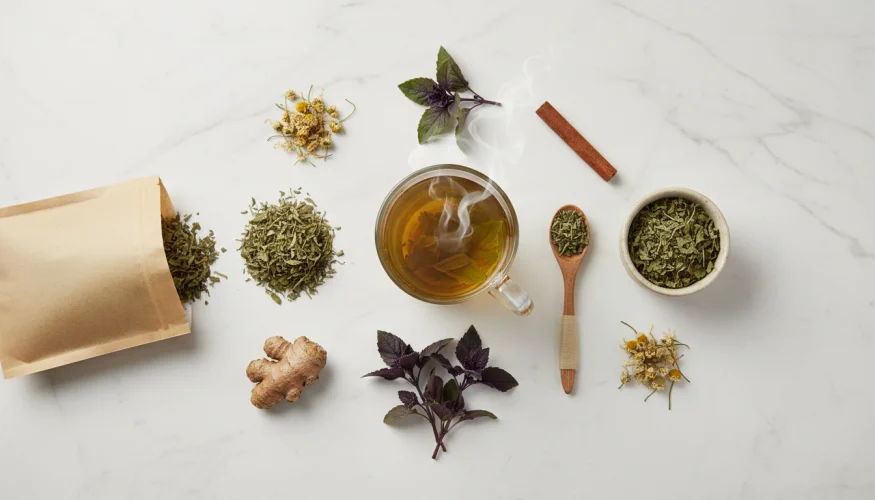
Preparing tulsi tea is simple and requires no special equipment. Dried tulsi leaves (or tea bags) are steeped in hot water at approximately 90–95 °C for 5 to 10 minutes. The longer the tea steeps, the more intense its flavour and effects. The flavour profile is interesting and surprising for many – tulsi does not taste like the classic Italian basil used in cooking, but rather like a combination of cloves, pepper, mint, and herbal earthiness with a slightly sweet undertone. Some compare it to clove tea or a mildly spicy green tea.
As herbalist and author David Winston has noted: "Tulsi is one of the few herbs that acts on body and mind simultaneously, without making a person drowsy or, conversely, stimulating them beyond a bearable degree." It is precisely this gentle balance that makes tulsi an ideal choice for people seeking natural support without the unwanted side effects of stronger adaptogens.
Tulsi tea can easily be combined with other herbs. Popular combinations include:
- tulsi and ginger – to support digestion and warm the body during cold months
- tulsi and chamomile – an ideal evening blend for calming the nervous system and promoting better sleep
- tulsi and lemongrass – a refreshing combination with a light citrus aroma, suitable as a coffee substitute
- tulsi and cinnamon – an aromatic blend that supports immunity and blood sugar
Regarding dosage, experts generally recommend one to three cups per day. Results are not immediate – as with most adaptogenic herbs, it is necessary to allow for regular consumption over at least three to four weeks for the full effect to become apparent. The body gradually "acclimatises" to the herb and its effects deepen over time.
As far as safety is concerned, tulsi is generally regarded as a very safe herb with minimal risk of side effects at normal levels of use. Nevertheless, caution is advisable for pregnant women (in high doses it may affect the uterus), for people taking blood-thinning medications (eugenol can mildly affect coagulation), and for diabetics monitoring blood sugar levels. In cases of doubt, it is always sensible to consult a doctor or pharmacist before taking herbs regularly.
Interest in tulsi in the Czech Republic and across Europe is growing markedly, in step with the broader trend towards natural, sustainable, and consciously chosen foods and supplements. The highest-quality tulsi comes from organic farming, ideally certified, where the plants are not treated with synthetic pesticides that could neutralise their natural medicinal properties. When choosing tea or dried herb, it is worth paying attention to the origin, the method of cultivation, and whether the producer specifies which variety of tulsi is involved.
Tulsi thus represents not merely a fashionable lifestyle supplement, but a genuine herb with a thousand-year tradition and a growing body of scientific support. At a time when stress is among the most common health complaints and when people are increasingly seeking natural paths to balance, a cup of holy basil tea offers something rare – simplicity, efficacy, and a deep rootedness in wisdom that has survived the centuries.