
# Try Frog Stretch for Stiff Hips and Groin
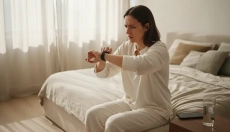
Modern lifestyle makes our existence easier in many ways, but it is slowly and insidiously destroying us in one respect – it forces us to sit. Hours spent at the computer, long car journeys, evenings on the sofa in front of the television. The result? Stiff hips and groins, which then make their displeasure known with every sudden movement, climbing stairs, or in the morning when we get out of bed and the first steps resemble a robot's gait rather than a human's. Yet there is one of the most effective stretching exercises that can systematically address this problem – and it is called the frog stretch.
The hip joints are among the largest and most heavily loaded joints in the human body. They are the centre of all movement – connecting the trunk with the lower limbs and bearing the weight of the entire body during walking, running and standing. But precisely because they are so important, their stiffness affects practically everything. Back pain, poor posture, limited mobility or even knee pain – many of these complaints stem from insufficiently released hips and shortened muscles in the groin area. According to experts at the Mayo Clinic, regular hip stretching is one of the key preventive measures against chronic lower back pain, which affects a large proportion of the adult population.
Try our natural products




Why the frog stretch in particular?
The frog stretch is nothing new – it draws on the principles of yoga and movement therapies that are hundreds of years old. Nevertheless, it has gained enormous popularity in recent years, particularly among athletes, physiotherapists and people engaged in functional training. The reason is simple: it is one of the few exercises capable of working simultaneously with the internal hip rotators, thigh adductors and hip flexors – that is, all the muscle groups that suffer most from prolonged sitting.
The exercise takes its name from the position the practitioner assumes – with knees spread to the sides and feet behind them, the person's silhouette resembles a frog. This position naturally opens the hip joint into abduction and external rotation, releasing tension in places that most other exercises cannot reach. It is no coincidence that the frog stretch is a staple in the preparation of competitive weightlifters, gymnasts and dancers – all those who require maximum hip mobility.
Consider Martina, a thirty-year-old accountant who spends eight hours a day at a computer. After several months, she began to suffer from a dull ache in her left hip and occasional stabbing sensations in her groin. An orthopaedist ruled out structural damage and recommended movement therapy focused on releasing the hip joint. Her physiotherapist prescribed the frog stretch as one of the primary exercises. Martina began practising it every morning for five minutes, and after three weeks she admitted that the pain had virtually disappeared and her movement had become significantly freer. There are thousands of such stories – and they are no coincidence.
How to perform the frog stretch correctly depends on the version you choose. There are various variants adapted to different levels of mobility. The basic static version is suitable for complete beginners, while the dynamic variant is for those who want to actively warm up their hips before training.
How to perform the frog stretch correctly
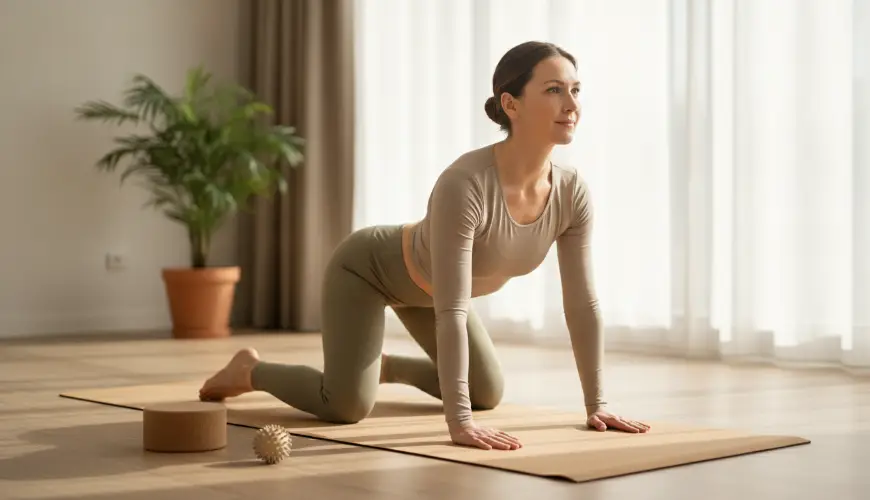
The basic position looks like this: the practitioner kneels on four points of support – hands and knees – on a mat or softer surface. The knees are gradually spread to the sides as far as mobility allows, with the feet remaining behind the knees and turned outward in line with the shins. The hips then slowly slide backward and downward, deepening the stretch in the groin and inner thighs. The back should remain straight, and the lumbar spine should not arch excessively – this is the most common mistake beginners make.
In the static version, the end position is held for 30 to 90 seconds, with focus on consciously releasing tension with each exhale. Physiotherapists recommend imagining that with each exhale the muscles "melt" and the hips move deeper into the stretch on their own – without forceful pushing. As the well-known sports physiotherapist Kelly Starrett says: "Mobility is not about how far you get once. It's about how consistently you work on releasing tension every day."
The dynamic version of the frog stretch adds movement: from the starting position, the practitioner rhythmically shifts the hips backward and forward, actively taking the hip joint through its full range of motion. This variant is ideal as part of a warm-up before sport – it increases blood flow to the muscles, activates hip stabilisers and prepares the joint for load. Experts in the field of sports medicine, such as those at the National Academy of Sports Medicine, recommend incorporating dynamic stretching before physical activity, while static variants are more suitable after training or as a standalone movement routine.
For those with more significant mobility limitations or knee pain, there is also a modified version performed lying on the back. In this version, the feet are placed together and the knees are allowed to fall naturally to the sides – this position is less intense but still effectively works the inner thighs and hip flexors. It is suitable, for example, for pregnant women, older practitioners, or as a first step for those just beginning to explore hip stretching.
An important part of the whole process is regularity. A single stretch will bring temporary relief, but real changes in mobility only occur after several weeks of consistent practice. Research shows that visible changes in the range of hip joint motion occur after approximately four to six weeks of regular stretching, with an optimal frequency of four to five times per week. The body needs time for connective tissues, fascia and muscle fibres to adapt to new demands.
The frog stretch naturally complements other exercises targeting the hips and pelvis. A lunge with trunk rotation, the yoga pigeon pose stretch, or the classic hip flexor stretch are its natural companions, together forming comprehensive care for the hip area. Many movement therapists recommend putting together a short morning routine lasting 10 to 15 minutes that combines these exercises – the result is not only better mobility but also a significantly more pleasant start to the day.
Interestingly, stiffness in the hips and groin is not exclusively a problem for people with sedentary jobs. Paradoxically, it is also very common among athletes – specifically runners, cyclists or footballers, whose movement patterns are one-sided and repetitive. Their hip flexors are often chronically shortened from repeated movement within a limited range, without any regular stretching taking place. The frog stretch is therefore not merely a rehabilitation tool, but a genuine means of preventing injury and overuse.
Beyond the physical aspect, regular stretching also has a less obvious but equally important impact on the mind. According to some somatic therapists and body-oriented psychologists, emotional tension is stored in the hip and pelvic region – stress, anxiety and suppressed emotions literally accumulate in the muscles. Whether or not one subscribes to this view, the experience of many practitioners suggests that deep hip stretching brings a sense of release that goes beyond the purely physical. It is not uncommon for some people to experience unexpected emotions or a profound release of tension they were not even aware they were carrying during an intense hip stretch.
When performing the frog stretch, several safety guidelines should be kept in mind. The exercise should not cause sharp or piercing pain – mild discomfort and a feeling of pulling are normal, but pain is a signal that the body is being overloaded or that the technique is incorrect. People with a diagnosed hip joint injury, following hip surgery, or with acute inflammation should consult a physiotherapist or orthopaedist before starting. It is equally important to note that exercising on a hard floor without a mat unnecessarily strains the knees – a quality yoga or exercise mat is a genuine necessity in this case, not a luxury.
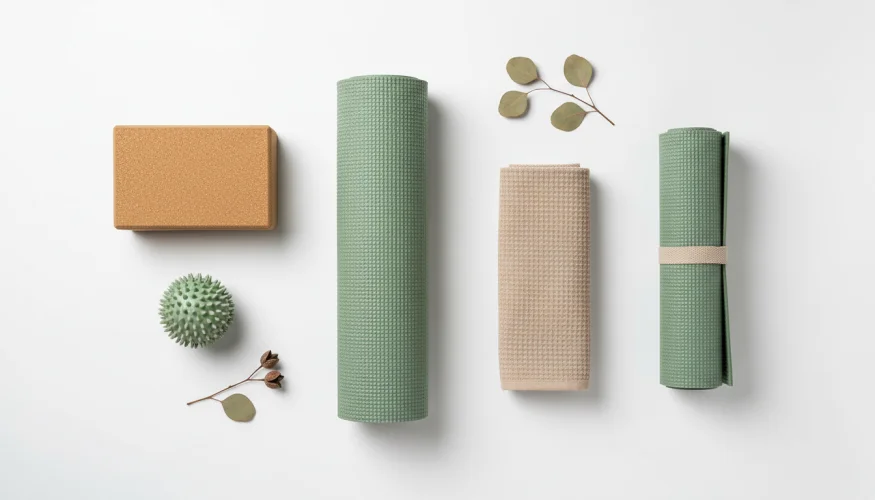
The right equipment need not mean significant expense. A thin, lightweight travel mat that fits in a backpack, or a firmer mat for home use – both will serve their purpose reliably. For those who wish to incorporate accessories into their stretching routine, a yoga block under the hips for the modified version or a massage ball for releasing tight fascia before the exercise itself can be useful.
It is remarkable how small an investment of time and effort can bring about such a significant change in the everyday quality of movement. Five to ten minutes a day devoted to the frog stretch and accompanying exercises is enough for the hips to gradually open up, the groins to ease, and movement to become natural and pain-free once again. At a time when many people seek complex solutions to simple problems, it is refreshing to know that sometimes all it takes is to sit down on a mat, spread the knees to the sides, and simply breathe.