
# How to Hygienically Clean LEGO and Wooden Toys After Illness ## ???? LEGO (Plastic Toys) ### Bas
Every parent knows it – barely does it seem that the flu season has finally passed, when the child starts coughing and sniffling again, and you look at the pile of toys scattered all over the living room, wondering whether it is right here, on those building blocks and wooden trains, that the germs of the next round of illness are surviving. This concern is not exaggerated. Scientists from the University of Valencia have demonstrated that viruses and bacteria can survive on the surfaces of plastic toys for several hours to days, while wood exhibits a certain antimicrobial activity due to its natural properties – yet even wooden toys are not immune to the accumulation of dirt and pathogens.
Proper hygienic cleaning of toys after illness is not just a matter of tidiness. It is a matter of the health of the whole family. And yet it is a topic that parents often approach intuitively and frequently incorrectly – either dousing toys with aggressive chemical products that can be harmful to young children, or wiping them with a damp cloth and being satisfied that they look clean. Neither approach is ideal.
Try our natural products
Why cleaning toys after illness is so important
Toys are the whole world to children. Lego bricks travel from hand to mouth, wooden building sets get licked, figurines are squeezed in palms for hours. This is precisely why they become one of the most significant vectors for the transmission of infectious diseases in the home, especially in households with multiple children. A study published in the specialist journal Pediatric Infectious Disease Journal showed that shared toys in play areas are one of the key sites for the spread of both respiratory viruses and intestinal infections.
When a child goes through an illness – whether it is tonsillitis, flu, a stomach virus, or even pneumonia – it is important, once symptoms have subsided, to carry out thorough hygienic cleaning of the entire environment in which they have been spending time. And toys are one of the most frequently overlooked categories in this process. A parent will typically wash the bedding, clean the toilet, and replace the toothbrush – but the pile of Lego on the carpet is left untouched.
Yet Lego bricks and similar plastic construction sets are actually quite demanding from a hygiene standpoint. They have many crevices, grooves, and protrusions where not only dust but also organic residue can accumulate – saliva, food, and pathogens. And wooden toys, on the other hand, cannot tolerate excessive moisture, so their cleaning requires a different approach than plastic.
Let us take a specific example from everyday life: Petra, a mother from Brno, describes how her three-year-old son had a rotavirus infection. After his recovery, she thoroughly cleaned the bathroom and kitchen, but forgot about the toys. A week later, she fell ill herself. Looking back, she realised that every day after her son's recovery she had been tidying his toys – and in doing so, was mechanically putting them near her mouth or transferring germs to her face by rubbing her hands on it. A simple disinfection of the toys could have resolved the entire situation.
How to clean Lego and plastic toys
Plastic toys, and Lego bricks in particular, have the advantage of tolerating contact with water and, in most cases, mild disinfectants as well. Nevertheless, it is important to proceed with care, as aggressive chemicals can degrade plastic, leave residues, or cause discolouration.
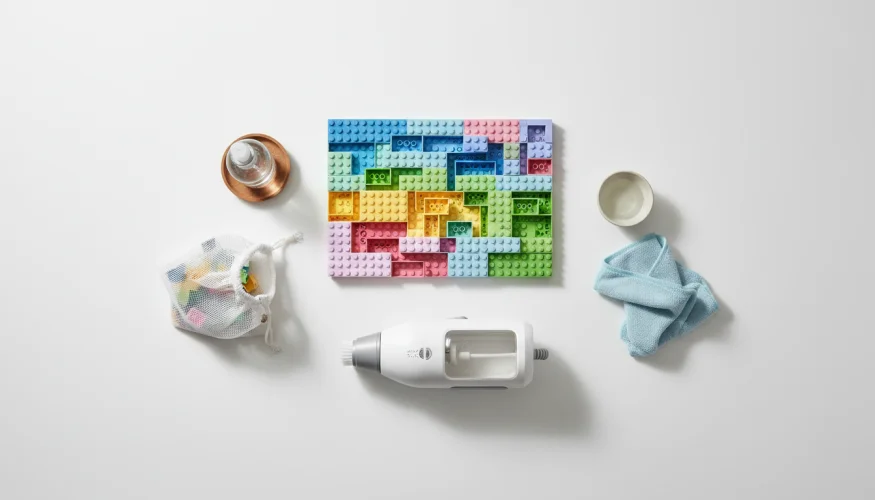
The most effective and at the same time safest method for hygienic cleaning of Lego after illness is washing in a dishwasher at a lower temperature – ideally around 50–60°C. The bricks can be placed in a mesh laundry bag so they do not get lost in the dishwasher, and the results are surprisingly good. Hot water reliably destroys most common pathogens while also removing mechanical dirt.
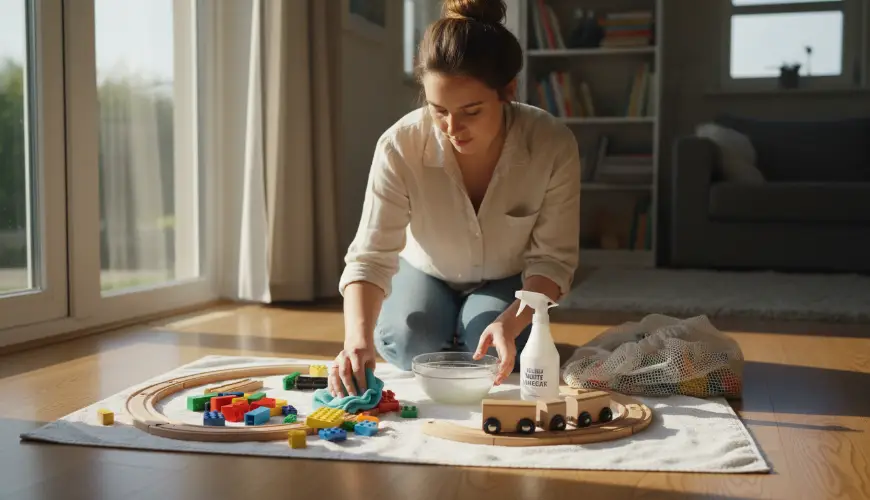
If you do not have a dishwasher or want to be even more thorough, Lego can be soaked in a solution of warm water with a small amount of gentle eco-friendly washing-up liquid or with the addition of vinegar, which acts as a natural disinfectant. Vinegar (acetic acid at a concentration of around 5–8%) is capable of inactivating a range of viruses and bacteria, while being safe for children and for plastic. After soaking for 15–20 minutes, it is sufficient to rinse the toys with clean water and allow them to dry thoroughly – ideally in the sun, as UV radiation also has disinfecting effects.
What not to do: do not use chlorine-based products or aggressive alcohol-based disinfectants at high concentrations directly on coloured plastic toys. They can cause discolouration, a dull surface finish, or even the release of microplastics. If you do reach for a disinfectant product, choose one that is certified as safe for contact with children and ideally has an eco-friendly composition.
A practical tip is also to make use of steam – a handheld steam cleaner can penetrate into the crevices and grooves of Lego bricks and effectively destroy pathogens without any chemicals whatsoever. It is an investment that pays off particularly in families with young children, where cleaning toys after illness is a regular part of the household routine.
Wooden toys and their specific care
Wooden toys have been experiencing a major comeback in recent years. Parents seek them out as a more eco-friendly and aesthetically pleasing alternative to plastic products, and rightly so – high-quality wooden toys are durable, safe, and have their own unmistakable character. But how should one approach their hygienic cleaning after illness?
Here a fundamental rule applies: wood and water are poor companions. Excessive moisture causes swelling, deformation, cracking, and, not least, promotes the growth of mould inside the wood – which is precisely the opposite of what we want to achieve with hygienic cleaning. Therefore, never soak wooden toys in water, put them in the dishwasher, or wash them.
The correct procedure for cleaning wooden toys after illness looks like this: first, wipe the toy with a lightly dampened cloth (not wet!) with a small amount of gentle soap. Then immediately dry it with a dry cloth and allow the wood to air-dry naturally – preferably in the sun or at least in a well-ventilated space. Sunlight serves a dual function here: it helps dry the wood and at the same time the UV rays naturally disinfect the surface.
For deeper disinfection of wooden toys after illness, a solution of white vinegar diluted with water in a 1:1 ratio can be used, applied to a cloth (not directly to the wood), the toy wiped gently and immediately dried. An alternative is 70% isopropyl alcohol applied in this way – it evaporates quickly and does not leave moisture that could damage the wood. Nevertheless, it is worth bearing in mind that repeated use of alcohol can dry out the wood surface over time, so it is a good idea to occasionally treat toys with a natural oil after disinfection – for example linseed oil or beeswax.
As UNICEF states in its materials on hygiene in children's environments, regular and proper cleaning of toys and play equipment is one of the fundamental preventive measures against the spread of infectious diseases among children. Particular emphasis is placed on ensuring that the products used are safe for children – that is, free from aggressive chemicals, fragrances, and residues that could end up in a young player's mouth.
Wooden toys that are painted or varnished deserve special attention. For these products, it is necessary to verify that the surface finishes used are certified as safe for children – that is, free from heavy metals, formaldehyde, and other harmful substances. Quality manufacturers of wooden toys include this information on the packaging or on their websites, and if you cannot find it, that is reason for caution.
An interesting aspect worth mentioning is the natural antimicrobial property of certain types of wood. Research shows that pine, fir, and beech wood in particular contain natural substances that inhibit the growth of certain bacteria. This property does not mean, however, that wooden toys do not need cleaning – only that natural material has a certain hygienic advantage over plastic when properly maintained.
To summarise all of this on a practical level: a family with preschool-age children should have a clearly established toy-cleaning ritual – not only after illness, but also at regular intervals, perhaps once a month. For Lego and plastic toys, the dishwasher or a bath in a mild disinfectant solution applies; for wooden toys, gentle wiping with a damp cloth and thorough drying. Such an approach is no scientific discipline – it is simply a part of caring for a healthy home environment.
"Cleanliness is the foundation of health," goes the old saying, and in the case of children's toys, this is literally true. Parents who make a habit of cleaning toys as a natural part of housekeeping are doing more for their children's health than they may realise. And it does not have to be expensive or complicated – all it takes is a little water, vinegar, sunlight, and regularity.
Eco-conscious parents will appreciate that hygienic cleaning of toys does not necessarily mean reaching for aggressive chemicals from the supermarket. On the contrary – natural products such as vinegar, baking soda, or lemon juice are not only gentle on the environment, but also safe for children and effective for everyday household disinfection. And for those looking for quality wooden toys or eco-friendly cleaning products suitable for family homes, it is worth seeking out retailers who focus on sustainable and healthy products – where the quality of materials and safety for children are not merely a marketing slogan, but a genuine value.