

Suffering from dandruff or just a dry scalp, learn the difference
Does your scalp itch, and do you occasionally spot white flakes on your dark sweater? Many people automatically reach for an anti-dandruff shampoo in such moments – but what if dandruff isn't the problem at all? Confusing dandruff with a dry scalp (or vice versa) is surprisingly common and leads people to use unsuitable products for years, which tend to make their problems worse rather than better. Distinguishing between these two conditions isn't as complicated as it might seem – you just need to know what to look for.
Take Martina, for example, a thirty-five-year-old teacher who struggled with scalp itching throughout the entire winter. She bought several shampoos labelled "anti-dandruff," but the problem persisted. It was only when she visited a dermatologist that she discovered she didn't have dandruff at all – she simply had an extremely dry scalp, which the harsh cleansing shampoos were drying out even further. All it took was switching to a gentle moisturising product, and within a few weeks the problem was gone. Martina's story is not an exception – estimates suggest that a large proportion of people dealing with these issues make the same mistake.
Try our natural products
What exactly is dandruff and how does it develop?
Dandruff is a chronic but non-serious skin condition in which the scalp sheds excessively. Contrary to what many people believe, dandruff is not caused by poor hygiene or excessive dryness. Its primary cause is an overgrowth of a yeast called Malassezia globosa, which naturally lives on everyone's skin. In sensitive individuals, however, this yeast triggers an inflammatory reaction that accelerates skin cell renewal – instead of the natural cycle lasting roughly a month, cells renew in just a few days. The result is characteristic greasy, yellowish or greyish-white flakes that clump together and stick to each other.
Dandruff is typically associated with an oily scalp, which is why dermatologists classify it within a group of conditions known as seborrhoeic dermatitis. This can manifest not only on the scalp but also on the face – particularly around the nose, eyebrows, or behind the ears. The skin tends to be red, irritated, and the itching can be quite intense. The flakes tend to be larger, greasy to the touch, and cling more firmly to hair or clothing than the fine, flour-like dust seen with dry scalp.
A dry scalp operates on an entirely different principle. Simply put, the skin produces less natural sebum and therefore lacks sufficient moisture. There can be many causes – cold and dry winter weather, overheated rooms with low humidity, water that is too hot when washing hair, harsh shampoos, or even insufficient fluid intake. The flakes that form with a dry scalp are typically small, fine, white to translucent, and dry – they resemble dust rather than larger flakes. They do not clump together and fall from the hair easily.
The key difference, which can be identified without professional help, lies precisely in the nature of the flakes and the appearance of the scalp itself. If the scalp is oily, red, and the flakes are larger and yellowish, it is most likely dandruff. If the scalp feels tight, the flakes are small and dry, and you also suffer from dry skin elsewhere on your body – such as on your hands or shins – it is most probably a dry scalp.
Dermatologists also recommend paying attention to another signal: how the scalp reacts after washing your hair. With dandruff, washing usually brings temporary relief, but the flakes return quickly. A dry scalp, on the other hand, may feel even tighter and more irritated after washing, especially with hot water.
How to properly care for your scalp according to its needs
Once you know what you are dealing with, you can choose the right care strategy. And this is precisely where the paths for treating dandruff and a dry scalp diverge completely.
For dandruff, the key to success is regular use of shampoos containing active ingredients that suppress yeast overgrowth. The best-known include zinc pyrithione, selenium sulfide, ketoconazole, or natural alternatives such as tea tree oil. The American Academy of Dermatology recommends starting with over-the-counter products and visiting a dermatologist if there are no results after four to eight weeks. It is also important to alternate between different products, as the yeast can gradually become accustomed to a specific active ingredient.
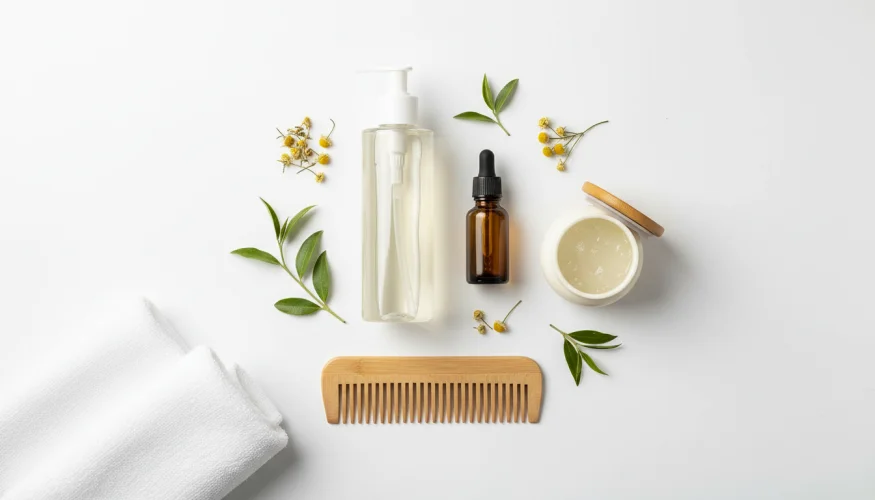
For a dry scalp, the approach is exactly the opposite. Harsh shampoos with antifungal ingredients would make the condition worse by drying the scalp out even further. Instead, it is appropriate to reach for gentle, moisturising shampoos free from sulphates and parabens, ideally enriched with ingredients such as panthenol, aloe vera, glycerin, or plant-based oils – such as argan, coconut, or jojoba. Regular scalp care using nourishing serums or oils applied directly to the skin and left to work before washing can also help.
Adjusting hair-washing habits is equally important. Water that is too hot strips the skin's natural protective barrier, so it is better to switch to lukewarm temperatures. Washing your hair every day can unnecessarily dry out the scalp – for a dry scalp, washing two to three times a week is usually optimal. Conversely, for dandruff caused by excessive oiliness, frequent washing can be beneficial.
Lifestyle also plays a role. Stress is one of the proven triggers of dandruff – research published in the specialist journal Journal of Clinical and Aesthetic Dermatology has shown a direct link between psychological stress and the worsening of seborrhoeic dermatitis. Getting enough sleep, exercising, and using stress management techniques are therefore not merely clichés from the pages of wellness magazines – they have a genuine impact on skin health. Likewise, a diet rich in omega-3 fatty acids, zinc, and B vitamins supports a healthy scalp from within.
As the famous French dermatologist Jean-Paul Ortonne once said: "The scalp is an extension of the face – it deserves the same care and attention." Yet most of us neglect it and focus our attention solely on the hair itself.
Care during the winter months deserves special mention, as both conditions typically worsen at this time of year. Dry air in overheated homes and sharp temperature fluctuations between outdoor cold and indoor warmth place strain on the scalp regardless of whether you have dandruff or dryness. A humidifier in the bedroom can be a surprisingly effective aid, as can maintaining adequate fluid intake – even in winter, when we sweat less, the body needs hydration just as much as in summer.
If you are unsure what exactly is troubling you, or if home care fails to produce results after a few weeks, the best course of action is always to visit a dermatologist. A specialist can reliably distinguish dandruff from a dry scalp, but can also identify other conditions that may look similar – such as scalp psoriasis or contact dermatitis caused by an allergy to ingredients in hair care products. These conditions require entirely different treatment, and experimenting at home with unsuitable products can complicate their management.
In the field of natural hair and scalp care, an increasing number of products have emerged in recent years that emphasise clean formulations free from unnecessary chemicals. Sulphate-free shampoos, conditioners with natural oils, or dry shampoos with a plant-based formula – all of these are options that can benefit a sensitive scalp without burdening it. The key, however, is always to know your specific problem and choose products deliberately, not at random.
White flakes on clothing are no reason for panic or embarrassment – they are signals the body sends that are worth interpreting correctly. Distinguishing dandruff from a dry scalp is the first and most important step towards effective care, a calm and healthy scalp free from unpleasant itching. And this will ultimately have a positive effect on the appearance and condition of the hair itself.