

Orthosomnia and the obsession with sleep data from smartwatches
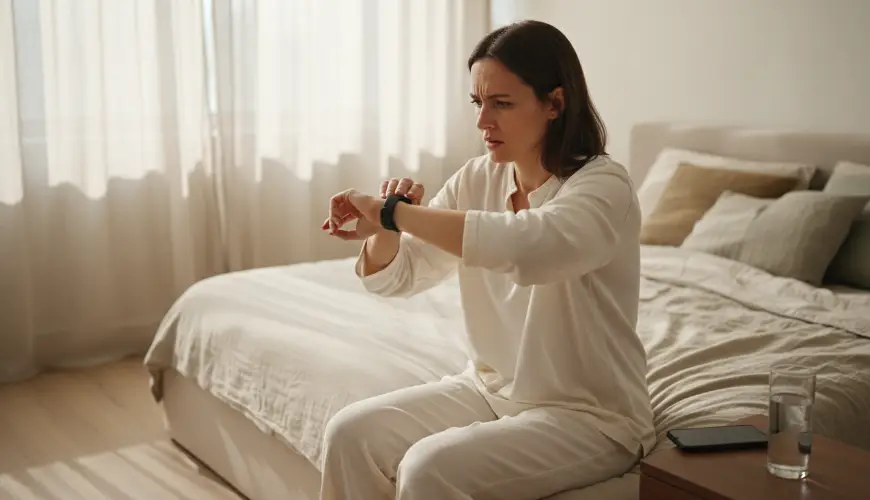
Smart watches promise better sleep. But what if they are the very reason why people can't sleep at night? This paradox even has its own name – orthosomnia – and sleep experts are talking about it with increasing urgency. At a time when wearable technology tracks every sleep phase, every movement and every heartbeat, it is becoming clear that too much information can be just as harmful as too little.
Imagine a scenario that is perfectly common today: a person wakes up in the morning feeling rested, in a good mood, full of energy for the new day. Then they pick up their phone, open the watch app and read that their "sleep score" is just 61 points out of a hundred. Deep sleep was apparently insufficient, the REM phase was shorter than usual, and the watch recommends going to bed an hour earlier tonight. And suddenly that good mood disappears. The person begins to doubt how they actually feel, and the thought that they slept badly haunts them all day – even though their body is saying the exact opposite.
This is precisely how orthosomnia works. It is a relatively new psychological phenomenon, first described by American scientists from Rush University Medical Center in 2017 in the academic journal Journal of Clinical Sleep Medicine. The name was formed by combining the Latin ortho (correct, straight) and the Greek somnia (sleep) – literally meaning an obsession with achieving "correct" sleep. People suffering from orthosomnia are so preoccupied with monitoring and optimising their sleep data that sleep itself paradoxically suffers as a result.
Try our natural products

How a helper becomes an enemy
Smart watches and fitness bands have become part of the daily lives of millions of people over the past decade. According to data from the analytics firm Statista, the global market for health-tracking wearable devices grows by tens of percent every year and exceeded a value of 90 billion dollars in 2024. Products such as Apple Watch, Fitbit, Garmin and Oura Ring offer detailed insights into how many minutes a person spent in light sleep, deep sleep or the REM phase, how their heart rate changed, blood oxygen saturation and body temperature.
The manufacturers' intentions are undoubtedly noble – to provide users with a tool that helps them better understand their own body and lead a healthier lifestyle. And for many people, it genuinely works. Some people discover through their watch that alcohol before bed is harmful to them, while others detect an irregular heart rhythm that would otherwise have gone unnoticed. The technology itself is not the problem.
The problem arises when a healthy interest becomes an obsession. Research published in the CHEST Journal showed that people who pay excessive attention to sleep data suffer from higher levels of anxiety, poorer sleep quality and paradoxically greater daytime fatigue – even though their objectively measured sleep parameters may not be poor at all. The brain receives a signal that "sleep was not good", and the body genuinely responds to that signal – with stress, tension and a feeling of exhaustion.
Psychologists are well acquainted with this mechanism. Much like orthorexia – an obsession with healthy eating – the same principle applies here: excessive control and the pursuit of perfection can cause more harm than good. As American neuroscientist Matthew Walker, author of the book Why We Sleep, aptly noted: "Sleep is the one thing in life where the harder you try, the less you get."
A person suffering from orthosomnia begins their day by analysing overnight data before even getting out of bed. They evaluate graphs, compare results with previous nights, and look for patterns and causes. In the evening, they go to bed knowing that the watch will be monitoring them, and instead of falling asleep naturally, they lie there in tension wondering whether they will achieve a better score this time. This tension itself disrupts sleep – and the cycle is complete.
How accurate is the data from smart watches, actually?
One of the key aspects of the whole issue is the question of how much the data from smart watches can actually be trusted. The experts' answer is surprisingly sober: the accuracy of these devices is significantly lower than their manufacturers suggest.
The gold standard for measuring sleep is polysomnography – an examination carried out in a sleep laboratory, in which brain waves, eye movements, muscle activity, breathing and cardiac activity are all recorded. Smart watches cannot directly measure any of these things. Instead, they track wrist movement and heart rate, and from this data algorithmically infer which sleep phase the user is probably in. The word "probably" is key here.
A comparative study published in the journal npj Digital Medicine tested the accuracy of popular consumer devices and found that when distinguishing between individual sleep phases – particularly deep sleep and the REM phase – smart watches achieve an accuracy of between 40 and 70 percent depending on the specific device and the specific user. In other words, the assessment a user sees on their display in the morning may be approximately correct, but it may also be entirely misleading.
Yet most users take these numbers as absolute truth. And that is precisely where the crux of the problem lies. People make decisions about their health, their feelings and their day based on data that may be inaccurate or even wrong – while simultaneously ignoring the most reliable feedback available to them: their own feelings and perception of their body.
Doctors in Chicago described an interesting case: a thirty-four-year-old female patient came to a sleep clinic complaining of severe insomnia and chronic fatigue. On closer examination, it turned out that she was objectively sleeping approximately seven hours a day – within the normal range. The problem was that her watch reported a low sleep score every morning, she believed this assessment and began to experience fatigue as a self-fulfilling prophecy. All it took was for her to stop using the watch for two weeks – and her "insomnia" almost disappeared.
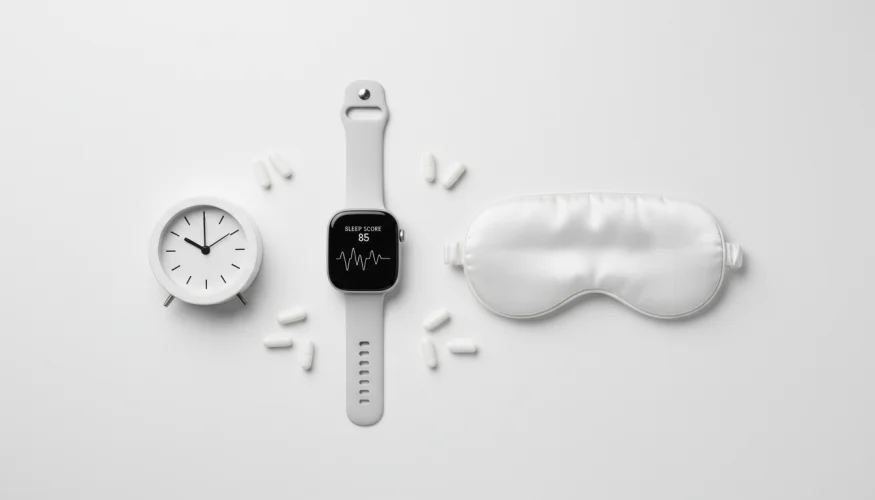
What to do about it – and when data is actually useful
It would be an exaggeration to claim that smart watches are harmful and people should throw them away. For many users, they genuinely represent a valuable tool that helps them track long-term trends, motivates them to exercise and can alert them to health anomalies. The key is a healthy relationship with data – and that is something that can be learned.
Sleep medicine experts recommend treating data from watches as a rough guide, not a medical diagnosis. It can be useful to track long-term trends – for example, whether a particular life change improves or worsens sleep – but daily fluctuations in sleep scores have little informational value and should certainly not determine how a person feels or how they experience their day.
A few practical guidelines for a healthier relationship with technology:
- Do not connect daily mood and energy to the overnight score – if a person feels well, that is more relevant information than a number on a display.
- Track weekly or monthly averages, not daily results.
- Do not use the watch as a tool for falling asleep – the mere awareness that a device is monitoring sleep can trigger tension in more sensitive individuals.
- Allow yourself regular "digital holidays" – days or weeks without tracking data, so the brain can rest from constant self-evaluation.
- Consult a specialist if the feeling of poor sleep persists regardless of the measured data.
The World Health Organization and leading sleep scientists agree that the most important indicator of sleep quality is how a person feels during the day – whether they are alert, focused and in a good mood. No app can measure that better than the person themselves.
It is also worth noting that there are groups of people for whom data from watches can be genuinely beneficial – for example, people with suspected sleep apnoea, those who work shifts and need to monitor the impact of an irregular rhythm on their body, or athletes optimising their recovery. In these cases, however, the ideal approach is to combine data from the watch with regular consultations with a doctor or sleep specialist, rather than relying solely on the manufacturer's algorithms.
Orthosomnia is, in a certain sense, a perfect symptom of our age – an era in which we have access to more data than ever before, yet trust our own intuition and bodily sensations less and less. Smart watches are a fascinating technology capable of many things. But teaching a person to listen to their own body rather than a screen – that is something no algorithm can do yet. And perhaps it never will be.