

Master the first days in kindergarten without tears
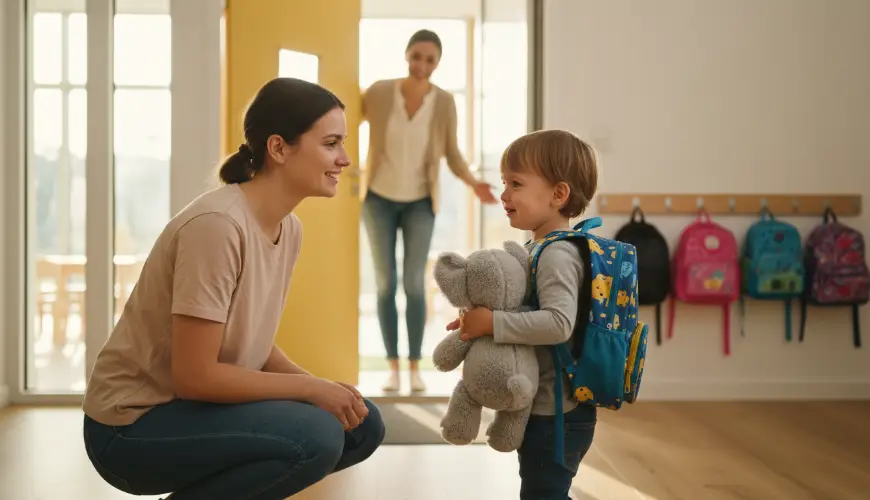
The coming September brings for many families one of the most emotional moments of early parenthood. Little backpack-wearers face a big leap into a world where mum and dad aren't on hand – and this moment can bring tears even to the most resilient parents. A child's adaptation to kindergarten is a topic that paediatricians, psychologists and teachers revisit every autumn, because every child and every family experiences it in their own way.
The transition to kindergarten is not merely a logistical matter. It is the first major life milestone at which a child discovers that the world exists even without their parents – and parents discover the same. Tears at the kindergarten gate are completely normal, but there are many things that can make the whole process easier. These are not guaranteed tricks, but rather an understanding of what is actually happening inside a little preschooler's head.
Try our natural products



Why adapting to kindergarten is so demanding
A child between the ages of two and four lives in the present moment. They do not yet have a fully developed sense of time, and so the phrase "I'll come for you after lunch" can sound just as abstract as "I'll come in a hundred years." This developmental fact is key to understanding why small children burst into tears at the kindergarten door even when they enjoy the kindergarten and like their teacher. It is not defiance or manipulation – it is natural separation anxiety, which according to the American Academy of Pediatrics is a completely normal part of a child's development.
Separation anxiety peaks at around 10 to 18 months of age, but it can persist or re-emerge precisely when a child enters a group care setting. What parents see as a dramatic farewell is in fact evidence of a healthy emotional bond. The child cries because they love their parents and miss them – that is good news, not bad.
At the same time, the way parents approach the situation significantly influences how adaptation unfolds. Research shows that children whose parents say goodbye calmly, confidently and with a clear routine settle down more quickly than children whose parents hesitate, turn back or visibly display their own anxiety. Children are excellent readers of emotion – if a parent radiates uncertainty, the child picks it up instantly and interprets the situation as dangerous.
It is also important to know that most children calm down within a few minutes of their parent leaving. Teachers confirm this every year: as soon as dad disappears around the corner, interest in toys or friends quickly outweighs the sadness. This does not mean that saying goodbye is easy – not for children, and not for adults either.
What really helps before and during the first day
Preparing for kindergarten does not begin on the first day of September, but weeks or even months beforehand. One of the most effective ways to prepare a child is gradual familiarisation with the new environment. If the kindergarten allows it, it is wonderful to visit before the term begins – to walk around the classroom, look at the garden, and meet the teacher in a calm, pressure-free atmosphere. The child builds a mental map of the place that awaits them, and the unknown becomes a little less unknown.
It also helps to talk about kindergarten naturally in everyday situations – not as a major event full of expectation, but as a normal part of life. "When you go to kindergarten, you'll get to play with playdough there" works better than repeatedly reassuring a child that "kindergarten will be great, you'll see how much you'll love it," which can paradoxically make the child feel they need to be convinced.
Another practical step is aligning the daily routine with the kindergarten schedule before September begins. If a child was waking up at eight and going to bed at ten, a sudden shift to waking at six can be an unnecessary source of additional stress. Gradually shifting wake-up and bedtime by fifteen minutes every two or three days will make a significant difference.
A so-called transitional object – a favourite soft toy, a scarf that smells of mum, or a small family photo in the backpack – can be enormously reassuring for a child. Psychologist and parenting author Jana Nováková describes it aptly: "A transitional object is not a crutch, it is a bridge. A bridge between the world of the family and the world outside." Most kindergartens welcome such a personal item and allow children to keep it with them.
When it comes to the farewell itself, one golden rule applies: be brief, warm and consistent. Create a small goodbye ritual – perhaps three kisses, one big hug and a specific promise about pick-up time. And then leave. Prolonged goodbyes, repeatedly turning back, or slipping away secretly without saying goodbye – all of these make the situation worse. Disappearing secretly may spare tears in the moment, but it undermines the child's trust, and that is too high a price to pay.
Imagine, for example, four-year-old Terezka, who cried so intensely every morning during her first week at kindergarten that her mother began to doubt the whole decision. Then she and the teacher agreed on a simple ritual: her mother would draw a little heart on Terezka's palm and say: "These hearts are for you until I come back." Terezka would then press her palm to her cheek from time to time. By the third week she was crying only briefly – and then she stopped altogether.
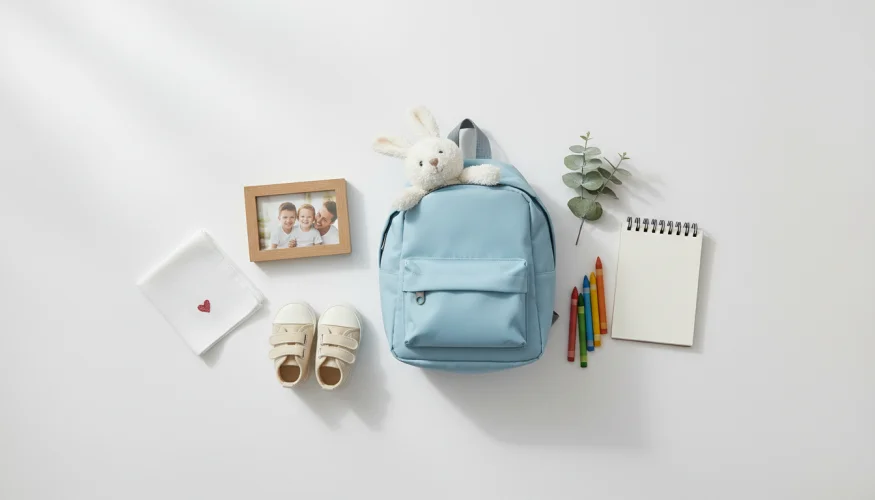
How to get through the first days of kindergarten as a parent
A child's adaptation to kindergarten is also demanding for adults, and this is a fact that is surprisingly rarely discussed. Parents – especially those who have been at home with their child since birth – go through their own form of separation anxiety. Guilt, sadness, an empty feeling during the morning hours, constantly wondering how the child is getting on – all of this is entirely legitimate and normal.
It helps to share these feelings with a partner, a friend or another parent in a similar situation. Online communities of parents of preschoolers can be surprisingly reassuring – discovering that you are not the only one crying in the car park outside the kindergarten is therapeutic in itself.
It is also important not to evaluate the adaptation too soon. The first week, sometimes even the first month, is a transitional period. The child may be tired after kindergarten, irritable, and may experience disrupted sleep or appetite. These are normal signs of heightened stress from a new environment, not signals that kindergarten is harming the child. Both body and mind need time to adjust to a new routine.
Communication with the teachers is invaluable during this period. Do not be afraid to ask – how did the child react after you left, what did they enjoy, who did they play with? A good kindergarten actively encourages this communication and sees parents as partners, not as an obstacle. If you feel that your child is experiencing difficulties that go beyond ordinary adaptation, do not hesitate to consult a child psychologist.
There are of course situations in which it is appropriate to slow down or adjust the adaptation. Some kindergartens offer a so-called settling-in programme, in which the parent spends part of the morning in the classroom with the child during the first few days and gradually reduces their presence. This approach can be very effective, particularly for more sensitive or younger children. According to the recommendations of the Czech Paediatric Society, adaptation should be individualised and respect the needs of the particular child.
There is no shame if your child needs a longer adaptation than the neighbour's child or a friend's child. Every child is different – introverted, sensitive or temperamental children may need more time, and that is perfectly fine. Comparing the speed at which children adapt is just as pointless as comparing when they started walking or talking.
The overall atmosphere at home during the adaptation period also plays a major role. A child who goes to kindergarten tired, overwhelmed by after-school activities or tense from family conflict will naturally find things more difficult. September is a good time to slow down, cut activities to a minimum and devote evenings to calm time together – reading, playing, talking about what happened at kindergarten. Taking an interest in the child's kindergarten world – who their friend is, what the teacher's name is, what they had for lunch – is one of the simplest and most effective ways to help the child build a positive relationship with their new place.
Autumn at kindergarten is also a wonderful opportunity to begin building healthy habits that will support immunity and the child's overall wellbeing. Sufficient sleep, a varied diet rich in vitamins, regular outdoor exercise – all of this helps both body and mind to cope better with the stress of new situations. Good nutrition and a healthy lifestyle are not merely a fashionable topic, but genuine support for a child facing their first major challenges.
Starting kindergarten is, after all, just the first of the many farewells that parenthood brings. Each one is an opportunity to teach a child that the world is a safe place worth venturing out into – and that home will always be where those who love them most are waiting. And that is perhaps the most important thing you can give them in those first September days.