

# What to Eat Before Bed for Calm and Deep Rest A good night's sleep is essential for health and ov
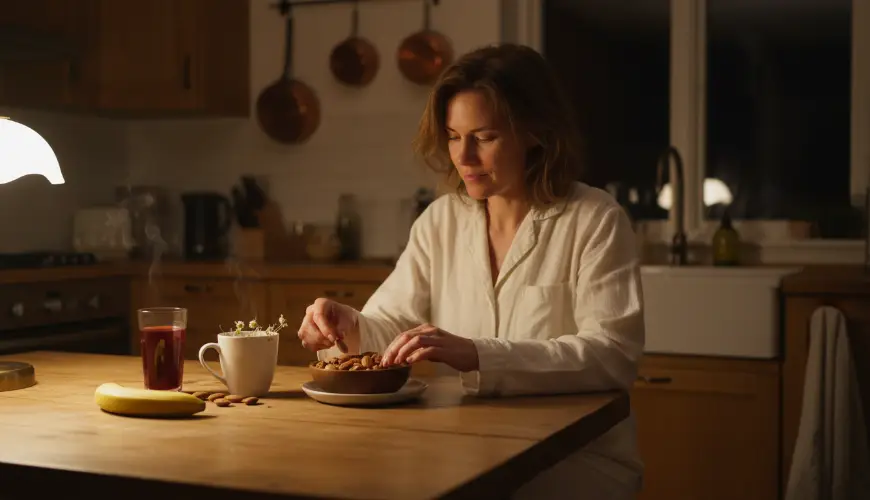
In the evening after a long day, there comes a moment when both body and mind call out for rest. Yet it is precisely then that many of us find ourselves standing in front of an open refrigerator, faced with a question that has no simple answer: should we have something else to eat, or hold out until morning? And if so, what should we choose to ensure that an evening snack doesn't disrupt our sleep or keep our stomach working through the night? The answer to this seemingly simple question can significantly affect the quality of our rest, how we feel in the morning, and our overall health.
The relationship between food and sleep runs deeper than it first appears. Research repeatedly shows that what we eat in the final hours of the day directly influences how quickly we fall asleep, how deeply we sleep, and how we wake up in the morning. According to a study published in the Journal of Clinical Sleep Medicine, a diet high in saturated fats and sugars is associated with lighter, less restorative sleep, while foods containing certain amino acids and minerals can significantly support the process of falling asleep.
Try our natural products
Why evening food matters more than we think
The body doesn't stop working at night. While the conscious mind rests, the digestive system, heart, liver, and brain continue their activity, just at a slower pace. If we give them too much work at the end of the day in the form of heavy, fatty, or spicy food, we disrupt the body's finely tuned nocturnal rhythm. Heavy meals close to bedtime prolong digestion, raise body temperature, and can cause heartburn or an uncomfortable feeling of fullness that simply makes effective rest impossible.
On the other hand, going to bed completely hungry is not an ideal solution either. An empty stomach can cause restlessness, waking in the middle of the night, or even nocturnal hypoglycaemia — a drop in blood sugar levels that the brain perceives as a stress signal. The key, therefore, is not abstinence, but choosing the right foods at the right time.
Take the example of Markéta, a thirty-year-old teacher who had long struggled with poor sleep quality. She fell asleep late, woke during the night, and got up tired in the morning. After visiting a nutritional consultant, she discovered that her evening ritual — a large portion of pasta with cream sauce around nine o'clock at night — was the main culprit. Once she switched to a lighter dinner earlier in the evening and addressed any hunger before bed with a handful of nuts or a glass of warm milk, the quality of her sleep improved significantly within a few weeks.
Markéta's experience is not unusual. Experts in nutrition and sleep medicine agree that the ideal time for the last larger meal is two to three hours before lying down. If hunger does strike just before bedtime, there is no need to panic — it is simply a matter of knowing what to reach for.
Foods that help you fall asleep without upsetting your stomach
There are foods with a natural ability to support sleep. Their secret lies most often in their content of tryptophan — an amino acid that serves as the precursor to serotonin and melatonin, two key hormones that regulate mood and the sleep cycle. Tryptophan occurs naturally in a wide range of commonly available foods, so there is no need to reach for dietary supplements.
Bananas are among the most accessible and practical choices. They contain not only tryptophan, but also magnesium and potassium, which relax muscle tension and help calm the body overall. They are also easily digestible and the stomach can process them without difficulty even in the late hours. Cherries and sour cherries work in a similar way, being one of the few natural sources of melatonin. A glass of undiluted cherry juice or a handful of fresh cherries can, according to some studies, shorten the time it takes to fall asleep and extend the overall duration of sleep.
Another tried-and-tested aid is warm milk. This age-old piece of advice has a solid scientific basis — milk contains both tryptophan and calcium, which helps the brain utilise tryptophan more effectively. Moreover, the very ritual of a warm drink before bed has a calming psychological effect that should not be underestimated. For those who are lactose intolerant, calcium-enriched plant-based drinks, such as oat or almond milk, are an excellent alternative.
Surprisingly good choices for late evening are also wholegrain crackers or oats. The complex carbohydrates found in these foods help tryptophan cross the blood-brain barrier into the brain, where it can then do its work. A small portion of porridge cooked in water or plant-based milk can therefore be not only a tasty but genuinely sleep-supportive evening snack.
Among protein sources, almonds and walnuts stand out. Almonds are rich in magnesium, which has a demonstrable effect on calming the nervous system and improving sleep quality, while walnuts contain naturally occurring melatonin. A small handful — roughly twenty to thirty grams — is enough to give the body what it needs without overburdening digestion.
Yoghurt, specifically plain, unsweetened yoghurt, is another candidate that combines a favourable tryptophan content with probiotics that support the health of the gut microbiome. And since research increasingly suggests that the gut microbiome and sleep quality are interconnected, this is a choice that makes sense on several levels at once.
Chamomile tea deserves special mention. This herbal drink contains apigenin, an antioxidant that binds to specific receptors in the brain and induces a feeling of calm and drowsiness. A cup of chamomile without sugar is one of the simplest and most natural ways to signal to the body that it is time to rest.
What to avoid if you want to sleep like a baby
Just as important as knowing what to eat is knowing what to steer clear of before bed. At the top of the list is caffeine — and not only in the form of coffee. Tea, dark chocolate, certain soft drinks, and energy drinks all contain caffeine, whose half-life in the body is approximately five to six hours. A glass of cola at eight in the evening can therefore still be active in the bloodstream at two in the morning, preventing natural sleep onset.
Alcohol is another widespread myth. Many people believe that a glass of wine before bed helps them fall asleep — and they are partly right, since alcohol does indeed shorten the time it takes to fall asleep. However, it simultaneously disrupts the second half of the sleep cycle, suppresses the REM sleep phase essential for memory consolidation and emotional processing, and causes early waking. The result is sleep that comes quickly but fails to restore.
Spicy foods, fatty fried dishes, and large portions of meat are processed slowly and laboriously by the digestive system. The body must expend considerable energy to digest them, which increases metabolic activity at precisely the time it should be declining. Spicy foods can also irritate the oesophagus and cause reflux — an unpleasant heartburn that intensifies when lying down.
A high intake of simple sugars just before bedtime also warrants caution. Sweets, biscuits, or sugary drinks cause a rapid rise in blood sugar levels followed by an equally rapid fall. This fluctuation can wake a person in the middle of the night and trigger feelings of hunger or restlessness. As American neuroscientist Matthew Walker aptly put it in his book Why We Sleep: "Sleep is the single most effective thing we can do for our health — and we systematically sabotage it every day."
It is not only about what we eat, but also how much. Even a healthy, easily digestible food consumed in a large portion can cause an uncomfortable feeling of an overfull stomach that complicates falling asleep. An evening snack before bed should truly be light — ideally in the range of 150 to 250 kilocalories, not a full meal.
A practical guide can also be observing your own body's reactions. Every person is different, and what helps one person fall asleep may keep another awake. A food diary kept over two to three weeks, in which a person records what they ate and how they slept, can reveal very specific personal patterns that no general advice can replace.
The choice of evening snack is part of the broader concept of so-called sleep hygiene — a set of habits that together create the conditions for quality night-time rest. These include a regular bedtime, limiting blue light from screens, an appropriate bedroom temperature, and indeed the conscious choice of what the body receives as its last fuel before the night's run. These seemingly small everyday decisions add up and manifest in energy levels, mood, immunity, and cognitive performance — that is, in everything that matters.
The good news is that the change need not be radical or complicated. A banana instead of chocolate, chamomile tea instead of a glass of wine, a handful of almonds instead of a handful of salted crisps — such small shifts are easily achievable for most people and can yet bring a surprisingly significant improvement in sleep quality. And quality sleep, as an ever-growing body of science confirms, is neither a luxury nor laziness — it is the foundation upon which everything else rests.