

Lipedema is not laziness or obesity
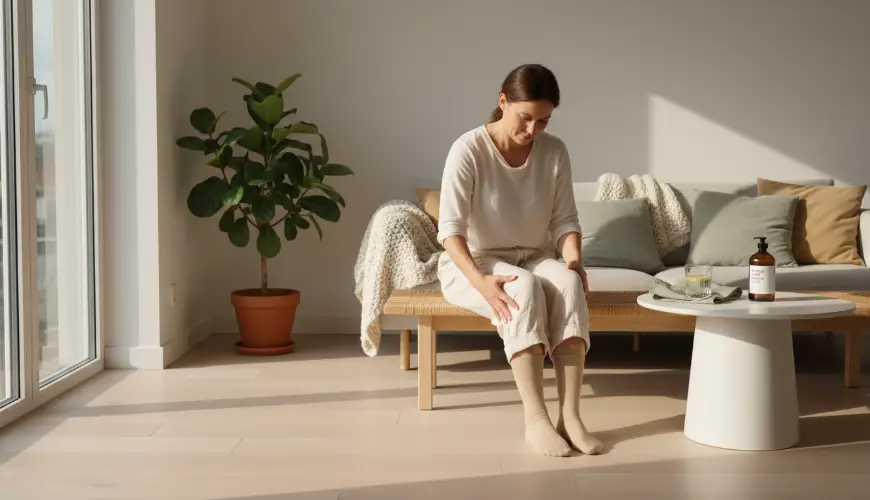
You may have experienced this yourself or know someone who struggles with it – legs that are disproportionately large compared to the rest of the body, painful to the touch, prone to swelling, and resistant to any diet or exercise. Many women in such situations have been told by those around them to lose weight or exercise more. Yet the problem may be entirely different from what it seems. Lipedema is a condition that is still talked about far too little, despite estimates suggesting it affects up to 11% of women in the population – tens of millions of women worldwide.
Confusing lipedema with common obesity or simple leg swelling is unfortunately very common, even in doctors' offices. The result is years of incorrect treatment, unnecessary self-blame, and frustration over results that simply never come – because they never can. Understanding what lipedema truly is, how it manifests, and why it differs from ordinary fat or swelling is the key to women finally receiving the help they need.
Try our natural products




What exactly is lipedema and why do we so easily overlook it
Lipedema is a chronic condition of the connective and adipose tissue, in which pathological fat accumulation occurs – particularly in the lower limbs, buttocks, and sometimes the arms. However, this fat behaves differently from ordinary adipose tissue. It cannot be removed through diet or exercise, it does not respond to a caloric deficit, and it is painful to the touch. A characteristic sign is the so-called cuff – a distinct transition between the ankles and feet, where the fat suddenly stops. The feet are often completely slim, while the calves and thighs are significantly enlarged.
The causes of lipedema have not yet been fully explained, but experts agree that hormonal factors and genetic predisposition play a key role. The condition most commonly appears or worsens during periods of hormonal change – at puberty, during pregnancy, or at menopause. This explains why it is almost exclusively a female condition, although isolated cases in men do exist.
The insidious nature of lipedema lies in the fact that at first glance it can genuinely appear to be simple excess weight. A woman with lipedema may have a normal or even low body weight in the upper body, while the lower half of the body is significantly larger. This disproportion is often one of the first signals, yet even doctors frequently overlook it. According to research published in the specialist journal Phlebology, the average diagnostic journey for lipedema patients in Europe takes more than ten years. Ten years, during which women are told they should try harder.
It is also important to distinguish lipedema from lymphedema, with which it is often confused. Lymphedema results from damage to the lymphatic system and manifests as swelling that is unilateral and responds to limb elevation. Lipedema swelling, by contrast, is symmetrical, bilateral, and does not respond to elevation. When the tissue is compressed in lipedema, characteristic dimples form, resembling orange peel; the tissue is sensitive or even painful, and patients frequently report easy bruising even without significant impact.
Living with lipedema: more than just an aesthetic problem
It is easy to dismiss lipedema as a cosmetic issue, but the reality for women living with it is considerably more complex. Pain is present almost constantly – when walking, when clothing touches the skin, when the weather changes. The legs swell throughout the day, feeling heavy and tired. Many patients avoid physical activity not because they are lazy, but because movement is painful for them. This paradoxically creates a vicious cycle, since movement is actually one of the few things that can alleviate symptoms.
Consider the example of thirty-year-old Klára, who had struggled since puberty with the fact that her legs simply didn't "match" the rest of her body. She tried various diets, exercised, restricted carbohydrates – all to no avail. Those around her assured her she wasn't trying hard enough. Only after ten years did she find her way to a doctor specialising in lymphology, who diagnosed lipedema during the first visit. "It was as if someone had told me I wasn't crazy," Klára described her feeling upon finally receiving a diagnosis. Stories like hers are not the exception – they are the rule.
The psychological impact of the condition is enormous. Research shows that women with lipedema suffer from significantly higher rates of depression, anxiety, and eating disorders than the general population. Persistent failure to lose weight, a lack of understanding from those around them and from doctors, and chronic pain create an environment in which self-esteem is systematically undermined. Awareness of lipedema is therefore not merely a medical question – it is a question of mental health and dignity.
As American physician and lipedema research pioneer Karen Herbst said: "Lipedema is one of the most overlooked conditions in medicine, despite affecting a huge number of women." These words resonate in the European context as well, where awareness of the condition remains insufficient.
How lipedema is diagnosed and treated
The diagnosis of lipedema is currently clinical – there is no simple blood test or imaging method that can reliably confirm it. The physician relies on characteristic symptoms, family history, the course of the condition, and physical examination. The key is to rule out other causes of swelling – heart, kidney, or thyroid disease, lymphedema, or venous insufficiency.
Because lipedema is not yet sufficiently embedded in medical education in many countries, it is ideal to seek out a specialist – an angiologist, lymphologist, or dermatologist with experience in this condition. In the Czech Republic, an increasing number of specialists are addressing the issue, but the situation is far from ideal. Patients are forming online communities and sharing contacts for doctors who genuinely know the condition.
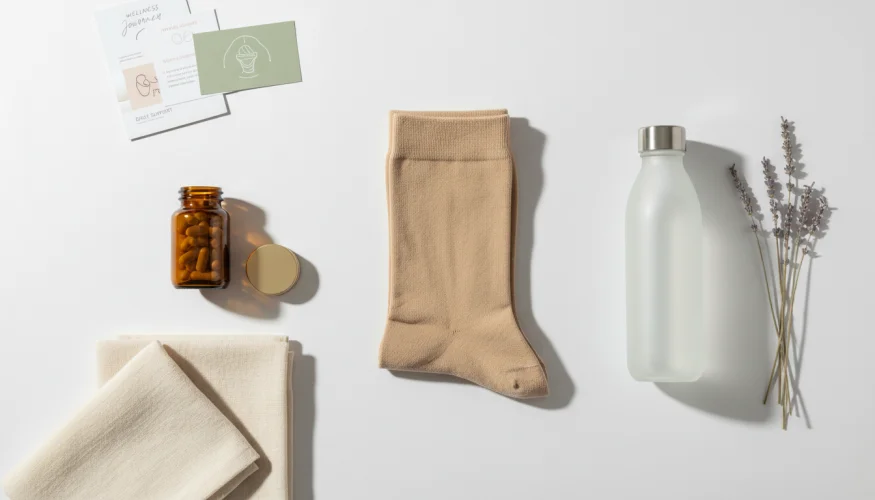
Treatment of lipedema is not curative – it cannot be cured, but its progression can be significantly slowed and quality of life greatly improved. The foundation of conservative therapy is so-called complex decongestive therapy, which includes manual lymphatic drainage, compression therapy, movement in water or on land, and skin care. Compression stockings or sleeves are a daily necessity for many patients – they help reduce swelling and pain.
Movement plays a key role, although it is paradoxically one of the most difficult components of therapy. Activities with low impact on the joints are recommended – swimming, aqua aerobics, cycling, or nordic walking. These forms of exercise support lymphatic drainage and strengthen the musculature without placing excessive strain on swollen limbs. It is important to start slowly and listen to your body.
In more advanced stages of the condition, surgical treatment becomes an option – liposuction using a special technique that is gentle on the lymphatic vessels, known as WAL (water-assisted liposuction) or PAL (power-assisted liposuction). Unlike conventional liposuction, this method removes pathological adipose tissue without damaging the lymphatic system, and in appropriately indicated patients it brings significant relief from pain and improved mobility. It is, however, costly, and in the Czech Republic patients largely fund it from private resources.
Alongside medical care, lifestyle also plays a role. Although diet will not help reduce lipedema fat, an anti-inflammatory diet can reduce inflammation in the tissue and thereby also pain. Experts recommend limiting processed foods, sugar, and alcohol, and instead incorporating more omega-3 fatty acids, vegetables, and quality proteins. Some patients report relief with a ketogenic or Mediterranean diet, although scientific evidence remains limited.
The choice of clothing and footwear is also a natural part of everyday body care with lipedema. Tight elastic materials can worsen circulation, while breathable, loose, and natural textiles contribute to comfort. Cotton, linen, or bamboo are materials that are gentle on sensitive skin and do not add unnecessary burden. Quality compression stockings are a chapter unto themselves – they are not a fashion accessory but a therapeutic aid that must be selected with professional guidance and tailored to the specific stage of the condition.
For women with lipedema, caring for psychological wellbeing is also essential. Patient communities, whether offline or online, offer a space to share experiences, recommend doctors, or simply vent without being judged. Organisations such as the Lipedema Foundation invest in research and awareness, and are gradually helping to spread knowledge of this condition into medical practices.
Regular monitoring of the condition by a specialist is also an important part of care. Lipedema tends to progress, particularly if left untreated or if significant hormonal changes occur. Early intervention can slow progression and prevent complications such as the development of secondary lymphedema – so-called lipolymphedema, where the lymphatic system becomes so overburdened that it ceases to function properly.
Leg swelling that does not respond to diet, exercise, or rest is not a weakness or the result of insufficient effort. It is a symptom of a condition that deserves the same attention as any other chronic illness. Every woman who recognises the symptoms of lipedema in herself or in those close to her should seek out a specialist – and if she encounters a lack of understanding, she should not hesitate to keep looking. The right diagnosis can change one's entire perspective on one's own body and on the possibilities for caring for it.