
Remove Furniture Marks from Carpet with Simple Tricks
Anyone who has ever rearranged a living room or simply moved a sofa for cleaning knows that unpleasant sight all too well: deep indentations left in the carpet where the furniture once stood, looking as though they've settled in permanently. Furniture marks on carpets are one of the most common household problems, and while they may seem impossible to remove, there are actually several reliable ways to restore a carpet to its original condition – and most of them require no special equipment or expensive products.
Before we get into the methods themselves, it's useful to understand why these marks occur in the first place. Carpet fibres are inherently flexible, but prolonged pressure from heavy furniture gradually compresses and deforms them. The longer the furniture sits in one place and the heavier it is, the deeper and more persistent the resulting indentations. The material of the carpet also plays a role – wool carpets are generally more resilient and recover better than synthetic varieties such as polypropylene or nylon, although effective restoration methods exist for those too.
Try our natural products






Steam and Heat: Your Most Reliable Allies
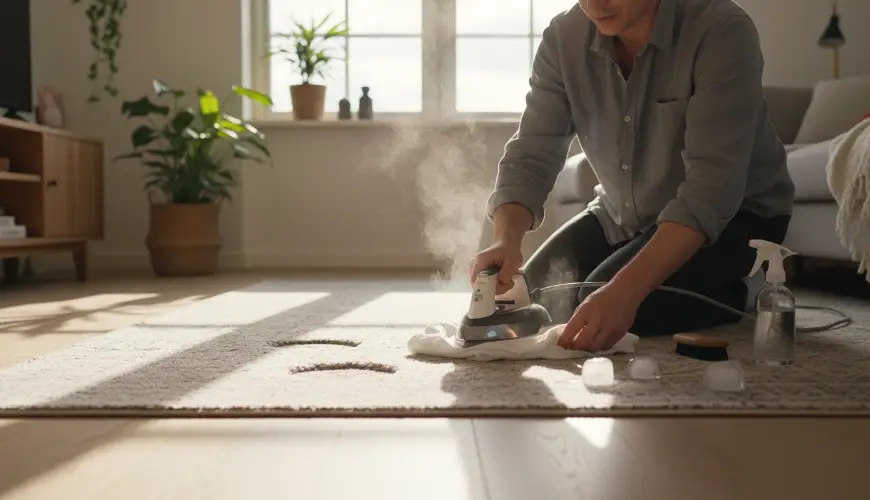
The most effective and gentlest method for removing furniture marks from carpets is using steam or heat. The principle is simple: heat relaxes the compressed fibres and allows them to straighten back into their original position. The easiest way to achieve this at home without any special equipment is using a standard clothes iron.
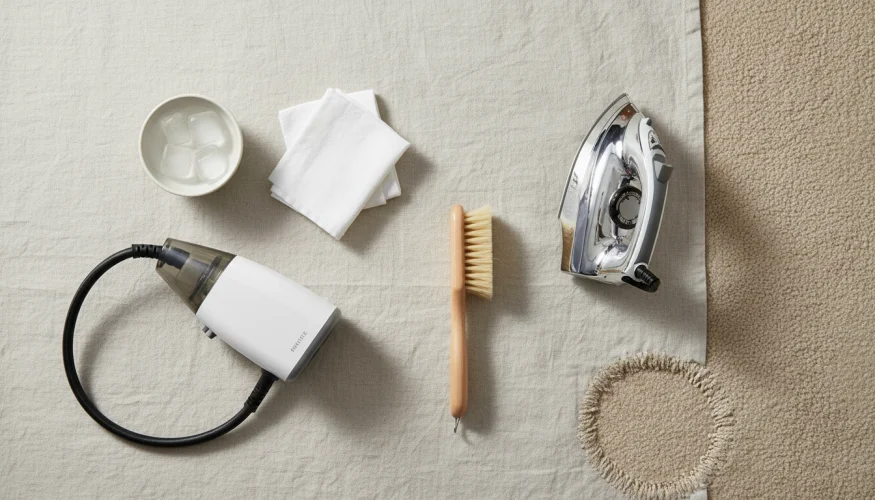
The process is quite straightforward. Place a damp cloth or towel – ideally white, to prevent colour transfer – over the affected area of the carpet, then hold an iron set to medium heat above it. Leave it in place for approximately thirty seconds, then remove the cloth and gently fluff the fibres with your fingers or the blunt edge of a spoon. The movement should go "against the grain" of the fibres, in the direction that naturally lifts them. This process can be repeated as many times as necessary. It's important never to place the iron directly on the carpet without a protective layer, as direct contact with heat could damage or even melt synthetic fibres.
Those who own a steam floor cleaner or steam mop have an even easier time of it. A steam cleaner works more evenly and gently on fibres than an iron, with results that are comparable or even better. The jet of hot steam penetrates deep into the carpet's structure and releases even very deep deformations. After steam treatment, it's again advisable to gently fluff the fibres and allow the carpet to dry completely before walking on it or returning furniture to its place.
A very similar effect can also be achieved using a handheld steam cleaner or even a standard kettle – simply hold the spout a few centimetres from the carpet's surface and allow the steam to work for about a minute before you begin fluffing the fibres. This method is particularly popular because it's quick, requires no chemical products, and is gentle on both the carpet and the environment.
Ice Cubes and Cold Water: A Surprisingly Effective Alternative
It may sound paradoxical, but cold can work wonders on furniture marks in carpets. The ice cube method is popular especially for its simplicity and zero cost – all you need to do is reach into the freezer. Place two or three ice cubes directly in the indentation and allow them to melt slowly. As the ice melts, the water gradually seeps into the compressed fibres and rehydrates them, allowing them to straighten naturally. The whole process takes several hours, so it's best to apply the ice cubes in the evening and check the results in the morning.
Once the ice has melted, the carpet in that area will be slightly damp – this is perfectly fine and desirable. This is the ideal moment to gently fluff the fibres with a brush or your fingers. Then allow the area to dry naturally, ideally with an open window or with the help of a fan. The results are surprisingly good for most carpets, although for very deep or old marks, it may be necessary to repeat the process.
This method is also one of the few that works well on carpets made from natural materials such as wool or jute, where more caution is needed with heat. Wool carpets are sensitive to excessive heat and can shrink or become damaged with improper handling, whereas cold will not harm them.
Consider a situation that many people will recognise: after moving into a new flat, you discover that the previous tenants left a large carpet in the living room with deep marks from a solid wardrobe that had apparently stood there for several years. The marks are deep, the fibres completely flattened. Instead of expensive professional cleaning or replacing the entire carpet, a combination of the ice method followed by steam treatment is all it takes – and after two days, the carpet is unrecognisable.
Practical Tips and How to Prevent Marks from Returning
Removing the marks themselves is only half the battle. It's equally important to know how to prevent similar problems in the future, or at least minimise their impact. The key is distributing the pressure that furniture exerts on the carpet. It's advisable to place special pads or so-called furniture gliders under the legs of heavy furniture – sofas, wardrobes, beds – which spread the pressure evenly over a larger area. These pads are available in various sizes and materials, and their use significantly reduces the risk of deep indentations forming.
Another effective preventive measure is regularly moving furniture – even by just a few centimetres. This allows the fibres to recover gradually and prevents permanent deformation. Of course, this isn't always practical or aesthetically desirable, but for less visible furniture or during seasonal cleaning, it can be very beneficial.
Websites focused on home care, such as Good Housekeeping, regularly point out that vacuuming the carpet in different directions also helps maintain the upright structure of the fibres and the overall longevity of the carpet. The vacuum cleaner should be set to a suction level appropriate for the density and pile height of the carpet – suction that is too powerful can actually damage delicate carpets.
When it comes to choosing a carpet for a room where heavy furniture is planned, it's worth investing in a quality carpet with a denser and more resilient pile. Carpets labelled as "stain-resistant" or with high fibre density are generally more resistant to deformation. According to experts at the Carpet and Rug Institute, carpets with higher fibre density have significantly better recovery ability after prolonged pressure.
As the writer and designer William Morris wrote: "Have nothing in your house that you do not know to be useful or believe to be beautiful." This idea can be applied to home care in general – investing in quality materials and caring for them regularly is always more worthwhile than looking for quick fixes.
There are a few additional methods worth mentioning that can be useful in specific situations:
- A fork or coarse brush: gently fluffing the fibres after heat or cold treatment speeds up their straightening
- A hair dryer: a practical alternative to an iron, especially for smaller marks – blow warm air onto damp fibres while simultaneously fluffing them with your fingers
- Vinegar and water: a solution in a 1:1 ratio sprayed onto the affected area before heat treatment can help with more stubborn marks; vinegar softens the fibres and makes them easier to straighten
When using vinegar, it's advisable to first test the solution on an inconspicuous area of the carpet to ensure it doesn't cause fading or any other change in colour. Extra caution is warranted with light-coloured or naturally dyed carpets.
Furniture marks on carpets are a problem that can in most cases be resolved without professional help, without the need to call in professional cleaners or invest in a new carpet. The key is choosing the right method based on the type of carpet and the depth of the damage – and having a little patience. Heat, steam or cold combined with gentle mechanical fluffing of the fibres can work wonders even on marks that appear irreversible. And if you care for your carpet regularly and pay attention to how and where you position your furniture, the chances of encountering this problem again are significantly reduced.