

How to Naturally Support Children's Immunity When Seasons Change and Viruses Circulate in the Classr
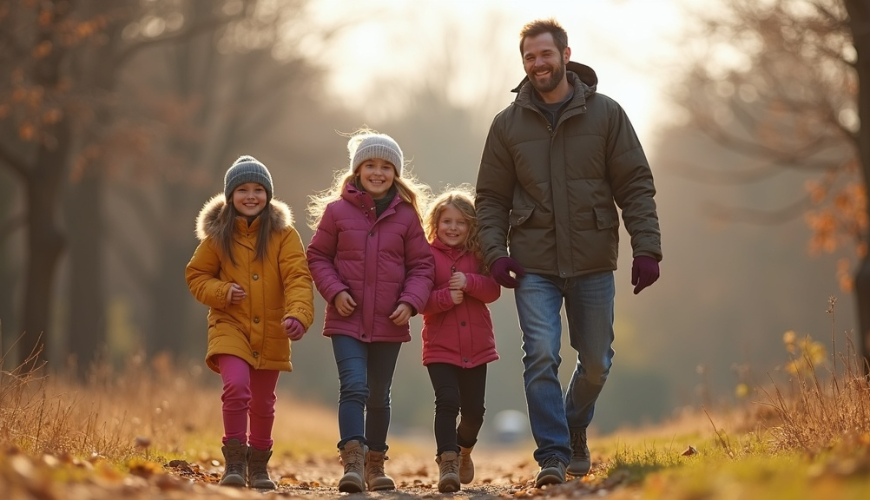
The transition between seasons can stir up the same question in families over and over again: why are children suddenly more often tired, coughing, and before you know it, something is going around the class? Children's immunity is put under greater strain during these weeks – not only due to viruses but also due to temperature fluctuations, drier air, changes in routine, and spending more time indoors. And while it sounds tempting to have a miracle pill, how to support children's immunity during transitional periods is usually addressed as a mosaic of small habits rather than a one-time intervention.
The good news is that most of these habits are simple, natural, and sustainable in the long term. It's not about "sterilizing" children or keeping them under a glass dome. On the contrary: the immune system learns through practice and a reasonable dose of regular contact with the world. So how to think about how to support children's immunity during seasonal changes in a way that makes sense and works in everyday family life?
Try our natural products


Why transitional periods are so challenging for children's immunity
In autumn and spring, the weather changes faster than the wardrobe can adjust. It's cold in the morning, warm in the afternoon, and cold again in the evening. Moreover, children often "switch" between environments: a warm preschool, a cold walk home, and dry air at home due to heating. The mucous membranes in the nose and throat, which are the first line of defense, can become dry and more susceptible to irritation. Add in a higher concentration of people in enclosed spaces, and viruses simply have better conditions.
From an immunological perspective, it's important to know that a child's immune system is still developing. Children encounter many common viruses for the first time, which is why they tend to get sick more often. This doesn't automatically mean "weak immunity"; it's often a normal learning process. As authoritative information about immunity and vaccination is summarized by organizations like the World Health Organization (WHO), which emphasizes that immune protection results from a combination of innate mechanisms, acquired immunity, and prevention.
During transitional periods, several factors come together: less sunlight (and potentially lower vitamin D levels), more stress from routines (return to school, extracurricular activities), fluctuating sleep patterns, and often less outdoor activity. Given all this, it's no wonder parents start looking for ways to naturally support their children's immunity – without unnecessary chemicals but also without naivety.
How to naturally support children's immunity: routine, food, exercise, and "ordinary" things that work
Paradoxically, the most effective changes are often the least dramatic. They aren't "Instagram-worthy," but they are repeatable. And repeatability is the most valuable aspect in a family.
It starts with sleep, which is often underestimated. During sleep, a child's body regenerates, "sorts" stimuli, and the immune system has the space to do its work. If a child is chronically sleep-deprived, they tend to be irritable, have trouble concentrating, and catch colds more frequently. It’s not just about duration but also regularity. In transitional periods, a simple framework helps: a similar bedtime even on weekends, calming down before sleep (dim lights, no screens), and ventilating the bedroom. Regular sleep is often a "supplement" that costs nothing but has a big impact.
Next to sleep is food. Not because of trendy diets, but because the immune system needs building materials. Children don't need a perfect diet, but they need to repeatedly receive a diverse mix throughout the week: vegetables, fruits, quality proteins, legumes, whole grains, and healthy fats. For "children’s immunity," gut microbiota – the environment in the intestines that affects immunity – is crucial. That's why it's sensible to think about fiber (vegetables, fruits, oats, legumes) and naturally fermented foods, if children can tolerate them (kefir, yogurt, sauerkraut). The relationship between diet and health is generally provided in a clear and factual framework by the Harvard T.H. Chan School of Public Health, where it can be found why diversity and minimally processed foods are usually the best long-term choice.
During transitional periods, parents often consider vitamin D. In our latitudes, there's less sunlight in autumn and winter, which is why lower vitamin D levels appear in part of the population. With children, it's advisable to proceed sensibly and ideally in line with pediatrician recommendations – especially for the youngest. Trustworthy basic information about vitamin D (including why it's important and when supplementation is discussed) is summarized by the NHS – the British health service, which provides very practical materials for the public.
Thirdly, exercise and outdoor activities. It's almost comical how often the answer to "how to support children's immunity during seasonal changes" hides in the simple phrase: go outside, even if the weather isn't perfect. Of course, with common sense and appropriate clothing. Children who exercise regularly tend to have better fitness, sleep better, and cope with stress more easily. Being outdoors also supports contact with the natural environment and "trains" the body to adapt to cold and heat. A daily walk or a walk to school can do more than a complex supplement plan.
Then there are the little things that sound trivial but are crucial in sum: regular ventilation, appropriate air humidity (especially during heating), hydration and hand hygiene. Hygiene doesn't mean scrubbing everything with disinfectant. It's about normal hand washing with soap after coming home, after using the toilet, and before eating. Excessive disinfection of the home can unnecessarily burden the skin and respiratory tract with strong scents.
In this regard, health beautifully intersects with sustainability: a gentler approach can be chosen at home – less aggressive chemicals, more ventilation, regular cleaning, and eco-friendly products without unnecessary fragrances. Children's skin and mucous membranes are sensitive; when strong scented sprays are regularly used at home, it can irritate some children’s noses and throats. Cleanliness is important, but often "clean" is enough, and "sterile" isn't necessary.
Real-life example: what happens when only two things change
In one typical family, the same scenario repeated every September: the first week of school, extracurricular activities, less time, quick dinners, later bedtimes. The child started coughing, then came a cold, and within a month, two to three viral infections went through. It wasn't a dramatic illness, more of an endless cycle of "it's getting better – and then not." This year, they tried only two changes: a fixed time to calm down before bed (without screens and with short reading) and a daily twenty-minute walk after dinner, even when it was drizzly. The diet remained similar, and no new supplements were added. The result wasn't a miracle in the sense of "never a cold again," but the cold had a shorter course, and most importantly, there was a significant reduction in the number of days when the child was completely without energy. It's precisely the type of change that can be maintained – and thus has a chance to work long-term.
There are more such stories, and they have a common denominator: children's immunity isn't based on one super trick, but on what an ordinary week looks like.
Supplements, herbs, and "immune" products: when they make sense and when they don't
The market for immunity support products is enormous and even louder during transitional periods. Parents then stand in front of a shelf or e-shop and wonder: what is useful and what is just an expensive promise? The answer is often uncomfortable but fair: supplements can be beneficial in certain situations, but they shouldn't replace sleep, food, and exercise.
For vitamin D, it makes sense to follow expert recommendations, especially for younger children. With probiotics, targeted use can be useful, for example, after antibiotics or with repeated intestinal problems, but "just in case all the time" may not be necessary. For vitamin C, it's important, but most children can manage to get it from food (fruits, vegetables) with a varied diet. For zinc or other substances, it's good not to exceed doses and not to unnecessarily combine many supplements at once.
Herbs? Some families swear by rosehip, sea buckthorn, or honey (for children over one year old), while elsewhere, warm herbal teas are part of the hydration regime. However, it's important to consider the child's age and possible allergies. And also that "natural" doesn't automatically mean "suitable for everyone." If a child has chronic problems or takes medication, it's better to consult with a pediatrician.
Perhaps the most important thing is not to fall into the trap that if a child gets sick, it indicates a parental failure. Children will get sick. The question is more: how often, how long, and how they recover. And this is where we return to the essence: how to support children's immunity during transitional periods naturally means creating an environment where the body has good conditions to defend itself and regenerate.
This also includes mental well-being. Stress – even in children – often manifests in sleep, appetite, and overall resilience. Transitional periods are often full of changes: a new grade, a new teacher, more responsibilities. It helps when a child knows what to expect, has some "downtime," and can safely relax at home. Sometimes it's this invisible factor that decides whether a cold becomes a week-long episode or a three-week ordeal.
And what about cold exposure? It has its fans and detractors. With children, it's sensible to approach cold exposure very gently: more in the sense of regular outdoor activities, layered clothing, not overheating the home, and gradually getting used to cooler water when showering if the child is comfortable with it. Extremes are usually unnecessary. As one often-quoted phrase says: "It's not about being tough, but about being consistent."
If there's anything truly practical during transitional periods, it's also the approach to the household: gentle washing, less irritating fragrances, well-ventilated rooms, and clothing in which the child doesn't sweat and also doesn't get cold. It sounds like small things, but colds often start with a combination of dry air, cold wind, and a tired body.
If a child has repeated complications, a persistent cough, significant fatigue, or if illnesses are unusually frequent and severe, a consultation with a pediatrician is appropriate. Sometimes it could be an allergy, enlarged adenoids, asthma, or another factor that merely mimics "immunity" but actually needs targeted solutions.
Ultimately, the question of how to support children's immunity during seasonal changes isn't just about how to avoid illnesses at all costs. It's more about how to set up everyday life for children so they have enough energy for school, friends, exercise, and joy – and so that common colds are just an episode, not the main program of the family. And when a few stable habits are established, the transitional period ceases to feel like an annual endurance test and becomes just another rhythm of the year that can be managed more calmly and with greater ease.