
Try homemade red lentil wraps
There is one type of recipe that you bookmark, forget about, then accidentally try it one day, and from that point on cook it every week. Red lentil wraps without flour are exactly that kind of recipe. This is not some trendy wellness influencer fad, but a genuinely functional alternative to classic wheat tortillas that makes sense nutritionally, flavour-wise, and practically.
Red lentils are among the most accessible and nutritious legumes available. Unlike green or brown lentils, they do not need to be soaked before cooking - or in this case, they do not need to be cooked at all, as they are processed raw, simply after soaking in water. The result is a thin, flexible flatbread that holds together, can handle a filling without falling apart, and contains not a single gram of wheat flour, gluten, or any other added binders. Just lentils, water, and a pinch of salt.
Try our natural products



Why it is worth swapping out classic tortillas
The average store-bought wheat tortilla contains refined white flour, palm fat, emulsifiers, and preservatives - while offering almost no nutritional value whatsoever. Red lentils, by contrast, are an exceptional source of plant-based protein (approximately 25 g per 100 g dry weight), fibre, iron, folic acid, and a whole range of micronutrients. According to data from the World Health Organization, legumes are a key component of a healthy diet that reduces the risk of cardiovascular disease and helps maintain stable blood sugar levels.
For people with coeliac disease or gluten sensitivity, these wraps are a natural choice without the need to reach for expensive gluten-free alternatives packed with starches and additives. But even for those with no intolerance at all, this is a way to add more nutrients to everyday meals without sacrificing anything in terms of taste or convenience.
Interestingly, similar recipes have roots in various world cuisines. Indian dosa or cheela - thin flatbreads made from soaked legumes or rice - work on exactly the same principle. There is therefore no need to reinvent the wheel; it is simply a matter of drawing on a tradition that has worked for centuries and adapting it to a modern way of eating.
How to prepare red lentil wraps without flour
The basic recipe is surprisingly straightforward. Dry red lentils are soaked in cold water for a minimum of four hours, ideally overnight. Soaking softens the structure of the lentils, activates enzymes, and also reduces the content of antinutrients such as phytic acid, which would otherwise inhibit the absorption of minerals. After soaking, the lentils are thoroughly rinsed and blended with fresh water into a smooth batter with the consistency of thin cream.
For one batch of wraps made from approximately 200 g of dry lentils (yielding roughly four to six flatbreads), it is sufficient to add around 150–200 ml of water, half a teaspoon of salt, and optionally spices to taste - cumin, turmeric, garlic powder, or dried paprika. The batter should be liquid but not watery; the right consistency resembles pancake batter.
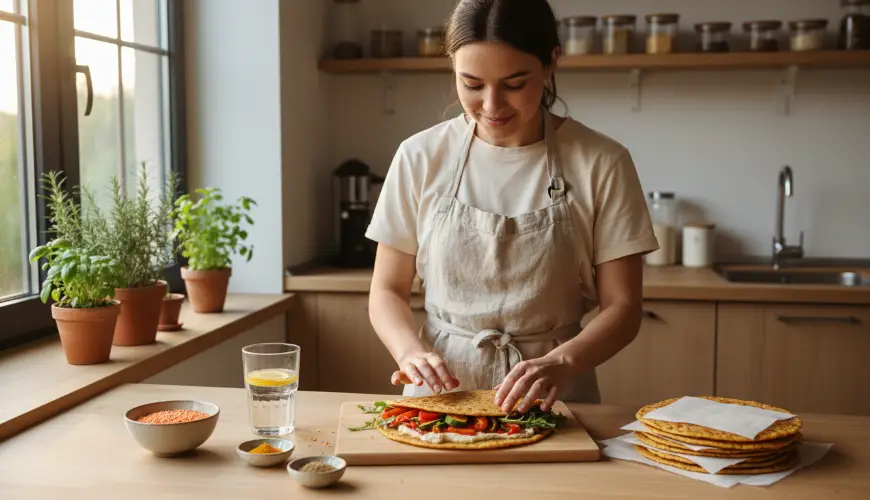
A pan - ideally cast iron or non-stick - is heated to medium temperature and lightly brushed with oil. A ladleful of batter is poured into the centre of the pan and spread into a thin flatbread using a circular motion. The key moment requires patience: the wrap must not be flipped too soon. Once the edges begin to dry out and the centre has set, it is time to turn it over. The second side only needs a minute or two. The resulting flatbread should be golden, slightly crispy at the edges, yet flexible enough to be folded or rolled with a filling.
Imagine coming home after a long working day with only leftover vegetables in the fridge, some hummus, and a few rocket leaves. Classic wheat tortillas are nowhere to be found, but there is a bag of red lentils in the pantry. Within twenty minutes - including cooking time - you have fresh, warm wraps on the table that are more nutritious than anything you could have ordered as a takeaway.
Fillings, variations, and tips for a perfect result
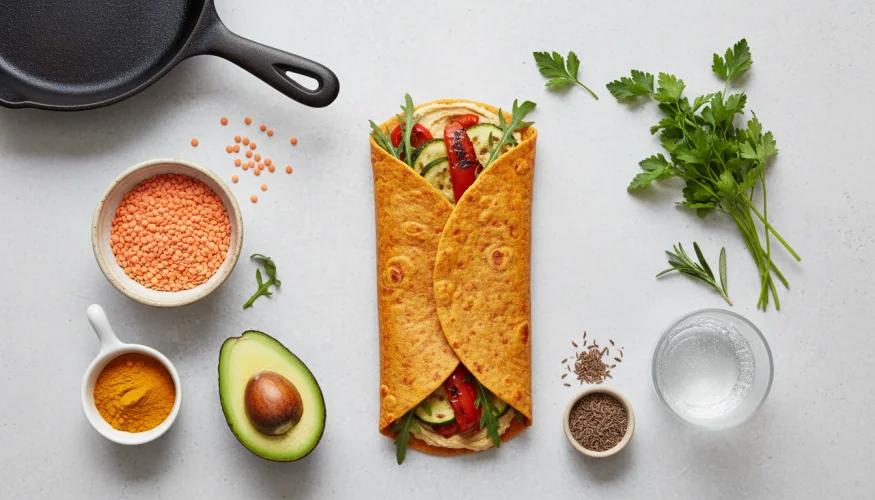
One of the great advantages of these wraps is their flavour neutrality with a slight nutty undertone, which pairs well with virtually everything. They work beautifully with Mediterranean fillings - grilled vegetables, feta, and olives - as well as with Mexican-inspired combinations of black beans, avocado, and salsa. A popular variation is also an Asian combination of tofu, kale, carrot, and sesame sauce.
For those who want to prepare wraps in advance, it is worth knowing that finished flatbreads can be stored in the fridge for up to three days, separated by baking paper to prevent them from sticking together. Before serving, simply reheat briefly in a dry pan or in the oven. The raw batter keeps in the fridge for approximately 24 hours, making it possible to prepare it in the evening and quickly cook fresh flatbreads in the morning for breakfast or lunch.
If you want crispier wraps, leave them in the pan a little longer and add a tablespoon of olive oil to the batter. Conversely, for a softer and more pliable texture, add a little more water to the batter and reduce the cooking time. Every pan behaves slightly differently, so the first flatbread is always a test run - which, incidentally, applies to classic pancakes as well.
As British chef and healthy eating advocate Hugh Fearnley-Whittingstall once remarked: "The best food doesn't come from expensive ingredients, but from understanding what cheap ones can do." Red lentils are precisely that kind of ingredient - inexpensive, accessible, nutritious, and, in the hands of someone who knows how to work with them, surprisingly versatile.
It is worth mentioning that this type of recipe naturally fits into the broader trend of sustainable eating. Legumes have a significantly lower carbon footprint compared to animal products, and their cultivation requires a fraction of the water needed for meat production. Shifting at least some of your meals to a legume-based foundation is therefore not just a matter of health, but also of a conscious relationship with the planet.
For those who want to go even further and combine healthy eating with an ecological approach to their household, it is natural to also reach for other products that support this lifestyle - whether that means eco-friendly kitchen tools, sustainable cookware, or natural foods with minimal packaging, which you can find, for example, in the range at Ferwer.
Red lentils without flour as the basis for wraps may sound like a compromise for those who "have to" eat healthily. In reality, however, this is a recipe that people return to not because they have to, but because they enjoy it. And that, ultimately, is the best reason of all.