Maintenance of things, thanks to which they last years longer
We live in an era when buying something new is easier than ever before. Fast fashion, cheap electronics, furniture assembled in an afternoon – everything is available at the click of a button. And yet, more and more people are returning to an idea that was completely taken for granted by our grandparents' generation: things should be repaired, maintained and cared for, not immediately replaced. This approach is not mere nostalgia for times gone by. It is a conscious decision that has an impact on our wallets, on the environment, and on how we feel in our own homes.
Proper care of everyday objects is a skill that is slowly disappearing. Few people today know how to properly condition leather shoes to make them last ten years instead of two. Few people think about why one jumper falls apart after three washes, while another still looks like new after ten years. Yet the answer almost always lies in care – or the lack of it.
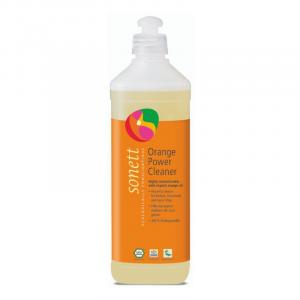
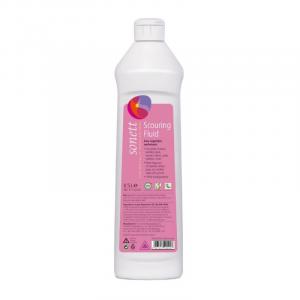
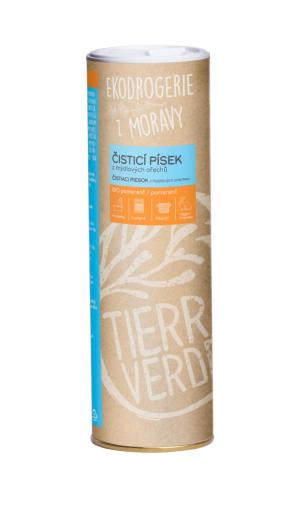
Try our natural products
Why bother caring for what we already have?
The statistics speak clearly. According to data from the Ellen MacArthur Foundation, the average garment in the world ends up in landfill or an incinerator after as few as seven to ten uses. The textile industry is one of the planet's biggest polluters – producing approximately 10% of global CO₂ emissions, more than aviation and maritime transport combined. Every jumper that lasts three years longer thanks to proper care is not just a saving of money, but also a small contribution to letting the planet breathe a little easier.
The economic argument is equally compelling. Imagine Lucie, a thirty-year-old teacher from Brno, who bought a quality winter jacket five years ago for three thousand crowns. Every year she has it cleaned at a specialist dry cleaner, regularly re-waterproofs the surface, and checks the zips and seams before the season. Today the jacket looks almost brand new and Lucie has no reason whatsoever to replace it. Her colleague, who buys a cheap jacket for eight hundred crowns every year, has spent four times as much over the same period – and has nothing to show for it that could be called a decent coat.
This example is not exceptional. It is a pattern that repeats itself with clothing, shoes, furniture, kitchen utensils and electronics. A quality item that is properly cared for will outlast a cheap replacement many times over. And it is precisely at this point that two seemingly different worlds meet – financial common sense and ecological thinking.
As American writer and philosopher Wendell Berry once observed: "To care for things is to care for the world." This thought may sound grandiose, but in everyday practice it takes a very concrete form.
Clothing and textiles: where the biggest mistakes are made
The most common place where people unintentionally damage their belongings is the laundry room. Modern automatic washing machines are convenient, but high temperatures, aggressive detergents and overly frequent washing are literally destructive to most textiles. Wool, cashmere, silk and delicate cottons should be washed as infrequently as possible and at the lowest temperature – ideally by hand or on a delicate cycle with a gentle, pH-neutral detergent.
Drying deserves a special mention. The tumble dryer is the greatest enemy of many textiles. Heat shrinks fibres, destroys elasticity and accelerates wear. Jeans, natural-fibre jumpers and technical sportswear with membranes should always be dried lying flat or hung loosely in the shade. Direct sunlight dries quickly, but it also fades colours and weakens fibres – especially in dark textiles.
Another overlooked aspect is storage. Woollen clothing stored without protection in a wardrobe is an open invitation to the clothes moth, whose larvae can destroy even an expensive jumper in a single season. Natural moth repellents – cedar balls, lavender sachets or tobacco leaves – work reliably without damaging textiles or the household. This is a solution our grandparents knew very well and one that modern chemical sprays cannot fully replace.
Repairs remain an underestimated option. A torn pocket, a fallen button or an unstitched hem – these are things that most people today resolve by buying a new garment, even though an experienced seamstress would fix them for a hundred crowns in twenty minutes. In the Czech Republic, tailors and shoe repair shops have been experiencing a renaissance in recent years, precisely because more and more people are realising how absurd it is to throw away an otherwise functional item because of a minor fault.
Furniture, leather and wood: materials that improve with age
There is a group of materials that, with proper care, do not deteriorate over time but actually improve. Solid wood, quality leather and natural stone are among those that gain character and patina with passing years – something cheap substitutes can never achieve. The condition, however, is regular and correct maintenance.
Solid wood furniture needs to be treated with oil or wax once a year – depending on the surface finish. This simple action prevents drying out, cracking and loss of colour. Wood is also sensitive to humidity: an environment that is too dry causes shrinkage and cracking, while one that is too damp causes swelling and mould. The ideal relative humidity for wooden furniture is between 45 and 65 percent – which, incidentally, is the same range that is comfortable for the human body.
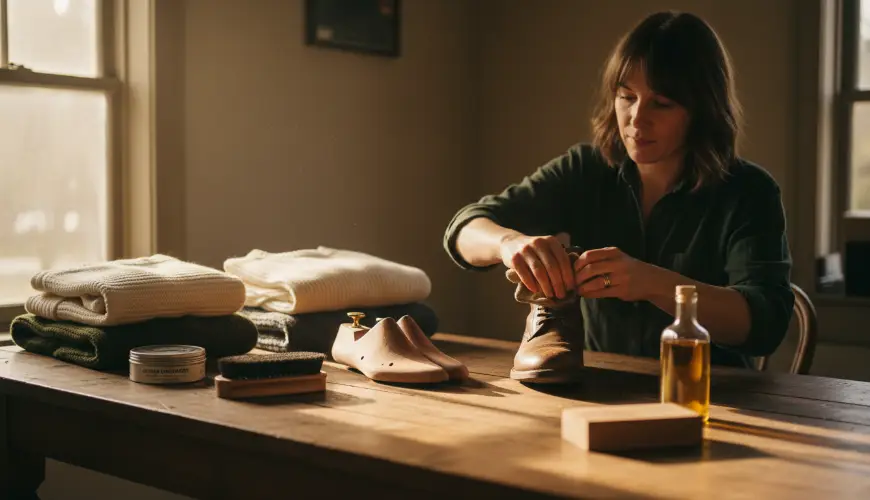
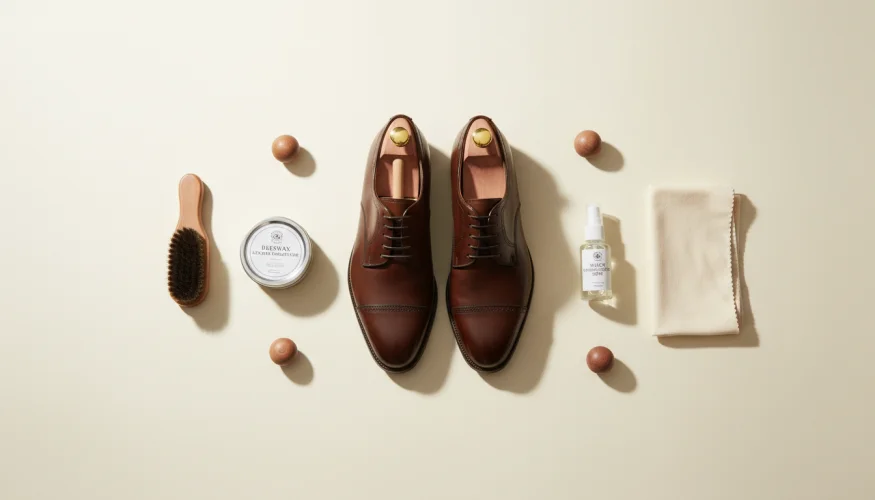
Leather goods – whether shoes, bags, belts or upholstered furniture – require regular cleaning and hydration. Leather is an organic material that dries out just like human skin. Without regular treatment with cream or oil, it cracks, loses its flexibility and eventually crumbles. Yet properly conditioned leather can last for decades and, over time, acquires that unmistakable look that lovers of leather goods call patina. A quality leather cream or natural beeswax is an investment of a few hundred crowns that will extend the life of a product by years.
Footwear deserves special attention. Shoes are one of the most frequently neglected items in the household, even though a quality pair can last a whole decade with proper care. The key lies in a few simple habits: using shoe trees to preserve their shape, regularly cleaning and waterproofing the surface, and allowing shoes to dry thoroughly between wearings. Wet shoes put straight into a cupboard are a guaranteed recipe for rapid mould growth and premature cracking of the material.
Electronics and appliances: maintenance that pays off
Electronics is perhaps the last place where most people would look for the topic of care and maintenance. And yet it is precisely here that proper upkeep can extend the life of a product by years. Overheating is one of the main reasons for premature electronic failure – and yet it can easily be prevented by regularly cleaning ventilation openings of dust. A laptop whose cooling system is clogged with dust operates at significantly higher temperatures, which accelerates wear on the processor, battery and other components.
Batteries are a chapter unto themselves. Modern lithium-ion batteries in phones, laptops and other devices have a limited lifespan measured in charging cycles – but their longevity can be significantly extended through proper use. Studies published by Battery University show that keeping battery charge between 20 and 80 percent, rather than repeatedly draining to zero and charging to full, can extend battery life up to twofold.
Household appliances – washing machines, dishwashers, refrigerators – come with service recommendations that most people never read. Regularly cleaning filters in washing machines and dishwashers, defrosting the fridge, or descaling the kettle and coffee machine are not merely matters of hygiene. They are actions that directly affect energy consumption and the lifespan of the appliance. A clogged washing machine consumes more electricity and works harder – and sooner or later this takes its toll on the motor.
Caring for our belongings does not mean spending every weekend on repairs and maintenance. It is more about conscious habits that gradually become a natural part of the daily routine. Setting wet shoes out to dry instead of putting them straight in the cupboard. Reading the label before the first wash. Oiling the wooden table once a year. Cleaning the washing machine filter before the winter season. Each of these actions takes minutes, but its effect is measured in years.
Is there something deeper in this approach than mere practical calculation? Perhaps. Things we care for become part of our story. They have a history; they remember places and moments. An old leather suitcase passed down from a grandfather, a jumper mended after a first trip abroad, or a table at which two generations of a family have grown up – these are objects whose value exceeds their market price. And it is precisely this value that is created through care, not through purchase.
At a time when sustainability is becoming an increasingly important topic not only in the fashion industry but in everyday life, it is becoming clear that the most ecological product is the one we already own – and take care of. The best purchase is often the one we never need to make at all.