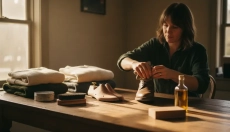

Forgotten places in the apartment stress us more than we realize
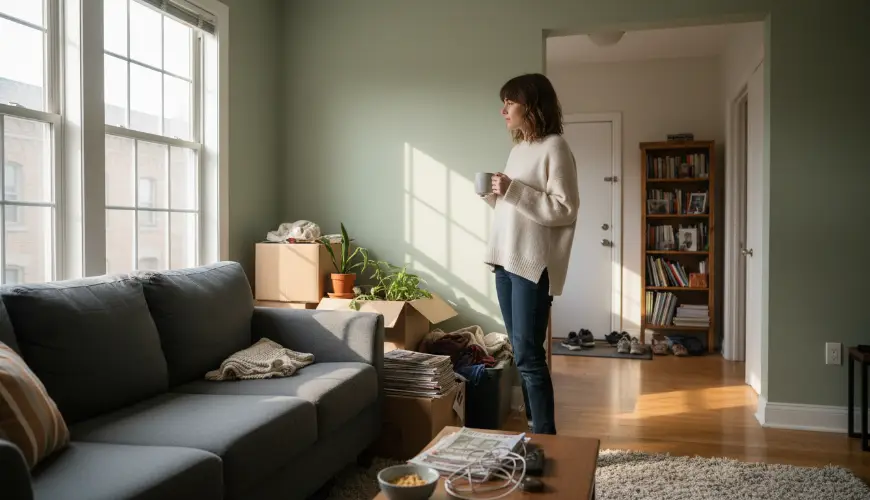
Every apartment has its nooks and crannies. Places that exist on the floor plan, for which rent or mortgage is paid, but which in reality serve only as a reservoir of dust and forgotten objects. The corner behind the sofa, the space under the bed, the shelf above the refrigerator, or the mysterious wardrobe in the hallway – all these places share one thing: almost no one consciously visits them. And yet we have them. We maintain them, occasionally walk past them, and mostly act as if they don't exist. Why is this, and what does this dead zone actually tell us about the way we live?
The answer is not as simple as it might seem. Behind every forgotten corner lies a story – about habits, about shopping, about plans that never came to fruition, or about things we once told ourselves we'd "sort out someday." Psychologists and interior designers are paying increasing attention to this phenomenon, because unused spaces in the home have a direct impact on the wellbeing and mental health of their inhabitants.
Try our natural products



Why Dead Zones Arise in the Home
Let's start with the most basic question: how do such places even come about? It's rarely intentional. Nobody says when moving in, "I'll leave this corner empty." It happens gradually, imperceptibly, like sediment settling at the bottom of a lake. First, one thing lands there – perhaps a shoebox that "for now" has no place. Then an old magazine joins it, followed by an extension cord and a bag from the pharmacy. After a month, the corner has become a functional rubbish dump that the brain stops registering as a problem, because it stops registering it at all.
This phenomenon even has its own psychological name – habituation. The brain is evolutionarily wired to ignore stimuli that don't change. If a box sits in the same spot for weeks and months, it ceases to be "visible" to our perception. It becomes part of the background, like wallpaper or a window frame. Research in the field of environmental psychology, such as studies published in the Journal of Environmental Psychology, repeatedly shows that clutter and unused spaces increase levels of cortisol – the stress hormone – even when we're not consciously aware of them.
Beyond psychology, architecture and apartment layouts also play a role. Many panel-block apartments, which make up a substantial portion of the Czech housing stock, were designed with corridors, alcoves, and corners that have no clear function. These are remnants of times when housing was planned differently – when different family needs and different household equipment were taken into account. Today, these spaces are functionally orphaned, yet physically still present.
Another factor is the accumulation of things, which is inevitable in today's consumer society. The average Czech household, according to various estimates, contains thousands of objects – and actively uses most of them rarely. Things pile up faster than we get rid of them, resulting in overstuffed wardrobes, overloaded shelves, and shelves above the refrigerator covered in medicine boxes and travel adapters that nobody can identify.
Which Places in the Apartment Are Most Commonly Abandoned
It would be naive to think this is an exceptional phenomenon. On the contrary – there are places that are almost universally abandoned across different households, cultures, and apartment sizes.
The space under the bed is a classic example. Formally serving as storage space, in practice it tends to be full of boxes that have been forgotten, or old blankets that "might come in handy someday." Few people go there intentionally. Few people know exactly what lies there.
Much the same applies to the tops of wardrobes and shelves. Everything that exceeds eye level ceases to exist. It's no coincidence that retail chains place their best-selling products exactly at eye level – what is higher or lower sells worse. The same principle applies at home. What is out of sight is out of mind.
The corner behind the door is another universal dead space. Whether in the living room, bedroom, or bathroom, the space hidden behind an open door automatically becomes a dumping ground. Bags, coats that don't belong in the wardrobe, or things waiting for "tomorrow's errand" all end up there.
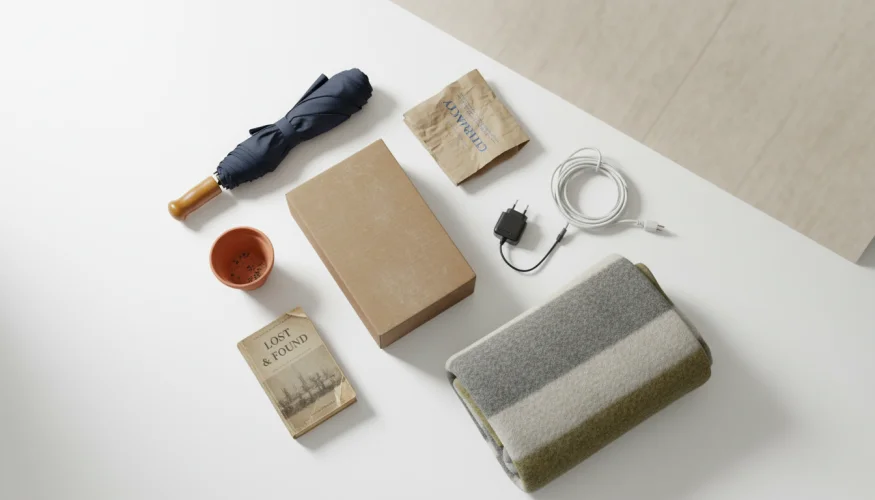
Then there is the hallway as a whole – a space that should be a welcoming gateway to the home, but in many apartments functions as a collection point for everything that has nowhere else to go. Shoes, umbrellas, shopping bags, parcels that haven't been unpacked yet. American therapist and home organisation expert Julie Morgenstern once wrote: "The way your entryway looks reflects the way you feel about your life." And while that may sound like a cliché, there is surprisingly much truth to it.
A special category is the balcony or loggia, which during winter months enters a kind of hibernation mode. It stops being a place to sit and becomes an outdoor storage space – with bicycles, old herb pots, and plastic bags filled with who knows what.
What to Do About It – and Why Bother at All
Perhaps the question arises: if these places bother nobody and nobody uses them, why bother at all? The answer lies precisely in that apparent invisibility. Research repeatedly confirms that chaos in the surrounding environment, even when perceived unconsciously, reduces the ability to concentrate, increases anxiety, and prevents a sense of calm at home. Home should be a place of regeneration, not another source of mental burden.
Moreover – and this is an aspect often overlooked in discussions about home organisation – unused spaces represent waste. We pay for every square metre, whether in the form of rent or mortgage repayments. If a quarter of the apartment effectively serves no purpose, that is an unnecessary expense. And at a time when property prices and rents in Czech cities are at record highs, few people can afford to pay for space they don't use.
Reconsidering these spaces doesn't have to mean major renovation or expensive equipment. Often, all it takes is a conscious decision – to walk through the apartment with fresh eyes and ask: what do I actually need here? What is lying here only because I never threw it away? The method popularised by Japanese organising consultant Marie Kondo remains relevant in this regard: things that don't bring joy or have no clear function should have no place in the home.
It is also important to think about how to make better use of these spaces – not necessarily by filling them with more things, but by giving them meaning. The space under the bed can serve as well-organised seasonal clothing storage in transparent boxes. The balcony can be a functional space even in winter for herbs or morning coffee, if properly equipped. The hallway can be welcoming and tidy if it contains only what truly belongs there.
The ecological dimension of this topic is by no means negligible. The things we accumulate in forgotten corners are most often things we bought impulsively, without much thought, or things we kept "just in case," even though we don't need them. A more mindful approach to the home naturally leads to more mindful shopping – fewer purchases, better choices, less waste. It is no coincidence that the movements of minimalism and sustainable living go hand in hand.
A good real-life example is a situation many people know: moving into a new apartment. In the first few weeks, everything is in its place, every object has a function, and the space looks tidy. After a year, the situation changes – more things have arrived, more nooks have formed, more places where nobody goes. The very act of moving forces us to reassess our belongings, because we have to physically pick up each object and decide whether it deserves a place in the new home. Home organisation experts recommend simulating this experience even without moving – regularly, once a year, walking through the entire apartment as if it were new.
Inspiration can also be drawn from the principles of feng shui, which, while rooted in Chinese philosophy, have a practical dimension that is surprisingly functional even for sceptics: the energy in a home (or, more simply put, the atmosphere and sense of wellbeing) deteriorates wherever there is stagnation, clutter, and blocked passage. Open space, clarity, and intentionality in the arrangement of the home contribute to a sense of calm and control over one's own life.
Dead spaces in the apartment are not merely an aesthetic problem. They are a symptom – an indicator of how we relate to the space, time, and objects around us. And just as a clear mind concentrates better, so too does a tidy apartment calm the mind. Not because cleanliness is a moral virtue, but because the environment in which we live shapes us far more than we usually care to admit. Every forgotten nook is at the same time an opportunity – to look again at what we actually want our home to be, and to take one small step in that direction.