

# How to Set Up a Training Plan for 20 Minutes a Day Training for just 20 minutes a day can be **su
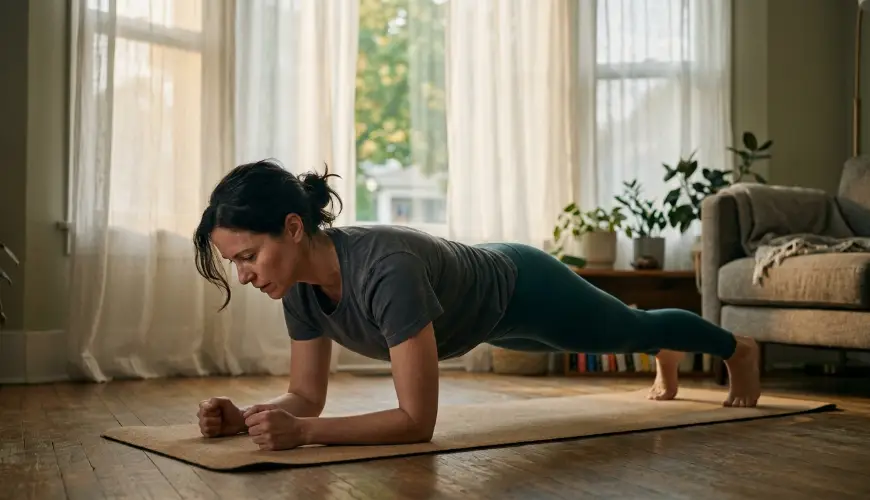
Modern life is relentless. Work, family, obligations, social commitments – and then that feeling of guilt for not exercising again today. Yet all it takes is one thing: stop thinking that an hour at the gym is the only path to a healthy body. Twenty minutes a day can be absolutely sufficient time to significantly improve your fitness, mood, and energy levels – if you know how to use it.
Many people give up on exercise before they even start, because they feel they don't have enough time. But science says otherwise. Studies published in the prestigious British Journal of Sports Medicine repeatedly confirm that even short but regular exercise sessions have a demonstrable impact on cardiovascular health, metabolism, and mental wellbeing. The key word here isn't the length of the workout, but its regularity and quality.
Try our natural products

Why Shorter Workouts Work Better Than You Think
Imagine Klára, a forty-three-year-old teacher from the Central Bohemian Region. Two children, a full-time job, a house to manage. For years she told herself she'd start exercising "when she had time." That time never came. Then she tried something different: every evening after the children had fallen asleep, she devoted twenty minutes to movement. No gym, no expensive equipment. Just a carpet in the living room, a simple set of exercises, and the determination not to give up. After three months, she had lost four kilograms, her back pain had disappeared, and – perhaps most importantly – she started waking up in the morning with more enthusiasm for the day ahead.
Klára's story is not exceptional. It's exactly what happens when a person stops waiting for ideal conditions and starts working with what they have. Twenty minutes is enough – if the workout is properly structured, targeted, and adapted to your capabilities.
The basic principle behind this is called HIIT, or high-intensity interval training. It involves alternating short periods of intense exertion with rest or lighter movement. The body burns calories not only during the exercise itself, but also for several hours afterwards – experts call this phenomenon the "afterburn effect," or the effect of temporarily elevated metabolism. But HIIT isn't the only way. For some people, a calmer but focused strength training session or yoga may be ideal – it depends on your goal and current fitness level.
Before you start putting together a plan, however, it's important to answer one crucial question: What do you actually want to achieve? A plan for someone who wants to lose weight will look different from one for someone dealing with back pain, and completely different again for someone who wants to build muscle mass or simply improve their overall fitness. Without a clear goal, it's easy to find yourself exercising a lot but achieving little.
How to Build a 20-Minute Training Plan Step by Step
A good training plan rests on three pillars: structure, progressive overload, and recovery. Even within just twenty minutes a day, these principles can be followed – without needing to buy expensive equipment or sign up for a fitness centre.
The first step is to divide the week sensibly. Experts from the American College of Sports Medicine recommend at least 150 minutes of moderate-intensity physical activity per week for a healthy adult. If you exercise for twenty minutes a day, five days a week, you're right at that threshold – and that's an excellent foundation. The remaining two days should be used for active recovery, meaning walks, gentle stretching, or yoga, rather than complete rest on the sofa.
The second step is the structure of each individual workout. Even twenty minutes has its own order. Roughly two to three minutes should be devoted to a warm-up – gentle movements that heat up the muscles and prepare the joints for exertion. Then comes the main part of the workout, lasting fourteen to sixteen minutes, followed by a cool-down stretch of two to three minutes. This rhythm applies regardless of whether you're doing HIIT, strength training, or Pilates.
The third pillar is progressive overload. The body is an amazingly adaptable machine – if you keep giving it the same stimuli, it will stop responding to them. That's why it's important to slightly increase the difficulty of your workout every two to three weeks: add repetitions, shorten rest periods, increase the pace, or move to a more challenging variation of an exercise. This way, you ensure your body continues to develop even when you can only dedicate a limited amount of time to it.
So what might a specific weekly plan look like? For example, something like this:
- Monday: Strength training focused on the upper body (push-ups, tricep dips, plank)
- Tuesday: HIIT – alternating jumping jacks, squats, and lunges with short rest periods
- Wednesday: Active recovery – 20 minutes of brisk walking or gentle yoga
- Thursday: Strength training focused on the lower body (squats, lunges, bridging)
- Friday: Cardio or full-body HIIT
- Saturday: Active recovery or light stretching
- Sunday: Rest or a short walk
Such a plan requires no equipment and can be done at home, in the park, or anywhere else. Flexibility is one of the greatest advantages of short workouts – you're not tied to gym opening hours or a specific location.
The time of day you exercise also plays a significant role. Some people are "early birds" and twenty minutes of movement right after waking up gives them energy for the entire day. Others function better in the evening, when exercise helps them release the stress of the working day. There is no single correct answer – what matters is finding a time that suits you and sticking to it. As sports psychologist and habits author James Clear puts it: "The best workout is the one you actually do."
Mental preparation for your workout also plays a major role. Many people fail not because they lack willpower, but because they haven't prepared the conditions. Laying out your sportswear in a visible place the night before, knowing exactly what you'll be doing the next day, or linking your workout to an enjoyable routine – such as a favourite podcast or playlist – are small tricks that significantly increase the likelihood that the exercise will actually happen.
Nutrition and recovery are an integral part of the whole process. Even the best-designed training plan won't work if the body doesn't get what it needs to recover. Adequate protein intake, quality sleep, and hydration are the foundations without which results come slowly or not at all. It's not about diets or complex nutritional protocols – it's about common sense and caring for your body as a whole.
If you're troubled by muscle soreness after training or a feeling of overexertion, appropriate recovery care may also be part of the solution. Quality magnesium oil or natural sports balms, such as those available from eco-conscious online shops, can support muscle recovery and relieve tension – without unnecessary chemicals. Looking after your body after a workout is just as important as the movement itself.
How to Stay Motivated Long-Term
Drawing up a plan is one thing. Sticking to it week after week is another. This is precisely where most people stop – after the initial enthusiasm comes routine, and with it the temptation to give up. So what helps?
One of the most effective tools is tracking your progress. It doesn't have to be a complex app or a detailed journal – a simple table or even just ticks in a diary will do. The visual proof that you've exercised thirteen days in a row is a surprisingly powerful motivation to keep the streak going. Psychologists call this phenomenon "don't break the chain."
Another key is setting realistic expectations. Results don't appear overnight, and the first month tends to be the hardest. The body adapts, the brain gets used to the new routine, and the results are still largely hidden – happening inside, in the metabolism, in the cardiovascular system, in hormonal balance. Visible changes typically come after six to eight weeks of regular exercise. Those who give up before then will never get to see them.
It also helps to find a partner – someone with whom you share your progress or mutually motivate each other. It could be a friend, a colleague, or perhaps an online community of people with the same goals. Social commitment is one of the strongest motivators available to us.
And finally: be kind to yourself. One missed workout doesn't mean it's over. If you skip a day, simply carry on. Perfectionism is the greatest enemy of long-term habits. Twenty minutes of exercise five days a week for a year will do incomparably more for your health than an intense month-long "challenge" after which you return to a sedentary lifestyle.
Movement is not a luxury or a reward for those who have enough time and money. It is a basic need of the human body, to which everyone is entitled – even the busiest person. And twenty minutes a day? That's less than the average episode of a TV series. All it takes is the decision to use that time differently.