
Foam roller relieves stiff muscles in just a few minutes
Modern lifestyle brings, alongside its advantages, one unpleasant legacy – chronic muscle tension. Hours spent at a computer, lack of movement, or conversely, intense athletic performance leave traces in the body that manifest as pain, stiffness, and limited mobility. Yet there is a tool that is accessible, effective, and requires neither a visit to a physiotherapist nor expensive equipment. Foam roller – a muscle massage roller – has in recent years become a popular aid both among elite athletes and among ordinary people seeking relief from everyday tension.
It is no coincidence that this simple cylinder of foam material can be found today in every well-equipped fitness centre or physiotherapy practice. Its popularity is backed by both science and practice – and the results that people feel after just a few weeks of regular use speak for themselves.
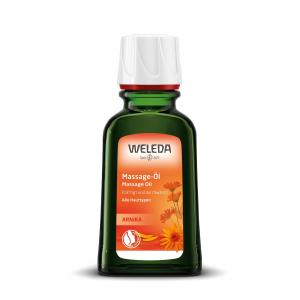
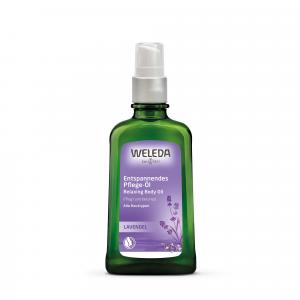
Try our natural products

What happens inside muscles and why stiffness occurs
To understand why massage with a roller works, it is useful to first understand what is actually happening in the muscles. Muscles are wrapped in a thin layer of connective tissue called fascia. This tissue connects individual muscle groups, protects them, and enables their gliding movement relative to one another. Problems arise when the fascia loses its natural elasticity – whether due to lack of movement, overloading, stress, or dehydration. So-called trigger points form – areas of increased tension that cause pain not only locally, but often in other parts of the body as well.
It is precisely these points that are targeted by the technique known as myofascial release. This is a form of self-massage in which controlled pressure and movement along the roller break up these tense areas, improve blood flow to the tissue, and restore the natural mobility of the fascia. Research published in the International Journal of Sports Physical Therapy confirmed that regular use of a foam roller increases range of motion while simultaneously reducing the perception of muscle pain – and this without any negative impact on muscle performance.
The transition from theory to practice is surprisingly straightforward. All you need is a roller, a mat, and a little patience.
How to use a foam roller correctly for stiff muscles
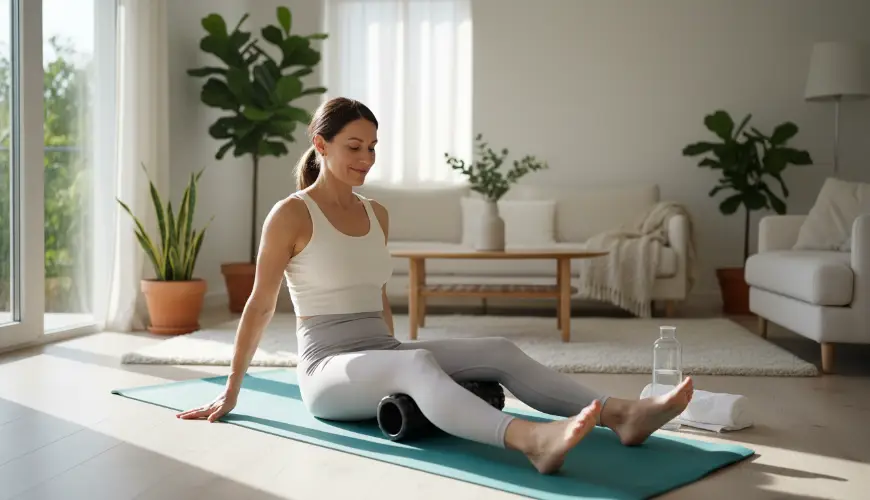
Massage with a roller is not a complicated discipline, but to produce real results, a few basic principles must be observed. The goal is not to roll back and forth as quickly as possible – quite the opposite. The key is slow, mindful movement and the ability to pause at points where the body responds with increased sensitivity.
Take Martina, a thirty-three-year-old accountant who spends most of her working day sitting down. After several months, she began to suffer from pain in her lower back and a feeling of constant stiffness in the back of her thighs. On the recommendation of her physiotherapist, she began spending fifteen minutes each evening on foam roller massage. She focused on her hamstrings, gluteal muscles, and the IT band area along the outer side of her thigh. The results came gradually – after three weeks the pain had significantly subsided and her morning warm-up had ceased to be a daily struggle.
The basic rules for effective roller massage are simple:
- Move slowly – approximately two to five centimetres per second
- When you encounter a sensitive spot, stop and hold it for 20 to 30 seconds
- Breathe regularly and consciously – exhaling helps release tension
- Do not push through acute pain – mild sensitivity is fine, sharp pain is a signal to stop
- Stay well hydrated – massage releases metabolic by-products and hydration helps flush them out
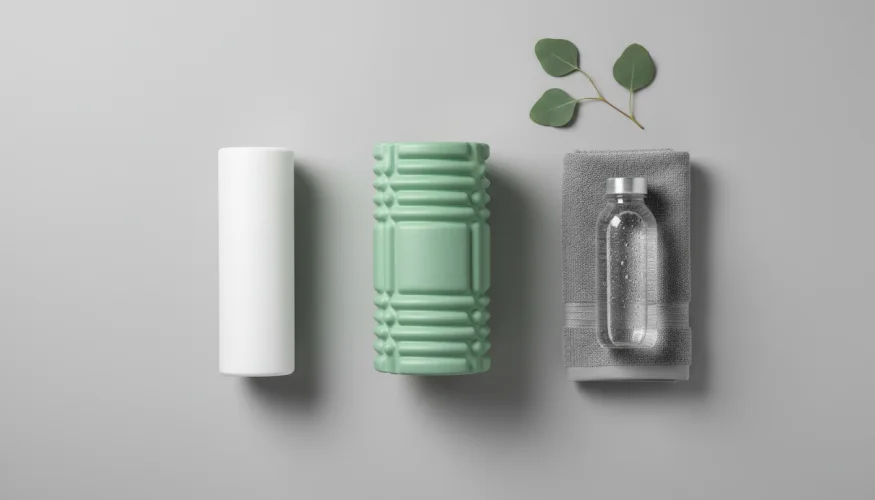
Beginners are advised to start with a softer roller and move to harder variants only as their tolerance for pressure gradually increases. Rollers with protrusions or a textured surface are also available, which mimic the work of a masseur's fingers and can penetrate more deeply into the tissue.
The calf area and thoracic spine deserve special attention – two areas that are most neglected in sedentary professions. Calf massage improves blood circulation in the lower limbs and can contribute to the prevention of varicose veins, while releasing the thoracic spine helps correct forward posture and improve breathing. Simply lie on your back, place the roller under your thoracic spine, and let the weight of your own body do the work.
Foam roller as part of everyday body care
Massage with a roller produces the greatest results when it becomes a regular part of the daily routine – not a tool for emergencies. Just as we brush our teeth every day, caring for fascia and muscles also requires consistency. This is precisely where the foam roller's greatest advantage over visits to a massage salon lies: it is available at any time, requires no appointment or travel, and its purchase price is in the range of a few hundred crowns.
The optimal timing depends on what the massage is intended to achieve. Before athletic performance, a short, dynamic session with the roller helps activate the muscles and increase blood flow – in this case, two to three minutes per muscle group is sufficient. After training or at the end of a working day, a longer, slower session aids recovery and accelerates the removal of lactic acid from muscle tissue. Research, such as a study published in the Journal of Athletic Training, has shown that foam rolling after intense training reduces muscle soreness in the following days – the so-called DOMS (delayed onset muscle soreness) – and shortens the time needed for full recovery.
For those who suffer from chronic tension in the neck and shoulder area – and there are truly many of them today – combining the foam roller with simple stretching exercises can also be beneficial. Releasing the fascia with a roller creates ideal conditions for subsequent stretching: the muscles are warmed up, the tissue is more pliable, and the stretch reaches greater depth. As physiotherapist Kelly Starrett, author of Becoming a Supple Leopard, aptly noted: "Mobility is not just about muscles – it is about the entire system that connects them."
It is also important to know when a foam roller is not appropriate. Direct massage over a site of acute inflammation, a fresh injury, or an open wound can worsen the condition. Similarly, massaging directly along the lumbar spine or cervical vertebrae is not recommended – in these areas it is advisable to focus on the surrounding musculature rather than the spine itself. People with osteoporosis, thrombosis, or other serious medical conditions should consult a doctor before starting.
Choosing the right roller is not a trivial matter. A wide range of variants are available on the market, differing in length, diameter, firmness, and surface texture. Shorter rollers are suitable for targeted work on specific muscle groups, such as the calves or forearms, while longer rollers of around 90 centimetres are ideal for working on the back or thighs. The firmness of the roller should match the user's level of experience and tissue sensitivity – a roller that is too hard for a beginner can cause bruising or worsen inflammation rather than alleviating it.
Environmentally conscious consumers can opt for rollers made from natural or recycled materials, which are gentler on the environment while still meeting all functional requirements. Ferwer's range includes products that combine functionality with a regard for sustainability – precisely what a modern approach to a healthy lifestyle demands.
Regular roller massage is not merely a fitness centre trend. It is a natural, scientifically supported method of caring for the musculoskeletal system that meets the needs of modern people – whether they compete in sport or are simply looking for a way to get through the working week without back pain. The body remembers every hour spent in an unfavourable position, but it equally remembers every minute devoted to its care. And that is perhaps what is most valuable about the foam roller: it serves as a reminder that caring for one's own body need not be complicated or expensive – all it takes is a roller, a mat, and a few minutes each day.