
Get Rid of Pet Urine Odor in Carpets and Mattresses
Every animal lover knows the feeling - you come home, and before you’ve even taken off your shoes, you notice that distinctive, sharp smell. Your four-legged friend has had another accident. Whether it’s a puppy still learning the house rules, an older dog with urinary incontinence, or a cat expressing its displeasure, the smell of pet urine in a carpet or mattress is among the most persistent and unpleasant problems pet owners face. The good news is that there are effective ways to deal with it - and they work best when you understand why the smell develops in the first place and why it is so difficult to remove.
Pet urine is a chemically complex liquid. It contains urea, creatinine, uric acid, various hormones and bacteria. Uric acid is the biggest problem - it crystallizes and binds tightly to carpet fibers and the porous surfaces of mattresses. Once the carpet dries, the problem may appear to have disappeared, but when humidity rises, the crystals reactivate and the smell returns in full force. Anyone who thought they had dealt with a stain only for rainy days to arrive will recognize this phenomenon. According to experts at the American Kennel Club, the key is therefore not just to remove the visible stain, but to chemically neutralize all the components of the urine.
Try our natural products


Why ordinary cleaning products are not enough
Many people reach for the first cleaning product at hand - whether it’s dish soap, vinegar or an all-purpose cleaner from the store. These products may remove the visible stain and suppress the smell for a while, but they rarely solve the problem completely. The reason is that uric acid is not broken down by soap or alcohol, either on or below the surface. What’s more, some products containing ammonia can paradoxically make the situation worse - ammonia is one of the components of urine, and its presence may encourage the animal to urinate in the same spot again. Animals have a much more sensitive sense of smell than humans, and a spot that smells “clean” to us still sends them a clear signal: this is where you go.
The most effective products are those that contain enzymes that break down uric acid. These enzymatic cleaners work through a biological process - the enzymes literally digest organic molecules, breaking them down into odorless substances. The process takes longer than a quick wipe with a cloth, but the results are incomparably better. There are many such products on the market, and their quality varies considerably. When choosing one, look for products with clearly stated ingredients and no harsh chemicals that could damage carpet fibers or mattress covers.
Consider a specific example: a family gets a Labrador puppy and keeps it in a living room with a light-colored carpet. During the first few weeks, several accidents occur in the same spot. Each time, the owners wipe up what they can, add a little vinegar and dry the carpet. After three months, the carpet looks clean, but when the windows are closed, the room has an unpleasant smell that guests notice immediately - even though the owners themselves hardly notice it anymore. This phenomenon is called olfactory adaptation and is very common among people who live with animals. The problem, however, remains and gradually gets worse because each new accident adds to the previous one.
The right way to clean carpets and mattresses
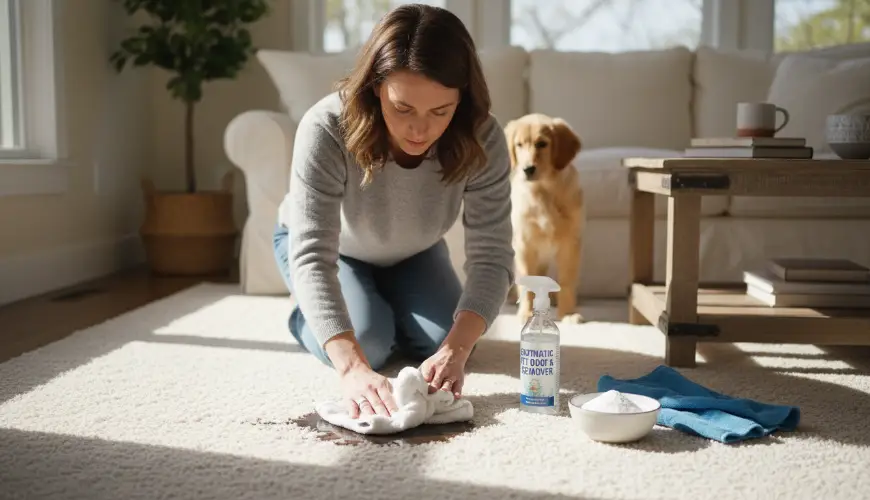
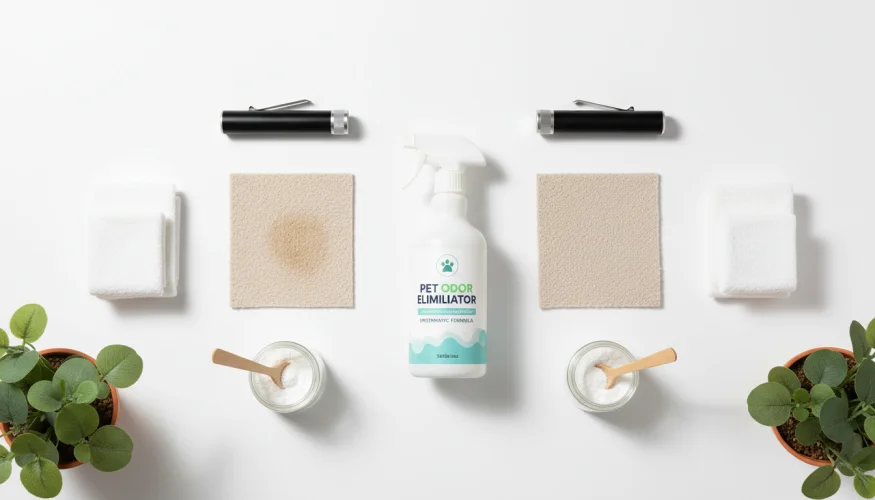
When an accident is fresh, the golden rule is: absorb as much liquid as possible, as quickly as possible. Never rub; instead, place absorbent paper or a clean cloth on the spot and press down gently. Rubbing spreads the stain over a larger area and pushes urine deeper into the fibers. Once you have absorbed as much liquid as possible, apply an enzymatic cleaner generously so that it penetrates as deeply as the urine, and leave it to work according to the instructions, usually for 10 to 15 minutes. Then blot it up again and let the area dry naturally. Speeding up drying with a hair dryer is not recommended, as heat can set the uric acid crystals even more firmly.
With mattresses, the situation is more complicated because a mattress is made of thick, porous material that liquid can penetrate easily and deeply. Pet urine odor in a mattress is therefore particularly difficult to eliminate completely. If an accident occurs, you need to act quickly - remove the bedding, absorb the liquid, apply an enzymatic product and let the mattress air-dry, ideally outdoors or near an open window. As a preventive measure, waterproof mattress protectors made from natural or recycled materials have proven very effective while remaining breathable and comfortable. Such a protector is easy to wash, and the mattress underneath remains untouched.
Old stains or areas affected repeatedly require more work. First, it is helpful to use a UV lamp (black light) to reveal all the places where urine has penetrated - including those invisible to the naked eye. This method is also commonly used by professional cleaning services. The enzymatic cleaner is then applied to all the affected areas, covered with plastic wrap to prevent it from drying too quickly (enzymes need moisture to work), and left to act for several hours or overnight.
As James Herriot, the famous British veterinarian and writer, said: “An animal that gives you its trust gives you the greatest thing it has.” That is precisely why it is worth caring not only for your pet, but also for the environment you share - because a clean home is comfortable for both of you.
Eco-friendly solutions and future prevention
More and more pet owners are looking for solutions that are effective yet environmentally friendly and safe for households with children or other animals. Synthetic cleaning products full of harsh chemicals may mask the smell, but they leave substances in the home that are not necessarily harmless to health. Biologically based enzymatic products are a much better choice in this respect - their ingredients are more natural, and the enzymes break down on their own once they have done their job.
Another popular natural aid is baking soda. Once the enzymatic cleaner has been applied and has dried, sprinkle a layer of baking soda over the area, leave it for several hours, then vacuum it up. Baking soda absorbs any remaining odors and leaves carpet fibers fresh. Activated charcoal in sachets placed near the problem area works in a similar way, helping to absorb odors from the air. These methods are not a substitute for enzymatic cleaning, but they make an effective addition.
When it comes to prevention, consistent training plays a key role, as do regular walks or access to a litter box, and the owner’s attention to the pet’s health. Sudden changes in bathroom habits - such as urinating in unusual places or urinating frequently - can be signs of health problems, such as a urinary tract infection or diabetes. In that case, a visit to the veterinarian is essential, because no cleaning product will solve the problem if its cause lies in the animal’s health. Information on the most common medical causes of changes in urination in dogs and cats is available, for example, from the Cornell University College of Veterinary Medicine.
For carpets in rooms where your pet spends a lot of time, it is also sensible to consider the choice of material itself. Natural-fiber carpets, such as wool or jute rugs, are generally easier to clean and less prone to trapping odors permanently than dense, high-pile synthetic carpets. Short-pile surfaces or smooth floors with a washable rug are the most practical choice for households with pets.
Regular maintenance is equally important. Even without visible accidents, carpets in homes with pets should be deep-cleaned several times a year - either by a professional service or with a steam cleaner. Steam effectively kills bacteria and helps loosen embedded dirt. Mattresses should be aired and rotated regularly, and it is a good idea to treat them occasionally with an enzymatic spray as a preventive measure, especially if the animal sleeps in the bedroom.
Living with an animal brings countless joys, but also practical challenges. Pet urine odor in a carpet or mattress is one of those challenges that can be managed without unnecessary stress, with a little knowledge and the right products. The key is a quick response, the right chemistry and a little patience - the same qualities we also appreciate when training our four-legged friends.