
What Is Anhedonia and How Can You Recognize It?
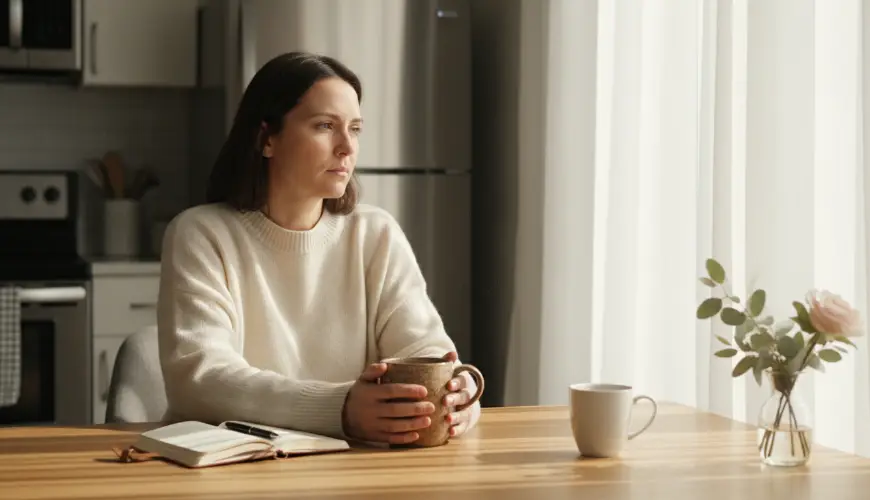
There is a peculiar state of mind that many people know, but few can find the right word for. You wake up in the morning with a day ahead full of things you would normally enjoy – your favorite coffee, a walk in the park, an evening with friends – yet all you feel is emptiness. Not sadness, not tears, not darkness. Simply nothing. As if someone had turned off the tap of joy and the water had stopped flowing. This state has a name: anhedonia.
The word comes from Greek – the prefix an- means negation, and hēdonē means joy or pleasure. Literally, then, it is the inability to experience pleasure. Although anhedonia is often associated with depression, it is important to understand that it is a distinct psychological phenomenon that can exist entirely independently of conventional sadness or hopelessness. That is precisely what makes it so insidious – a person does not feel “bad” in the traditional sense, and so often does not even realize they might need help.
Take Markéta, a thirty-four-year-old graphic designer from Brno. Her work used to fulfill her, every new project was a challenge, she looked forward to weekends with friends, and she loved trying new recipes. Then came a year when all of it somehow… stopped working. She did not start crying or hiding under the covers; she went to work and fulfilled her responsibilities. But the spark was gone. Coffee no longer tastes the way it used to, a vacation passed without a single genuine feeling of joy, and new projects are just tasks to be checked off. “I told myself I was probably just tired,” she recalls. “It never occurred to me that it might have a name.”
Try our natural products
What actually happens in the brain
Anhedonia is not just a “bad mood” or mere fatigue. Specific neurobiological processes lie behind this state. The dopamine system plays a key role – the brain’s reward network, which normally motivates us to seek out pleasant experiences and rewards us for them with a sense of satisfaction. When this system does not function properly, the brain stops processing reward signals correctly. A person may know that they should enjoy something, but the actual experience simply does not come.
Research published, for example, in the scientific journal Neuroscience & Biobehavioral Reviews shows that anhedonia affects not only the ability to experience joy in the moment, but also anticipation – the ability to look forward to things. In other words, an affected person not only fails to enjoy pleasant experiences, but cannot look forward to them either. This creates a vicious cycle: why plan a vacation, a trip, or dinner with friends when you do not feel any excitement beforehand?
Experts distinguish two basic types of anhedonia. Social anhedonia manifests as a loss of interest in interpersonal relationships and interactions – meeting friends becomes an obligation rather than a source of joy. Physical anhedonia affects bodily sensations – food loses its flavor, music no longer moves you, and a loved one’s touch evokes no warmth. Both types can occur together or separately, and their intensity can change over time.
It is also important to note that anhedonia is not exclusively associated with depression, even though it is one of its main symptoms according to the diagnostic criteria of the World Health Organization. It also occurs in schizophrenia, bipolar disorder, and anxiety disorders, as well as as a result of chronic stress, burnout, or long-term physical illness. In recent years, there has also been discussion of so-called post-COVID anhedonia – a condition in which people describe a persistent loss of the ability to experience joy after having COVID-19, even months after their other symptoms have subsided.
Part of what makes anhedonia insidious is how unobtrusively it settles into everyday life. It does not arrive like a storm, but like fog – slowly and quietly, so that a person does not even notice exactly when things stopped bringing them joy. Looking back, many realize it happened gradually: first they stopped watching shows they used to look forward to, then they began turning down invitations to events, then they stopped cooking their favorite meals. Each step on its own looked like a minor thing, like fatigue or just a “rough patch.” Only with time does it become clear that there is a systematic loss of the ability to experience pleasure.
This gradual progression is one reason why anhedonia is so difficult to address. Unlike acute sadness or a panic attack, anhedonia is not dramatic. It does not create crises or interfere with functioning in a way that is visible to others. The person goes to work, interacts with people, and meets their commitments. From the outside, they look fine. Inside, however, they are like an empty vessel – functional, but with nothing in it.
How can you tell whether it is more than ordinary fatigue or an introverted nature? The line can be thin, but there are certain signs worth watching for. If the joy you once took in things you enjoyed has been missing for more than a few weeks, if you cannot experience pleasure even in situations that should objectively be pleasant, and if you notice that you are increasingly avoiding social contact or activities – these are signs that the situation should not be underestimated.

How anhedonia is addressed and what can help
The good news is that anhedonia is not an inevitable condition that one simply has to live with. There are ways to gradually “awaken” the dopamine system and restore the ability to experience joy. As psychiatrist and author of a book on the neuroscience of happiness Alex Korb said: “The brain is plastic – what we repeat, we strengthen. This applies to patterns of thought, but also to the ability to experience joy.”
Professional help is essential in cases of anhedonia, especially if it lasts a long time or is intense. Psychotherapy – particularly cognitive behavioral therapy – has proven effective in addressing negative thought patterns that perpetuate a state of emotional numbness. In some cases, doctors also recommend medication that targets the dopamine and serotonin systems.
Alongside professional care, everyday lifestyle also plays a major role. Regular exercise is among the best-documented natural ways to support the dopamine system – and it does not have to mean intense exercise. A brisk walk in nature, swimming, or yoga can have a measurable effect on mood and the ability to experience pleasure. Equally important is sleep, a lack of which directly affects the functioning of the brain’s reward system.
Nutrition also plays an interesting role. The gut and brain are connected by the so-called gut-brain axis, and a healthy microbiome can positively influence the production of neurotransmitters, including dopamine and serotonin. Fermented foods, fiber, and limiting highly processed foods are steps supported by scientific evidence. In this context, it is no coincidence that interest in healthy eating and organic food is growing alongside greater awareness of mental health.
Another important part of addressing anhedonia is consciously seeking out small pleasures – not with the expectation of euphoric joy, but with patience and attention. Psychologists speak of so-called behavioral activation: deliberately engaging in activities that used to bring joy, even when they bring no feeling at the time. The brain needs repetition to restart its reward patterns. It may sound paradoxical – doing things you do not enjoy so that you can start enjoying them – but research has repeatedly shown this method to be effective.
The relationship between anhedonia and digital overload deserves special attention. Excessive use of social media, a constant stream of notifications, and shortened attention spans caused by algorithm-driven content can literally “overload” the dopamine system. The brain becomes accustomed to fast, intense stimuli, and ordinary everyday pleasures – a cup of tea, morning silence, a conversation with a friend – then seem pale and uninteresting. A digital detox, even if it only takes the form of regular hours without a phone, can be a surprisingly effective step.
Topics such as mindful living, contact with nature, quality materials, and slow daily rituals are not merely fashionable trends – they are directly connected to how our nervous system functions and how we experience the world around us. Mindful shopping, cooking with fresh ingredients, wearing clothes that feel good – all of these are small anchors in the present that can gradually help us reconnect with our emotions.
In many ways, anhedonia is a mirror of our times. We live in an era of unprecedented opportunities, stimuli, and information, and yet – or perhaps precisely because of this – more and more people describe a feeling of inner emptiness. It is neither a weakness nor a whim. It is a signal worth listening to. Because the ability to experience joy is not a luxury – it is one of the fundamental pillars of what it means to be fully alive.