
Stop wasting starts with small habits that turn an ordinary household into a sustainable home
Every day in a Czech household, more energy, water, and food disappears than most of us can imagine. According to data from the Czech Statistical Office, households consume approximately a quarter of all energy in the country, and a significant portion of it is simply wasted – through poor insulation, unnecessarily running water, or forgotten appliances in standby mode. Yet a few well-thought-out changes are all it takes to turn an ordinary apartment or house into a sustainable eco household that saves the planet and your wallet at the same time. It's not about radical deprivation. It's about a smarter approach to what we already have.
The idea of "stop wasting" has moved from ecological circles into the mainstream in recent years, and for good reason. Rising energy prices after 2022 showed millions of Czechs that reducing energy and water waste is not just a matter of conscience but a purely practical issue. A family in a medium-sized apartment can, according to estimates by the organization Šance pro budovy, save thousands of crowns annually simply by eliminating the most common sources of waste, without having to invest in expensive technologies. And it is precisely these specific steps that we will discuss.
Try our natural products






Where energy and water actually disappear in the household
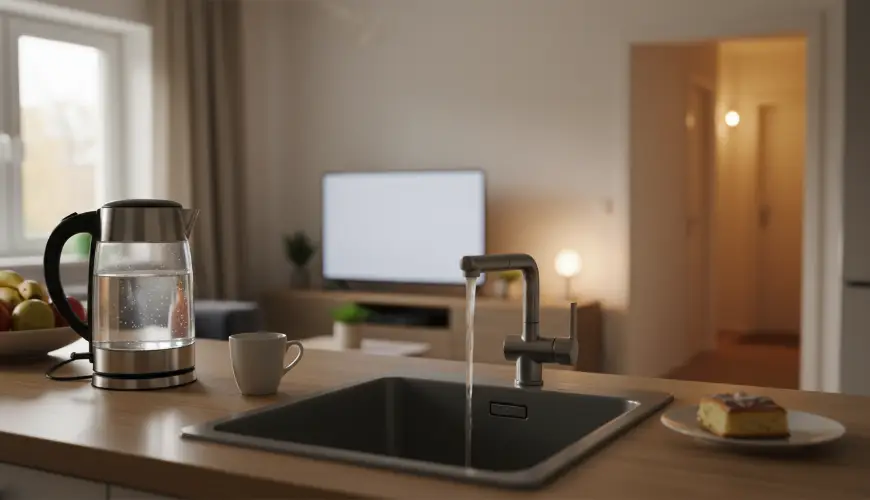
Imagine a typical morning. The alarm goes off, you turn on the bathroom light, run the hot water and let it flow until it warms up. Meanwhile, in the kitchen, the electric kettle is running filled to the brim, even though you're only making a single cup. The TV in the living room is on even though no one is watching it, and a lamp in the hallway was left on overnight. Each of these small things seems harmless on its own, but added up over an entire year, they represent a surprisingly high amount on your bills – and an unnecessary burden on the environment.
Energy waste most often hides where we least expect it. Appliances in standby mode consume five to ten percent of total electricity consumption in an average Czech household, according to the International Energy Agency (IEA). That's as if you were paying every month for an appliance you don't use at all. Older refrigerators, washing machines, and dryers tend to be an even bigger black hole – their energy rating corresponds to a time when efficiency was hardly discussed.
The situation with water is similar. The average Czech consumes around 130 liters of drinking water per day, while the World Health Organization considers approximately 50–100 liters a reasonable minimum. The largest share goes to toilet flushing and showering. Yet a simple water-saving shower attachment can reduce flow by thirty to fifty percent without the person noticing any difference in comfort. Similarly, faucet aerators mix air into the stream, so the water looks and feels just as rich, but significantly less of it flows.
One of the most common places for water waste, however, is even more prosaic – a dripping faucet. A single faucet dripping at a rate of one drop per second produces over 11,000 liters of needlessly lost water per year. That's enough to fill a small garden pool. The repair often costs just a few dozen crowns for a seal.
When food waste is added to energy and water, the picture becomes even more telling. According to the initiative Zachraň jídlo, approximately 80 kilograms of food per person per year end up in the bin in Czech households. That's not just money thrown away – it's also energy consumed in the production, transportation, and storage of food that never fulfilled its purpose. As author and environmental journalist Elizabeth Rosenthal said: "The greenest energy is the energy you never use." And the same applies to water, food, and everything else.
Practical tips on how to save by stopping waste
The good news is that most steps to reduce waste require no initial investment or technical knowledge. Often it's about changing habits that, after a few weeks, become an automatic part of everyday life.
Let's start with heating, because in Czech conditions it represents the largest energy cost item – usually around sixty percent. Lowering the room temperature by just one degree can, according to energy auditors, save up to six percent on heating costs. That doesn't mean freezing – it means, for example, heating to 21 °C instead of 23 °C and putting on a warm sweater at home. It's also important not to cover radiators with furniture or curtains that prevent warm air from circulating into the room. And ventilation? Short, intensive cross-ventilation for five minutes is incomparably more efficient than a window left slightly open all day, letting expensive heat escape.
For electrical appliances, it pays to get a power strip with a switch and disconnect groups of appliances – TV, game console, soundbar – with a single click. When cooking, using a lid on the pot helps, which can shorten cooking time by up to a third. The electric kettle only needs to be filled with the amount of water you actually need. And a dishwasher, contrary to a widespread myth, uses less water and energy than washing by hand, provided you run it fully loaded and on an eco program.
Lighting is a chapter of its own. Switching from old incandescent bulbs or halogens to LED lighting is one of the fastest-returning investments of all. An LED bulb uses up to eighty percent less energy than a traditional bulb and lasts many times longer. If ten bulbs in a household are on for an average of five hours a day, the difference in annual consumption can amount to hundreds of kilowatt-hours.
As for water, besides the already mentioned aerators and water-saving shower heads, it's essential to check the toilet flushing system. Modern dual-flush systems allow you to choose between a small and large flush, saving thousands of liters per year. Those with a garden can consider collecting rainwater in barrels or underground tanks – rainwater is ideal for watering and requires no chemical treatment.
And then there's food. Meal planning may seem like trivial advice, but it works reliably. Once a week, simply write down a meal plan, check what's already at home, and buy only what's missing. Proper food storage extends shelf life – tomatoes don't belong in the refrigerator, herbs last longer in a glass of water, and bread stays fresh in a cloth bag in a cooler environment. Leftovers from cooking can almost always be turned into a new dish – yesterday's rice becomes great fried rice, overripe bananas become banana bread, and broth that would otherwise end up down the drain becomes the base for soup.
An interesting real-life example is the Novák family from Brno, who two years ago decided to track everything they threw in the bin for one month. The result shocked them: in thirty days, they threw away nearly seven kilograms of food, mostly fruit, vegetables, and bread. After implementing a simple system – smaller, more frequent shopping trips, freezing leftovers, and cooking "from what's at home" – the amount of discarded food dropped to less than a kilogram per month. Annual savings? Approximately four thousand crowns, not counting the better feeling that food is actually fulfilling its purpose.
The transition to a more sustainable household doesn't have to mean only savings on operating costs, though. It's also about choosing the materials and products that surround us. Organic cotton textiles, cleaning products without unnecessary chemicals, reusable food wraps, or quality clothing that lasts years instead of one season – these are all pieces of a mosaic that together create a truly ecological household. It's not about being perfect, but about making more conscious decisions where possible.
Incidentally, there is one surprisingly effective tool that is rarely discussed: energy monitoring. Simple plug-in consumption meters, costing a few hundred crowns, allow you to find out exactly how much each appliance actually consumes. Many people are surprised to discover that their old freezer in the garage uses more electricity than all other kitchen appliances combined. Without measuring, you can only guess – with data, you can take action.
The whole concept of reducing waste has yet another dimension that is often overlooked: the psychological one. Studies published in the Journal of Consumer Psychology suggest that people who consciously reduce waste experience a higher level of life satisfaction. It's not a paradox – it's logical. When a person knows they are using their resources meaningfully, they feel greater control over their own life. Less waste, less chaos, fewer unnecessary expenses. More calm, more space, more freedom.
The path to a more sustainable household is not a sprint but a marathon. You don't have to change everything at once. Start with one habit – perhaps next week, don't fill the kettle to the brim. Then add another. In a few months, you'll look back and realize that your household works differently, more efficiently and more considerately, and that it didn't actually hurt. Perhaps the opposite – that it brought something you didn't expect. The feeling that you're doing things right, not just for yourself, but for the world around you.