

Brittle nails as a signal of nutritional deficiency in the diet

Nails are much more than just an aesthetic detail. They are small mirrors of our inner health, capable of revealing a great deal about what is happening inside the body. When nails break, split, or become brittle and thin, the body is sending a clear signal that something is wrong – and in most cases, the cause is hidden in the diet. It is surprising how many people look for solutions in expensive nail products without considering what they are actually eating.
Brittle nails are one of the most common problems people face. According to dermatologists, approximately 20% of the population suffers from this condition, with women affected significantly more often than men. The medical terms for this condition are onychoschizia or onychorrhexis, where the former refers to horizontal splitting of the nail plate and the latter to vertical cracking. Both conditions share one thing in common – they very often stem from a deficiency of key nutrients.
What exactly do brittle nails signal?
A healthy nail grows approximately three millimetres per month, and its structure depends on a continuous supply of proteins, vitamins, and minerals. When this supply fails, the nail plate begins to lose flexibility, becoming brittle and prone to damage. Nails are composed primarily of keratin – a structural protein that requires a whole range of micronutrients for its proper formation.
One of the most common culprits is biotin deficiency, a B-group vitamin that plays a key role in the metabolism of fats, carbohydrates, and proteins. A study published in the Journal of the American Academy of Dermatology showed that biotin supplementation led to measurable improvements in the thickness and firmness of the nail plate in patients with brittle nails. Biotin is naturally found in eggs, nuts, seeds, salmon, and avocado – and these are precisely the foods missing from the diets of many people who struggle with brittle nails.
Another signal may be iron deficiency. Iron-deficiency anaemia manifests on the nails not only through brittleness, but also through a characteristic concave shape of the nail plate – a phenomenon medically known as koilonychia. Iron is a mineral whose deficiency is very widespread in Europe, particularly among women of reproductive age, vegetarians, and vegans. If brittle nails are accompanied by fatigue, pallor, or shortness of breath, it is advisable to have a blood count test done.
Less well known, but equally important, is zinc deficiency. Zinc is involved in protein synthesis and cell division – precisely the processes that are essential for nail growth. Its deficiency can manifest as white spots on the nails, brittleness, or slowed growth. Zinc is found in meat, seafood, legumes, and pumpkin seeds, and although an overall zinc deficiency is not extremely common in our population, its absorption can be impaired by high consumption of processed foods or excessive alcohol intake.
Vitamins A, C, and E also play a role. Vitamin C is essential for collagen production, which gives nails their flexibility, and its deficiency can manifest precisely as brittleness. Vitamin A supports cell growth and tissue renewal, while vitamin E acts as an antioxidant that protects cells from oxidative stress. All of these vitamins are readily available from a varied diet rich in vegetables, fruit, and quality fats – but this is precisely the kind of diet that is often lacking in modern life.
An interesting case from practice: Jana, a thirty-three-year-old accountant from Brno, struggled for many months with nails that cracked as soon as they grew a little. She tried various strengthening nail polishes and expensive hand creams, but nothing helped. It was only when she visited a nutritional advisor that it became clear her diet was extremely low in protein and healthy fats – as a working mother, she mainly ate fast food and skipped breakfast. After changing her diet and supplementing with biotin and zinc, the condition of her nails improved significantly within three months. This story is not exceptional – on the contrary, it is very typical.
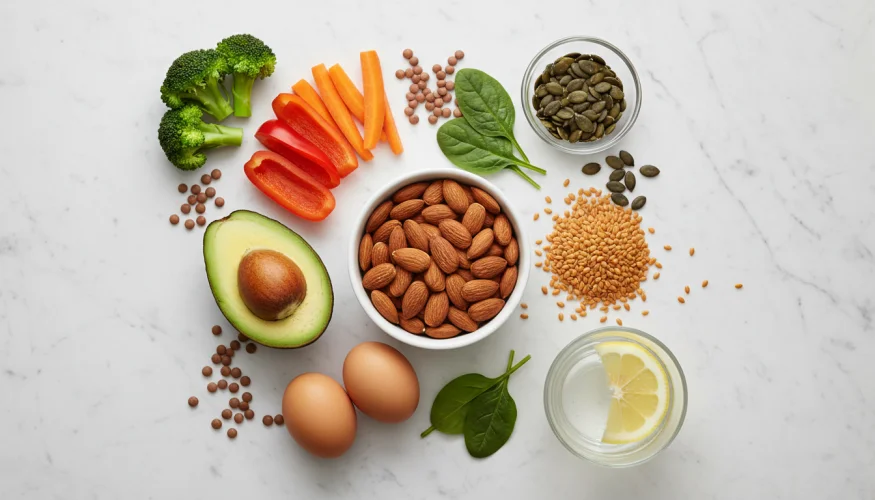
How to adjust your diet so that nails are strong and healthy?
The solution to brittle nails begins at the plate, not in the pharmacy. The foundation is an adequate intake of quality proteins, because keratin, from which nails are made, is a protein and the body cannot synthesise it without amino acids. The recommended daily intake of protein for an adult is around 0.8 grams per kilogram of body weight, and this may be higher during periods of increased physical exertion or stress. Good sources include eggs, legumes, fish, poultry, dairy products, and tofu.
It is equally important to include healthy fats in the diet. Omega-3 fatty acids, found in oily fish, flaxseeds, and walnuts, help maintain the natural moisture of the nail plate and prevent it from drying out. Dry nails are significantly more prone to breaking than nails that are properly hydrated from within. Interestingly, even external hydration through creams and oils cannot fully replace the intake of healthy fats through diet.
When it comes to micronutrients, it is sensible to focus primarily on the following nutrients:
- Biotin – eggs, almonds, salmon, sweet potatoes, avocado
- Iron – red meat, lentils, spinach, pumpkin seeds (together with vitamin C for better absorption)
- Zinc – oysters, beef, pumpkin seeds, chickpeas
- Vitamin C – citrus fruits, peppers, broccoli, strawberries
- Vitamin A – carrots, sweet potatoes, leafy greens, eggs
- Silicon – whole grains, oats, green beans
Silicon is a nutrient that tends to be overlooked in the context of nails, despite playing an important role in the formation of connective tissue and contributing to the firmness of the nail plate. It is found primarily in oats, wholegrain bread, and green beans.
Hydration also plays an important role. Dehydration manifests not only as dry skin and fatigue, but also as brittle nails. An adequate fluid intake – ideally plain water, herbal teas, or diluted fruit juices – helps keep nails flexible and resilient. The daily recommendation is around two litres of fluids, with higher amounts needed during physical activity or in hot weather.
As the famous Greek physician Hippocrates said: "Let food be thy medicine and medicine be thy food." This idea holds true in the context of nail health as well – although they may seem like a trivial problem, brittle nails are a genuine call from the body for better nutrition.
It is worth noting that certain lifestyle habits can disrupt nutrient absorption even when the diet appears varied. Excessive consumption of coffee and alcohol reduces the absorption of zinc and calcium. Diets with extreme caloric restriction, or one-sided eating plans such as various fad diets, very often lead to significant micronutrient deficiencies – and nails are one of the first places where this becomes apparent. Similarly, chronic stress increases the body's consumption of B-group vitamins and magnesium, which can contribute to their deficiency even with an otherwise balanced diet.
If changes to the diet do not produce results after two to three months – nails renew slowly and visible improvement takes time – it is advisable to see a doctor. In some cases, brittle nails can be a symptom of thyroid conditions, psoriasis, or other systemic diseases that require specialist care. The Czech Dermatovenerological Society recommends consulting a dermatologist for persistent nail problems, who can recommend targeted diagnostics.
Modern nutrition offers a wide range of ways to support nail health naturally. Rather than searching for miracle products in pharmacies or drugstores, it is worth first taking an honest look at what we eat every day. A varied, balanced diet rich in proteins, healthy fats, vitamins, and minerals is the most effective and at the same time most natural path to strong, healthy nails. And as a side effect, it will bring improvements in energy levels, skin condition, and overall wellbeing – because the body functions as a whole, and what we feed it shows up everywhere.