

Get rid of heartburn during pregnancy without medication

Pregnancy brings many beautiful moments, but also a whole range of physical discomforts that can significantly complicate everyday life. One of the most common issues experienced by a large proportion of pregnant women is heartburn. That unpleasant burning sensation behind the breastbone that spreads up to the throat can be particularly intense during pregnancy – and worst of all, it tends to strike most often at moments when a pregnant woman would most like to rest.
The natural reaction is to reach for medication. However, during pregnancy every drug is a potential risk, and most women quite reasonably look for ways to manage heartburn during pregnancy without medication. The good news is that there are numerous natural methods that genuinely work – and many of them are surprisingly simple.
Try our natural products


Why does pregnancy cause heartburn?
Before we get into specific solutions, it is useful to understand what is actually happening in the body. Heartburn occurs when stomach acid flows back into the oesophagus. Under normal circumstances, this is prevented by a sphincter at the lower end of the oesophagus, which functions as a one-way valve. During pregnancy, however, two significant changes occur that disrupt this mechanism.
Firstly, the hormone progesterone, whose levels rise considerably during pregnancy, causes the smooth muscle throughout the body to relax – including the aforementioned sphincter. It then ceases to perform its protective function as reliably as before. Secondly, as the foetus grows, the uterus gradually displaces other organs and physically presses on the stomach, increasing pressure on its contents. It is therefore no surprise that heartburn tends to be most intense in the third trimester, when the abdomen is at its largest.
According to information available on the American College of Obstetricians and Gynecologists website, up to 80% of women experience heartburn during pregnancy. It is therefore an entirely common phenomenon, even if that does nothing to lessen its unpleasantness. Understanding the causes is key, however, because only on that basis can the right measures be chosen.
It is also important to know that heartburn during pregnancy is not medically dangerous for either the mother or the baby. It is an unpleasant side effect, but a natural one, and it typically resolves on its own after delivery. That said, it does not mean every pregnant woman simply has to put up with it.
Changes to diet and eating habits as a first step
The most effective tool in combating heartburn is adjusting diet and eating habits. This is nothing new, but it works – and without any side effects whatsoever. The basic rule is: less and more often. Instead of three large meals a day, it is advisable to switch to five or six smaller portions. A full stomach increases pressure on the oesophageal sphincter, so eating smaller amounts at a time significantly alleviates this problem.
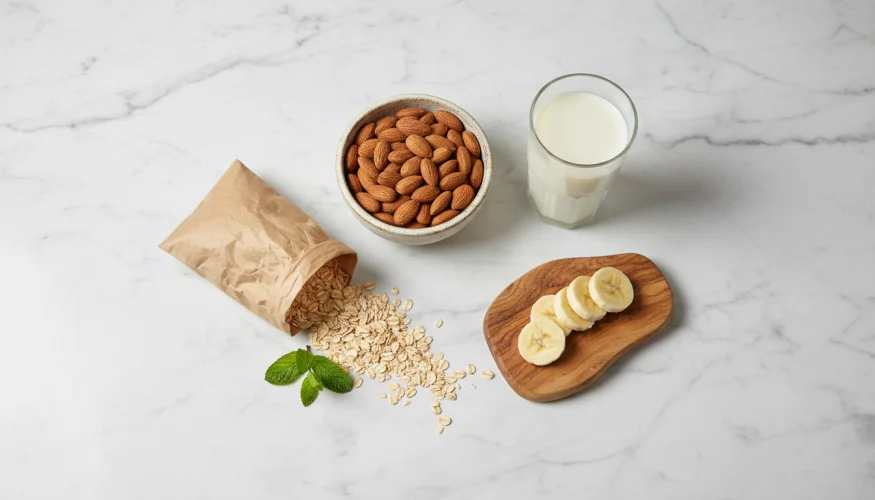
It is equally important to know which foods trigger or worsen heartburn. Every woman is slightly different, but there are foods that are notorious for their ability to cause irritation. These include fatty and fried foods, hot spices, citrus fruits and their juices, tomatoes and tomato-based sauces, chocolate, coffee, and alcohol. Conversely, foods such as cooked vegetables, rice, oatmeal, or bananas tend to be gentle on digestion and are less likely to trigger heartburn.
The timing of meals also plays a major role. Eating just before bed is almost a guaranteed recipe for a disturbed night for women suffering from heartburn during pregnancy. Ideally, the last meal should be eaten at least two to three hours before lying down, to give the stomach time to digest and move its contents further along the digestive tract. Similarly, it is advisable to avoid lying down immediately after eating – a short walk or sitting quietly are better options.
Eating slowly and calmly, chewing thoroughly, and avoiding rushing at the table may seem like trivial advice, but their effect on digestion is demonstrable. Eating in a hurry leads to swallowing air and insufficient breakdown of food in the mouth, which complicates the entire digestive process.
An interesting tip appreciated by many pregnant women is incorporating almonds into the diet. A handful of almonds after a meal can help neutralise stomach acid thanks to their alkaline nature. A glass of full-fat milk or a spoonful of cream has a similar effect – the fat they contain temporarily creates a protective coating on the stomach wall.
Body positioning, movement, and other natural methods
Dietary changes are undoubtedly the most important measure, but they are not the only weapon available. Physical body position plays a surprisingly significant role in preventing heartburn. Pregnant women are advised to sleep with the upper part of their body slightly elevated – it is enough to prop up the mattress or use extra pillows so that the head and shoulders are higher than the stomach. Gravity then helps keep stomach acid where it belongs.
Loose clothing is not merely a matter of comfort. Tight clothing around the abdomen and waist increases pressure on the stomach and can worsen heartburn. Pregnant women who switch to comfortable, loose-fitting clothing therefore often notice an improvement in their digestive complaints as well. This is, incidentally, one of the reasons why maternity fashion makes sense from a purely functional perspective.
Regular physical activity has a positive effect on digestion in general. Short walks after meals, gentle prenatal yoga, or swimming support intestinal peristalsis and the overall function of the digestive tract. It goes without saying that all physical activity during pregnancy should be adapted to the current state of health and discussed with a doctor or midwife.
As a real-life example, the experience of many pregnant women illustrates that a significant turning point came when they combined several small changes at once: switching to smaller portions, giving up coffee, going for a short walk after dinner, and raising the head of the bed by a few centimetres. None of these changes was miraculous on its own, but together they were able to substantially reduce heartburn – without a single medication.
Ginger is also worth mentioning, as it has a long history in herbal medicine as a remedy for digestive complaints. Ginger tea or ginger sweets can help soothe the stomach and ease the nausea that sometimes accompanies heartburn. Ginger is generally considered safe during pregnancy, though it is always wise to consult a doctor before using it regularly. Chamomile tea is sometimes recommended in a similar context, but it requires caution during pregnancy and should only be used on professional advice.
An interesting and relatively little-known method is chewing sugar-free gum after meals. Chewing stimulates the production of saliva, which is naturally alkaline and helps neutralise acid in the oesophagus. Research published in the Journal of Dental Research, among other journals, has confirmed that chewing gum after meals reduces acidity in the oesophagus. It is a small trick with a surprisingly measurable effect.
The influence of stress on digestion must not be overlooked either. Pregnancy is an emotionally demanding period, and stress demonstrably worsens digestive complaints, including heartburn. Relaxation techniques such as breathing exercises, meditation, or prenatal yoga therefore benefit not only the mind, but have a direct impact on physical symptoms as well. As the old medical saying goes: "The gut is the second brain" – words now confirmed by an entire field of science studying the gut-brain axis.
It is also important to ensure adequate fluid intake, but with care. Drinking large amounts of water during meals can overfill the stomach and increase pressure on the oesophageal sphincter. A better strategy is to drink water between meals and consume only a smaller amount at the table. Sparkling water and sugary drinks are best avoided, as they can worsen digestive complaints.
If heartburn persists despite all these measures and significantly disrupts sleep quality or day-to-day functioning, consulting a gynaecologist or general practitioner is always appropriate. There are medications considered safe during pregnancy – for example, certain antacids based on calcium carbonate. However, the decision to use them should always rest with a doctor, rather than being the result of one's own initiative at the pharmacy.
Heartburn during pregnancy may be a tiresome companion, but with a little patience and a willingness to experiment with different approaches, it can in most cases be brought substantially under control. And with each passing week that brings the due date closer, the moment when this discomfort simply disappears also draws nearer – along with the arrival of a new life into the world.