

# Try McKenzie Exercises for Relief from Disc Pain McKenzie exercises are a specific set of movemen
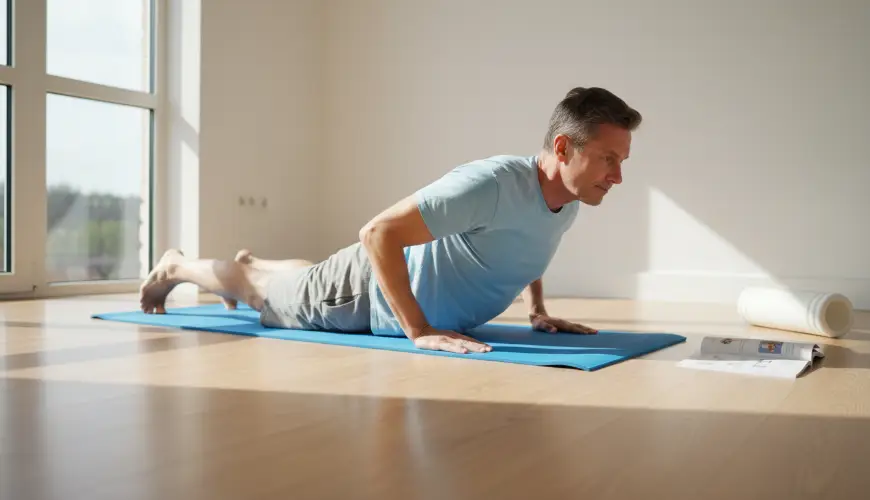
Back pain is among the most common health complaints of the modern era. Millions of people around the world struggle every day with uncomfortable pressure, stabbing sensations, or dull pain originating from the lumbar spine. A large proportion of these problems share a common denominator – a herniated or damaged intervertebral disc. This is precisely where McKenzie exercises come into play, a rehabilitation method that has earned the respect of physiotherapists and patients worldwide over the decades of its existence.
Intervertebral discs are cartilaginous structures that act as shock absorbers between the individual vertebrae of the spine. When a disc is healthy, it performs its role unnoticed. Problems arise when its inner mass – known as the nucleus pulposus – begins to push outward through the outer casing. This condition, commonly known as a "slipped disc" or "disc herniation", can irritate surrounding nerves and cause pain that frequently radiates down into the lower limbs. If pain shoots down your leg, it may be a typical symptom of sciatica – a condition in which the sciatic nerve is being irritated.
Try our natural products




What are McKenzie exercises and where do they come from?
Behind this method stands New Zealand physiotherapist Robin McKenzie, who developed it in the 1950s and 1960s. The story of its origin is surprisingly straightforward. McKenzie once left a patient with chronic back pain lying on an examination table in a position with an arched back – that is, in extension – and after a short while the patient announced that the pain was beginning to subside. This chance discovery gave rise to a systematic method now known as the McKenzie Method of Mechanical Diagnosis and Therapy (MDT).
The fundamental philosophy of the method rests on the idea that movement – the right kind, targeted and repeated – can help shift the displaced disc nucleus back to a central position. In other words, instead of complete rest and avoiding movement, McKenzie recommends the active involvement of the patient in their own recovery. This was a fairly revolutionary approach at the time of its inception, as medicine of that era primarily prescribed bed rest for back pain.
Today, McKenzie's approach is supported by a number of scientific studies. For example, a review study published in the European Spine Journal confirms that this method can be effective in treating both acute and chronic lumbar pain, comparably or better than some other conservative approaches.
The key concept of the entire method is what is known as centralisation of pain. This refers to the phenomenon whereby pain that originally radiates into the leg or buttock gradually retreats back towards the spine. If this occurs during exercise, it is a very good sign – it means the exercises are working correctly and the disc is responding to movement in the desired way. Conversely, if pain intensifies during exercise or spreads further into the limb, it is necessary to stop exercising and consult a specialist.
The principle of pain centralisation is so specific that it serves as a diagnostic tool in its own right. An experienced physiotherapist trained in the McKenzie method can, based on how a patient responds to various movements, precisely determine which type of exercise will be most suitable for that individual. Every case is different – some people need extension exercises, others need flexion or lateral movements.
Consider Martin, a forty-five-year-old accountant who spent eight hours a day at a computer. One morning he woke up with unbearable pain in his lower back that radiated through his buttocks and down into his calf. An X-ray and MRI scan revealed a disc herniation at the L4/L5 level. While an orthopaedic surgeon offered surgery, he first recommended trying conservative treatment. Martin began working with McKenzie exercises under the guidance of a physiotherapist, and after six weeks of regular exercise, the pain improved significantly – it centralised to the lumbar region and practically disappeared from his leg. He ultimately did not need surgery.
What McKenzie exercises look like in practice
The best-known and most frequently prescribed McKenzie exercise for lumbar disc herniation is the prone press-up – referred to in English as a "press-up" or "prone press-up". It is performed lying face down, with the patient propping themselves up on their forearms or palms and slowly raising the upper body while the pelvis remains on the surface. This brings the spine into extension, which in most people with disc herniation helps centralise the disc contents.
Of course, McKenzie exercises are not just a single movement. The entire system encompasses several phases and types of exercise, adapted to the patient's condition:
- Prone lying (passive position in pronation) – the simplest starting position, suitable for acute conditions
- Extension in prone lying – gradually raising the trunk with support on the forearms and then the palms
- Standing extension – for patients who cannot lie down, or as a more advanced variation
- Lateral shift correction – lateral exercises for cases where the spine is deviated to one side
- Flexion exercises – forward bending movements used primarily for spinal canal stenosis or for patients who do not respond to extension exercises
It is absolutely essential to emphasise that the selection of specific exercises should always be made by a trained physiotherapist. Performing exercises without a proper diagnosis can worsen the condition. What helps one patient may harm another. This is precisely why the McKenzie method is described as diagnostic-therapeutic – first the correct direction of movement is identified, and only then does exercise begin.
One of the great advantages of the McKenzie approach is its emphasis on patient self-sufficiency. Robin McKenzie himself used to say: "The best doctor is one who teaches you how to heal yourself." This approach is enormously valuable in today's world, where the healthcare system faces enormous pressure and waiting times for rehabilitation are long. The patient learns to understand their own body, identify movements that help them, and perform these regularly at home without the need for daily visits to a physiotherapist.
Beyond the exercises themselves, the McKenzie method also places emphasis on correct posture and the ergonomics of everyday life. One of the greatest enemies of the lumbar spine is prolonged sitting in a forward-bent position – the posture that computer work, driving, or looking at a phone forces upon us. The lumbar lordosis – the natural curve of the lower spine – flattens during prolonged sitting, exposing the discs to uneven pressure. McKenzie physiotherapists therefore teach patients how to sit correctly, how to get out of bed, how to lift objects from the floor, and how to organise their workstation.
A question many people ask is: is the McKenzie method suitable for everyone? The answer is not straightforward. The method is highly effective for lumbar or cervical disc herniation, chronic back pain without a clear cause, and functional spinal disorders. It may be less suitable or even contraindicated in cases of severe osteoporosis, spinal tumours, recent fractures, or severe spinal canal stenosis with neurological symptoms. Again, the rule applies: before beginning any exercise programme, consultation with a doctor or certified physiotherapist is essential.
It is also interesting to compare the McKenzie method with other popular approaches to treating back pain. For example, the Cochrane Database of Systematic Reviews – one of the most respected databases of medical evidence – states that the McKenzie method has better short-term results in reducing pain and improving function than placebo or passive treatment. Compared to other active approaches, such as deep spinal stabilisation exercises or yoga, results are comparable, with the McKenzie method standing out particularly for the speed with which pain relief begins.
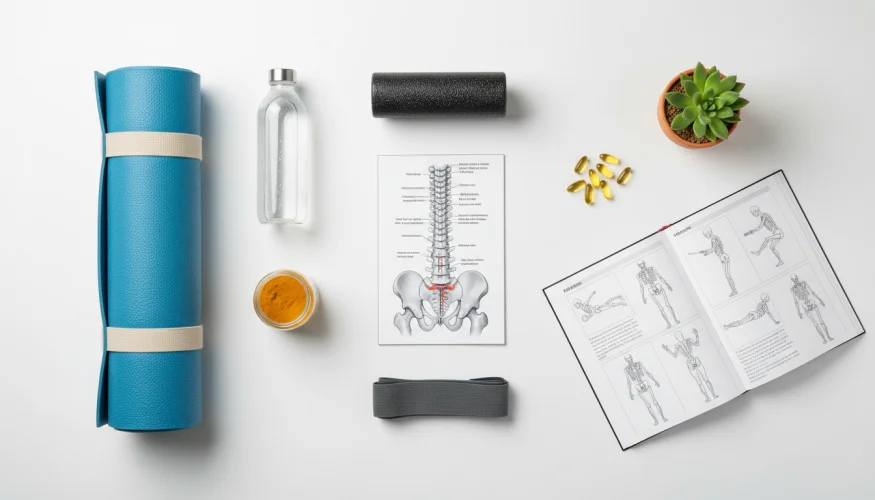
Alongside physiotherapy, overall lifestyle also plays a role in treating disc herniation. Maintaining a healthy body weight reduces the load on the spine, regular physical activity strengthens the muscles that support the spine, and adequate sleep allows tissue regeneration. A diet rich in anti-inflammatory substances – such as omega-3 fatty acids, turmeric, or ginger – can also help reduce inflammation around an irritated nerve. These natural approaches are an ideal complement to targeted rehabilitation exercise.
Many people immediately dread the operating theatre upon receiving a disc herniation diagnosis. It is worth knowing that the vast majority of disc herniation cases resolve with conservative treatment – that is, without surgery. Surgery is indicated only when conservative treatment fails to produce results after several months, or when serious neurological deficit occurs, such as paralysis or loss of bladder control. The McKenzie method is one of the most effective conservative approaches that modern physiotherapy has to offer.
If back pain is troubling you and you suspect disc problems, the first step should be a visit to your general practitioner or orthopaedic specialist, who can rule out serious causes and recommend imaging investigations if necessary. It is then ideal to seek out a physiotherapist certified in the McKenzie method – a list of such specialists can be found, for example, on the McKenzie Institute International website. These specialists have undergone rigorous training and are able to carry out precise diagnostics and draw up an individualised exercise plan.
Back pain does not have to be a lifelong sentence. With the right approach, patience and consistency, it is possible to return to a full life free from the daily struggle with pain. The McKenzie method has achieved this for thousands of patients around the world – and it can do so for you too.