
# When Is a Child Really Ready for Potty Training
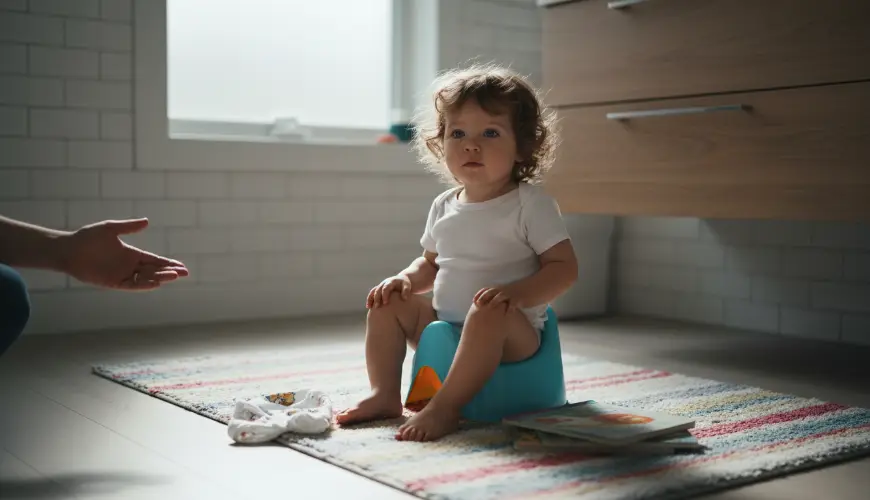
Every parent knows that moment – the child is playing in the sandbox, the other children are without diapers, and friends or grandparents casually ask: "Haven't you switched to a potty yet?" Social pressure around potty training tends to be strong and often completely unnecessary. Meanwhile, the answer to the question of when a child is truly ready to give up diapers is neither simple nor universal. It depends on dozens of factors – from physical maturity to emotional readiness to the specific family situation.
Pediatricians and developmental psychologists agree on this point: there is no single correct date or age by which every child should be using the toilet. Yet in practice, we still encounter the misconception that a child who is still wearing a diaper at two years old is "falling behind" or that the parents aren't doing their job properly. The opposite is true – premature pressure can significantly complicate and prolong the entire process.
Try our natural products





The signals that truly matter
Experts from the American Academy of Pediatrics have long emphasized that the transition to a potty should stem from the child's readiness, not from the calendar. Most children show the first signs of maturity somewhere between 18 and 36 months of age, with enormous individual differences. Boys tend to be ready somewhat later than girls on average, and that is completely normal.
So what specifically should you look for? Physical readiness means that the child can keep their diaper dry for at least two hours at a stretch – this signals that their bladder and sphincter have reached sufficient maturity for conscious control. The child should also be able to sit down and get up from the potty independently, pull down their trousers, and understand basic instructions. Without these motor and cognitive prerequisites, any potty training is doomed to frustration on both sides.
The emotional dimension is equally important. A child who is afraid of the potty, refuses to talk about it, or reacts to the topic with marked anxiety simply is not ready yet – regardless of their age or physical capabilities. Parents sometimes overlook this because they focus exclusively on whether the child can "technically manage" the elimination process. Emotional resistance can be just as powerful a barrier as muscular immaturity.
Seemingly small signals in everyday behaviour can also serve as practical guides. The child begins to show interest in what adults do in the bathroom. They start telling you on their own that their diaper is wet or dirty and they want it changed. They use words like "wee" or "poo" and can communicate that they "need to go." They hide behind the sofa or in a corner of the room when doing a "number two" – a classic sign that they are aware of what is happening and are seeking privacy. These are precisely the moments that offer a golden opportunity for a gentle introduction to potty training.
Take three-year-old Eliška as an example. Her parents started with the potty when she was eighteen months old, because her grandmother insisted that "by two years old, she must be out of diapers." Eliška resisted, cried, and the training was stressful for the whole family. They stopped, waited a few months – and then she came to them herself and said: "I want to use the toilet like Mummy." Three weeks later, it was done. This story is not an exception; research and practice alike show that a child who expresses interest on their own learns considerably faster and with far less stress.
How to support the potty training process – and what not to do
Once a parent recognises that their child is showing enough signs of readiness, the question becomes: how to go about it? The foundation is patience and a positive approach. Potty training should never be associated with punishment, shame, or a sense of failure. Accidents happen – and will continue to happen long after the child has mastered the basics. It is completely normal for a child who no longer needs daytime diapers to still need nighttime protection for months or even years.
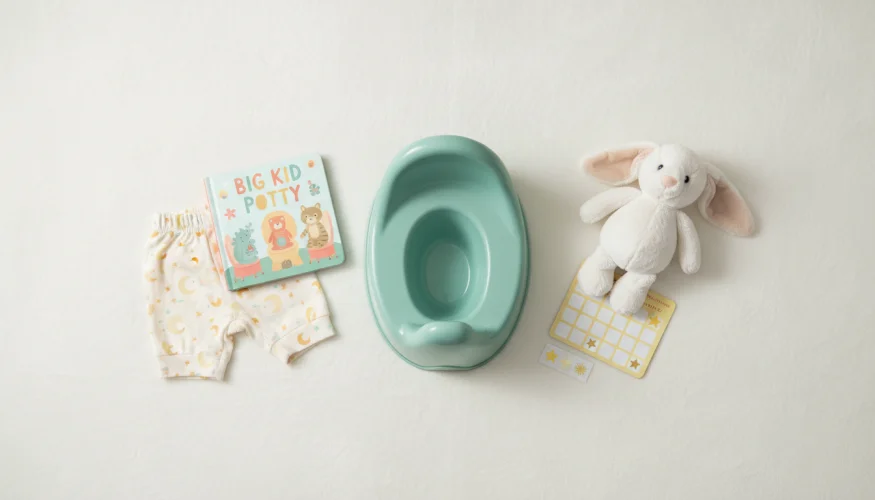
Experts recommend first simply introducing the potty – letting it stand in the bathroom as part of the environment, letting the child sit on it while dressed, playing with it. No pressure, no expectations. Gradually moving on to short "sessions" without a diaper, always with encouragement and without dramatising any setbacks. Some parents successfully make use of natural moments – first thing in the morning, after meals, or before bath time – when the likelihood of success is higher.
Choosing the right equipment also plays a significant role. A classic potty that sits firmly on the floor and allows the child to rest their feet flat tends to be more comfortable for smaller children than a toilet reducer where their legs dangle in the air. A sense of security and stability is important – a child who is afraid of "falling off" will avoid the whole process. Favourite books or songs on the topic of potties can also help, normalising the subject and stripping away any sense of weight it might carry.
What complicates matters? Above all, any pressure or comparisons with other children. "Your friend Anička is already out of diapers and she's only two" – this sentence helps no one. Every child has their own developmental rhythm, and comparisons only bring stress and a sense of inadequacy that can then spill over into other areas as well. Similarly harmful is starting training at an inopportune time – for instance, when a new sibling arrives, during a house move, or amid any other major change in family life. At such moments, a child needs security and stability, not additional demands.
A wise foundation for approaching child development is captured in the words of developmental psychologist Jean Piaget: "The goal of education is not to fill a bucket, but to light a fire." The same applies to potty training – it is not about meeting a deadline, but about creating the conditions in which the child discovers for themselves what they are capable of.
Special attention is warranted when training proves complicated or when a child seems to have stopped making progress. Regression – returning to accidents after a child had been managing the potty – is very common and usually has nothing to do with failure on the part of the parent or child. It tends to be a response to stress, illness, or a change in environment. A calm, consistent response without dramatisation is the best path back to success. However, if a child older than four years continues to strongly refuse the potty or experiences repeated and intense bouts of anxiety related to elimination, it is worth consulting a paediatrician, who can rule out any potential medical or developmental causes.
An interesting perspective is the cultural dimension of the whole topic. Very different norms and expectations regarding the age of potty training exist in various parts of the world. In some Asian and African cultures, so-called elimination communication is practised from the first months of life, with parents reading the baby's signals and holding them over a basin or toilet. In the Western world, by contrast, the readiness-focused approach dominates, having established itself particularly from the second half of the 20th century. Research published in the Journal of Pediatric Urology suggests that neither approach is objectively "correct" – outcomes are comparable, provided that training is carried out sensitively and with respect for the child.
Parents going through this period deserve to be reminded of one thing: the vast majority of children eventually manage without diapers – regardless of exactly when training began or how long it took. The journey may be winding, full of accidents and frustrations, but the destination is the same for everyone. The key is not speed, but trust – trust in the child that they will manage when they are truly ready, and trust in yourself as a parent that you know your child and their needs best.
Giving up diapers at the right time means watching the specific child in front of you – their signals, their pace, their temperament. Not the calendar, not the neighbour's Honzík, not grandmother's expectations. Children who are given the space to mature at their own pace approach the potty with greater confidence, less fear, and a significantly higher rate of success. And that, in the end, is what truly matters.