

# Mouth Breathing in Adults and the Trend of Taping Your Mouth at Night
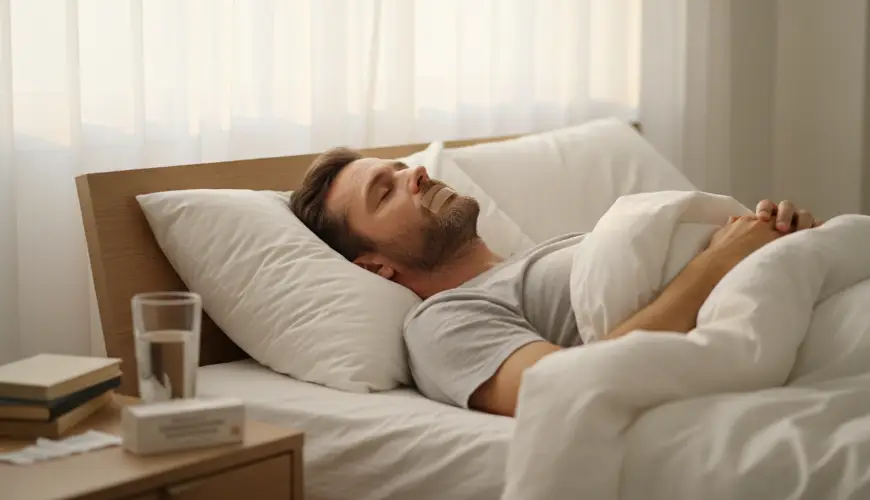
Imagine waking up in the morning feeling rested, without dry mouth, without a headache, and with the sense that you truly slept. For many adults, this sounds like a utopia – and yet the solution may be literally within reach. Or rather, within reach of a small piece of tape. The trend of mouth taping at night has spread in recent years from fringe biohacker communities into completely ordinary households around the world. But what's behind it? Is it just another social media fad, or is there a solid scientific basis for this habit?
The answer is more complex than it might initially appear – and it begins with something so obvious that most of us don't even notice it. With how we breathe.
Try our natural products
Mouth breathing in adults – a silent problem with loud consequences
Mouth breathing in adults is a surprisingly widespread phenomenon that experts consider one of the most underestimated health problems of modern times. It is estimated that up to 61% of adults breathe through their mouths for at least part of the night, with a large proportion having no idea this is happening. The problem occurs during sleep, when we lose conscious control over our own bodies.
The nose is not merely a passive opening for the passage of air. It is a sophisticated organ that warms, humidifies, and filters air from impurities and pathogens. The nasal mucosa produces nitric oxide, a substance with demonstrably positive effects on blood vessels and the immune system. The nose also slows inhalation and exhalation in a way that naturally activates the parasympathetic nervous system – the part of the nervous system that brings the body into a state of calm and regeneration. The mouth can do none of this.
When a person breathes through their mouth, air enters the body unprocessed, cold, and dry. This irritates the mucous membranes of the airways, dries out the oral cavity, and alters its pH in a way that promotes the proliferation of harmful bacteria. Dry mouth in the morning, bad breath, poor sleep, snoring, or even sleep apnea – these are just some of the symptoms that may be directly related to mouth breathing. Dentists are watching this trend with concern, as chronic mouth breathing significantly increases the risk of tooth decay and gum disease.
There are several reasons why adults switch to mouth breathing. Chronic rhinitis, a deviated nasal septum, enlarged nasal polyps, or simply habit – all of these can lead to the nose ceasing to be the primary breathing organ. Modern lifestyle does nothing to help the situation: polluted air, air conditioning that dries out the air in offices and bedrooms, stress causing shallow chest breathing. The result is that many people breathe poorly throughout the day, and at night this pattern only deepens.
It is no coincidence that interest in proper breathing has exploded in recent years. Books such as Breath by James Nestor, which became an international bestseller, brought the topic of nasal breathing into the mainstream and showed how fundamental an impact the way we breathe has on overall health, performance, and longevity. Nestor cites research in the book showing that switching to exclusive nasal breathing can improve sleep quality, lower blood pressure, and even alleviate symptoms of sleep apnea.
Mouth taping at night – madness or a clever hack?
And this is where the phenomenon of mouth taping enters the picture. The idea is simple: if we unconsciously open our mouths at night and breathe through them, what if we simply taped them shut? Special strips designed for mouth taping at night – or in a pinch, ordinary hypoallergenic tape – are meant to prevent the mouth from opening, naturally redirecting breathing through the nose.
Does it sound absurd? Perhaps. But when one looks more closely at what science says about this trend, the picture begins to change. A study published in the journal Journal of Clinical Sleep Medicine in 2022 found that in patients with mild sleep apnea, mouth taping led to a statistically significant reduction in apneic episodes and an improvement in overall sleep quality. Researchers from various countries repeatedly confirm that nasal breathing during sleep is associated with deeper sleep cycles and better blood oxygenation.
Mouth taping is not a new invention. Records of techniques supporting nasal breathing exist in traditional Chinese medicine dating back hundreds of years. However, modern interest in this practice truly grew with the rise of the biohacker community and viral videos on platforms such as TikTok and Instagram, where people share their experiences of feeling fresh and energetic in the morning.
Take, for example, Petr, a forty-four-year-old project manager from Brno who suffered from chronic fatigue and snoring. His partner noticed that he was breathing through his mouth at night, and after trying various anti-snoring devices without results, he decided to try mouth taping. "The first few nights I was nervous, but the tape holds only lightly and if anything were wrong, it would come off easily," he describes. After two weeks, he noticed a significant improvement – less snoring, less frequent waking, and the feeling of actually getting a good night's sleep in the morning.
Exactly such experiences number in the thousands across the internet today. But it is important to distinguish between anecdotal stories and scientific evidence – and also to know for whom this method is not suitable.
Experts, including sleep specialists and otolaryngologists, warn that mouth taping is not suitable for everyone. People with severe sleep apnea, significantly blocked nasal passages, anxiety, or claustrophobia should consult a doctor before trying this method. In such cases, mouth taping may not only be ineffective but potentially dangerous as well. It is an aid for those whose nose is unobstructed and who simply unconsciously switch to mouth breathing during sleep.
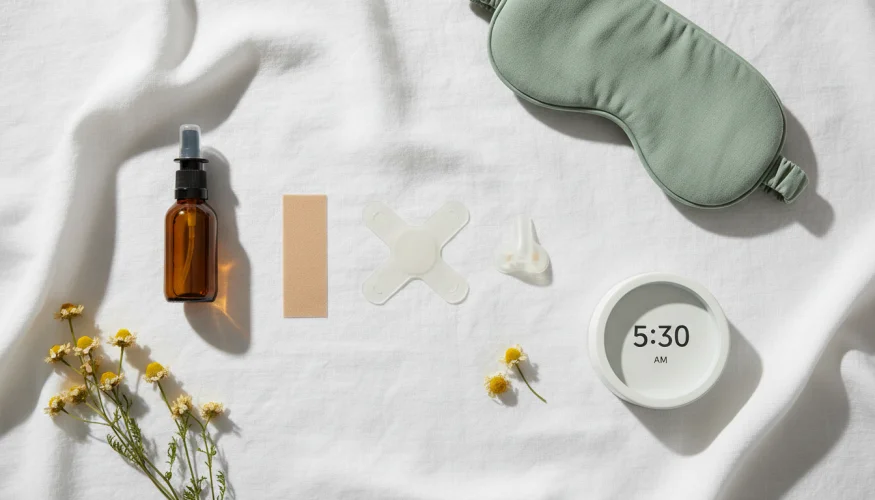
If you decide to try this method, it is recommended to use strips specifically designed for this purpose – they are made from hypoallergenic materials, hold only lightly, and come off easily. Various options are available on the market, from horizontal strips to X-shaped tapes to special silicone patches. The goal is not to seal the mouth hermetically, but simply to gently remind the body that it should breathe through the nose.
What happens in the body when we switch to nasal breathing
To make it clear why the way we breathe matters so much, it is useful to look at the physiology a little more closely. During nasal breathing, the air slows down in the nasal cavity, where it is warmed and humidified. The nasal mucosa captures some dust particles and microorganisms. And perhaps most importantly – the nose produces nitric oxide (NO), a molecule with vasodilatory effects, meaning it widens blood vessels and improves blood flow. Research by the Karolinska Institutet in Stockholm, one of the leading institutions in this field, has demonstrated that nitric oxide produced in the nasal cavities plays a key role in regulating blood pressure and immune response.
Nasal breathing also naturally slows the breathing rate. While mouth breathing typically results in 15 to 20 breaths per minute, nasal breathing naturally reduces this number to 10 to 12 breaths. Slower breathing activates the vagus nerve – nervus vagus – and thereby the parasympathetic nervous system, which is responsible for rest and regeneration. In other words, nasal breathing at night literally tells the body that it is time to relax and repair itself.
As James Nestor once noted: "The nose is for breathing, the mouth is for eating." This seemingly trivial statement captures what anatomy and physiology confirm: our bodies are designed to take in air through the nose. Deviation from this pattern has measurable consequences.
Improved sleep quality is just one of the possible benefits. People who switch to nasal breathing often also report fewer upper respiratory tract infections, better concentration during the day, and even improvements in athletic performance – in the field of sports training, nasal breathing during exercise is an increasingly popular approach promoted by coaches and sports scientists alike.
Of course, mouth taping at night is just one of the tools available. Alongside it, it makes sense to address any underlying causes of mouth breathing – visiting an ENT specialist to determine whether polyps or a deviated septum are present, paying attention to bedroom hygiene and air quality, and potentially working on proper breathing techniques during the day. Breathing exercises such as those from the Buteyko method or Wim Hof's technique can help retrain breathing patterns and gradually shift the emphasis back to the nose.
It is fascinating how something as fundamental as the way we breathe can have such far-reaching effects on health. At a time when people invest thousands of crowns in supplements, expensive mattresses, and tracking devices to optimize their sleep, it turns out that one of the most effective solutions may be literally free – or at the cost of a strip of tape costing a few tens of crowns. Science does not yet have all the answers in this regard and research is still ongoing, but the available evidence suggests that paying attention to how we breathe is one of the most sensible steps we can take for our health.