

Red beet latte is good for your health and taste
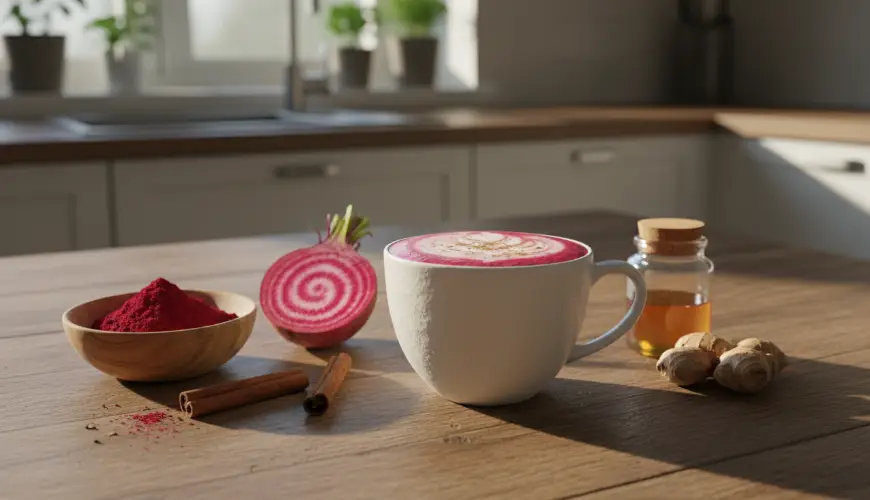
Pink-red color, a gently earthy taste and an aroma that evokes an autumn garden – all of this is offered by a drink that has won the hearts of health-conscious people around the world in recent years. Beetroot latte is not just another social media hit. It is a truly nutritious, simple and surprisingly delicious drink that absolutely anyone can prepare at home, regardless of their cooking skills or equipment. And it is precisely this accessibility that is one of the reasons why thousands of people have fallen in love with it – from busy parents to biohacking enthusiasts.
Beetroot is a vegetable with an exceptionally rich nutritional profile. It contains nitrates, which the body converts into nitric oxide, which plays a key role in dilating blood vessels and improving circulation. According to a study published in the scientific journal Nutrients, regular consumption of beetroot can contribute to lowering blood pressure and improving athletic performance. In addition, beetroot is rich in folate, manganese, potassium and antioxidants called betalains, which give it its characteristic deep red colour. Add plant-based milk, a little spice and a touch of honey, and you have a drink that not only looks beautiful but also genuinely benefits your body.
Try our natural products

Why prepare beetroot latte at home?
Cafés around the world, from London to Sydney to Prague, have added beet latte to their menus. A cup typically costs upwards of eighty crowns – and that's for a drink whose ingredients cost a fraction of that at home. But it's not just about money. Preparing it at home gives you complete control over what goes into your cup – no added sugars, no cheap substitute milks, no questionable flavourings. You can tailor the drink precisely to your taste preferences, dietary needs or current mood.
Take Petra, a thirty-three-year-old teacher from Brno, who started making beetroot latte as a replacement for her morning coffee when she was trying to cut back on caffeine. "At first I thought it would be complicated and the result would taste like garden soil," she says with a laugh. "But the first cup completely surprised me. It was creamy, gently sweet and the colour... I immediately shared it on Instagram." Petra's story is not unique. It is precisely this combination of visual appeal, ease of preparation and positive health effects that makes this drink a phenomenon that goes beyond the boundaries of a passing trend.
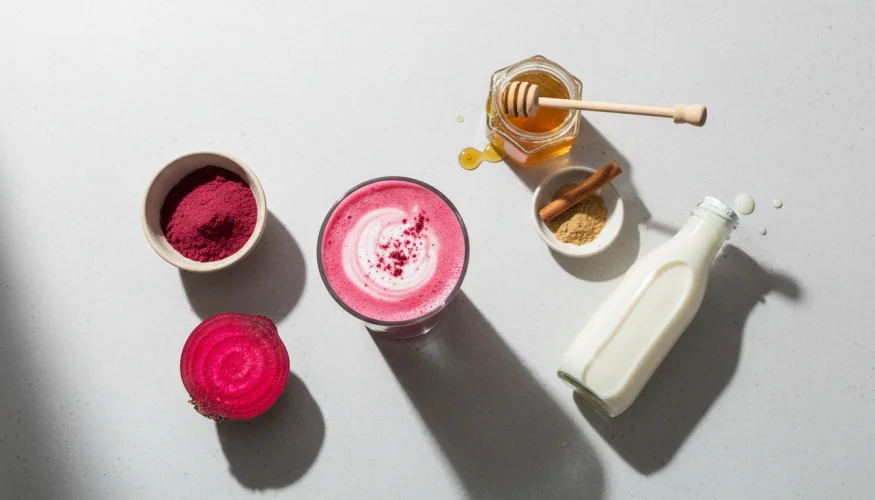
Preparation is genuinely simple. The base consists of beetroot powder or fresh beetroot blended into a smooth purée. To this you add heated plant-based milk – oat, almond or coconut – a pinch of cinnamon, a little ginger and, to taste, some honey or maple syrup. Everything is mixed together, optionally frothed with a milk frother, and the result is a drink worthy of the finest café. The entire preparation takes no more than five minutes.
The key to a perfect result is the quality of the ingredients used. Beetroot powder should be pure, without additives, ideally of organic origin, to ensure the highest possible nutrient content and no unnecessary fillers. The quality of this basic ingredient determines both the taste and the nutritional value of the entire drink. Cheap blends full of starch or dried sugar will significantly worsen the result – both in terms of taste and health benefits.
The choice of milk also plays an important role. Oat milk adds natural sweetness and creaminess to the drink, almond milk lends it a gently nutty flavour, and coconut milk creates a richer, fuller texture. Each option produces a slightly different result, so it is worth experimenting. If you care about the ecological footprint of your diet, it is worth knowing that the production of oat milk has a significantly lower environmental impact than the production of cow's milk – an interesting comparison on this topic is provided by Oxford University, where researchers mapped the ecological costs of various foods.
How to prepare beetroot latte at home step by step
The basic recipe, which truly anyone can manage, looks like this: pour approximately two hundred and fifty millilitres of plant-based milk into a saucepan or a jug with a milk frother and heat it to around sixty-five degrees Celsius – the milk should not boil, as this will cause it to lose some of its flavour and nutrients. Meanwhile, mix one to two teaspoons of beetroot powder in a cup with a small amount of warm water or milk until a smooth paste forms without lumps. Add a pinch of cinnamon, a quarter teaspoon of ground ginger and optionally a little vanilla extract. Pour in the heated milk and mix everything well. If you have a milk frother, use it to create a fine foam on the surface – this gives the drink a café-style character and visual appeal.
For those who prefer fresh ingredients over powder, there is an alternative using cooked or roasted beetroot. Simply blend the cooked beetroot until smooth, strain it through a fine sieve and use the resulting juice in place of the powder. The result will be slightly less intense in colour, but all the fresher in taste. Roasted beetroot also brings a lightly caramelised sweetness that adds depth to the drink.
Spices offer another area for creativity in this recipe. Cardamom gives the drink an exotic touch and also has proven anti-inflammatory properties. Turmeric adds a golden hue and enhances the health benefits of the drink. Black pepper – just a pinch – increases the body's absorption of curcumin from the turmeric. The combination of beetroot, turmeric and ginger creates what is known as a "golden beet latte" – a golden-red latte that is even more nutritious than the basic version.
The sweetener depends entirely on personal preference. Honey adds natural sweetness and gentle floral notes, maple syrup is the choice for vegans and also has a lower glycaemic index than white sugar. Those who want a drink completely free of added sugar can rely on the natural sweetness of the beetroot itself – which is surprisingly pronounced, especially when using freshly cooked beetroot.
It is also worth mentioning that beetroot latte is naturally caffeine-free, making it an excellent choice for pregnant women, breastfeeding mothers, children or anyone who wants to reduce their intake of stimulants. At the same time, thanks to its nitrate and antioxidant content, it can serve as a natural boost before physical activity – some athletes consume it as an alternative to pre-workout drinks. Research, such as that published in the Journal of the Academy of Nutrition and Dietetics, suggests that nitrates from beetroot can reduce the time to exhaustion and improve overall endurance.
The drink can be served both hot and cold. The iced version – known as iced beet latte – is ideal for summer days. Simply prepare a more concentrated base, add ice and top with cold plant-based milk. The result is a refreshing, beautifully coloured drink that looks like something from a luxury smoothie bar, yet can be prepared in a few minutes at home in your kitchen.
One thing worth being prepared for: beetroot stains intensely. When working with fresh beetroot or powder, we recommend using darker containers, or simply accepting that light-coloured vessels may become slightly stained. Similarly, after consuming beetroot, urine or stools may temporarily take on a pinkish hue – this is a completely natural and harmless phenomenon caused by betalains, and is no cause for concern.
As the famous French chef Auguste Escoffier once said: "Good food is the foundation of genuine happiness." And although Escoffier had gourmet dishes rather than healthy drinks in mind, the idea remains valid – the pleasure of eating and drinking need not come at the expense of health. Beetroot latte is a beautiful example of the fact that healthy can also be tasty, beautiful and simple.
At a time when more and more people are taking an interest in what they put into their bodies, and when interest in sustainable and natural alternatives to commercial drinks is growing, beetroot latte arrives as an answer to many questions at once. It is nutritious, accessible, easy to prepare, visually appealing and gentle on the planet – especially if you opt for organic powder or locally grown beetroot. It is not just a fashionable fad. It is a drink with a story, with benefits and with the potential to become part of a daily routine – just like a morning coffee or an afternoon tea. And unlike many other health trends, it can genuinely be prepared by anyone who has a cup, a milk frother and five free minutes.