
Iron in foods can help with fatigue when you know which sources to choose
Iron is one of those nutrients that is often talked about, but in practice, it can be surprisingly easy to "miss" its regular intake. Yet, it's not an exotic substance: iron in foods is a common part of our diet, it's just necessary to know which foods contain iron, how to smartly combine them, and what might unnecessarily hinder its utilization. And since few people survive on raw food alone in the kitchen, a logical question arises: does cooking affect the iron in foods? The answer is reassuring, but there are a few important "buts" worth knowing.
Iron is crucial for the production of hemoglobin, the protein in red blood cells that carries oxygen. When there's a long-term deficiency, a person often doesn't notice immediately. Fatigue, poor concentration, pallor, brittle nails, or hair loss can be stealthily attributed to stress, weather, or a challenging period. But sometimes it's simply a matter of iron intake and bioavailability. Life stages also play a role: teenagers, pregnant or breastfeeding women, or people with blood loss have higher needs. And of course, those who primarily eat plant-based diets, as they need to work more with combinations.
Try our natural products
Iron in Foods: Two Types, One Important Practical Thing
Iron in food comes in two forms. Heme iron is found in animal foods (typically in meat and offal). The body can absorb it relatively easily. Non-heme iron is present in plant sources (legumes, grains, seeds, vegetables) and its absorption is more variable – it's significantly influenced by what we eat alongside it.
This is crucial: with non-heme iron, it's often not just about how much is in the food, but how much the body actually utilizes. Therefore, someone might have a diet full of "iron-rich" ingredients and still feel low on energy, while another person with a less "by-the-book" approach but good combinations, does better.
Professional sources serve as a solid basic orientation, such as the overview on iron from the NIH – Office of Dietary Supplements or information about the role of iron in the body on the WHO website. It's not "bedtime reading," but for verifying relationships, these are reliable reference points.
And now to what interests people the most: which foods contain iron and how to maximize them in the everyday kitchen.
Which Foods Contain Iron and How to Incorporate Them into the Everyday Diet
When you mention iron, many people think of spinach. While it does contain iron, on its own, it's not "magical." In practice, a varied diet where iron appears in different forms throughout the day is much more beneficial. The good news is that there are many options – from traditional ingredients to small "silent boosters" that can be added almost anywhere.
Among animal sources, red meat, some fish, and especially offal are noteworthy. Not everyone likes them, but in terms of iron, they are very rich. Those who eat them only occasionally can cover a significant part of their needs. At the same time, it makes sense to stick to a reasonable frequency and quality – ideally from verified farms and balance it with plant foods in the diet.
In the plant kingdom, legumes are staples: lentils, chickpeas, beans, and peas. In an ordinary week, simplicity often wins – and this is where legumes excel. They can be cooked in advance, added to soups, made into spreads, or a quick "salad in a box." Fermented or sprouted versions also work well, as they change compounds that otherwise hinder iron absorption.
Another major chapter is grains and pseudocereals. Oats, buckwheat, quinoa, or whole grain bread can be a stable source of non-heme iron, just be mindful of what you add to them. When whole grain bread becomes "just" a carrier for cheese and coffee, the effect on iron can be unnecessarily diminished. On the contrary, adding something rich in vitamin C (bell peppers, citrus, kiwi, sauerkraut) improves absorption.
An excellent, often undervalued category is seeds and nuts. Pumpkin seeds, sesame (tahini), sunflower seeds, or cashews can be added to porridge, salad, or baking. They are practical, storable, and can boost iron intake without major dietary changes. And then there's cocoa and quality dark chocolate – in moderation, it can be a pleasant bonus, but not the only pillar.
Vegetables? Yes, but more as part of the whole. Spinach, chard, broccoli, or beets can contribute, just keep in mind that some leafy types contain oxalates, which reduce iron availability. This doesn't mean avoiding them – just combine them wisely.
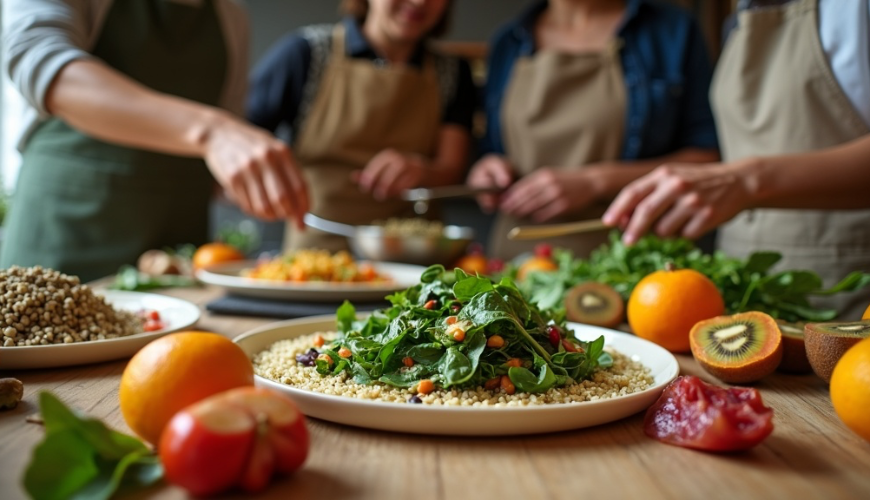
And what does it look like in real life? Imagine an ordinary workday: quick oatmeal in the morning, "something" in the cafeteria for lunch, bread in the evening. When the porridge is made from oats, a spoonful of tahini or pumpkin seeds is added along with kiwi or orange, it's suddenly a completely different start. For lunch, just choose a legume soup or a side like a lentil salad, and in the evening, instead of a white baguette, try whole grain bread with hummus and peppers. It's not about perfection, but about how to incorporate more iron into meals naturally throughout the day, not as a stressful project.
If there is to be only one list in the article, then one that can be truly used:
Practical Tips to Increase Iron Intake and Absorption through Food
- Add vitamin C to plant sources of iron (bell peppers, citrus, broccoli, strawberries, sauerkraut) – often a small portion is enough.
- Include legumes 3–5 times a week in various forms (soup, spread, salad, curry).
- Use seeds (pumpkin, sesame, sunflower) as a "sprinkle" on porridge, salads, and bread.
- Soak, sprout, or ferment legumes and grains if possible – it can improve absorption.
- Separate coffee and tea from main meals for at least 1–2 hours, as they can reduce non-heme iron utilization.
Notice, it's not about extremes. Just small shifts in timing and combinations that make a big difference.
Does Cooking Affect Iron in Foods? Mostly No, but It Depends on the Detail
Cooking is generally neutral to slightly beneficial for iron in many respects. Iron is a mineral, and minerals, unlike some vitamins, don't "boil away" easily through chemical breakdown. So, when considering whether cooking affects the iron in foods, the answer is: the iron itself doesn't disappear with heat.
However, two practical things come into play: losses to water and changes in availability.
The first situation is simple: when food is boiled in a large amount of water and the water is drained, some minerals might leave with the broth. This is typically true for cooking legumes or some vegetables. It doesn't mean that cooking is "bad," just that it's worth considering whether the broth can be used (soup, sauce) or choosing gentler methods like steaming. With legumes, the water is often drained intentionally because it aids digestion – and that's perfectly legitimate. Even so, legumes remain a very good source of iron; it's just good to eat them regularly.
The second situation is more interesting: cooking can improve the digestibility and availability of nutrients in some foods by breaking down cell walls. With leafy vegetables, it's often true that after cooking, we eat a larger amount (a handful of raw spinach vs. a portion of cooked). And even if some minerals might release into the juice, they remain in the meal as a whole.
A separate topic is cooking in cast iron. It's not a necessity or a miracle, but it's known that when preparing acidic foods (like tomato sauce), a small amount of iron from the cookware can leach into the dish. It's not a universal solution to deficiency, but as a small bonus, it can work.
And what about freezing, baking, roasting? Here too, it's true that iron as a mineral remains. From a "iron strategy" perspective, what happens around it is often more important: whether black tea is drunk with the meal, whether there's vitamin C, whether legumes were soaked beforehand, or whether the portion of vegetables was just reduced to a symbolic garnish.
Another common question arises: can anything "interfere" with iron? Yes, especially with non-heme iron. Tannins in tea and coffee, calcium in large amounts within the same meal, or some compounds naturally present in plants (phytates in grains and legumes) can reduce absorption. It sounds complicated, but in practice, it means one thing: if the goal is to get more iron from food, avoid drinking a large mug of black tea with the main meal and have it later instead. Sometimes that's all it takes.
"It's not about eating perfectly, but eating smartly," nutrition experts often say in various forms – and this holds especially true for iron. Iron doesn't behave like a simple item in a chart. It's more of a relationship: between the food, the body, and the context in which it's eaten.
Finally, it's good to remind the safe side of things. Iron is important, but taking too high doses of supplements without a specialist's recommendation is not a good idea. If someone suspects a deficiency, it makes sense to address it with a doctor and lab tests (typically hemoglobin, ferritin, and other parameters). Food is a great foundation, but sometimes targeted help is needed – and other times it's not appropriate to add iron "blindly."
But when sticking to an ordinary plate, it's surprisingly simple: regularly include legumes, seeds, and whole grains, add something with vitamin C to plant sources, and don't let coffee and tea turn every meal into an obstacle course. And if a hearty lentil soup or a long-simmered tomato sauce occasionally appears, it's exactly the type of "ordinary" meal that does more for iron in foods than it might seem at first glance.