

Perioral Dermatitis and How to Get Rid of It
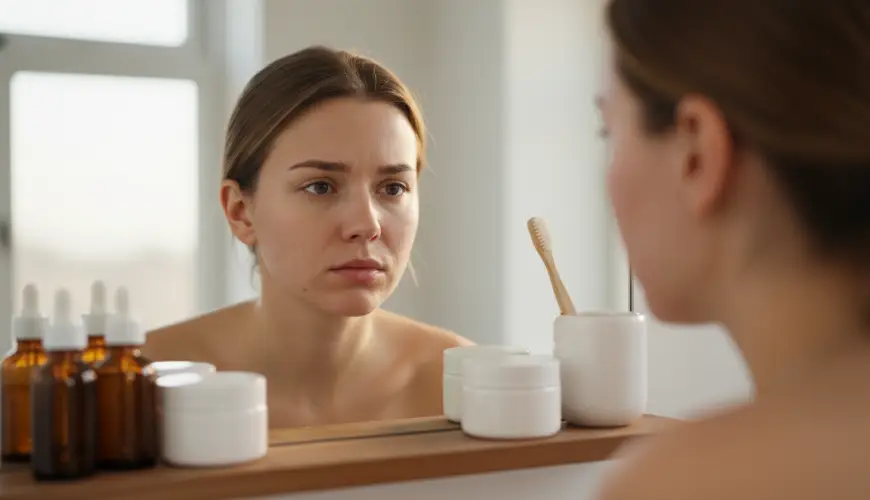
Red pimples around the mouth that appear seemingly out of nowhere and refuse to disappear. They itch, burn, and look similar to acne, but none of the tried-and-tested acne products help. On the contrary – the more care applied, the worse it gets. If this situation sounds familiar, you may be dealing with perioral dermatitis, a skin condition that affects a surprisingly large number of people, yet remains unrecognised for a long time.
Perioral dermatitis is an inflammatory skin condition that manifests as small red pimples, a rash, and occasionally flaky skin around the mouth, nose, and sometimes eyes. The name comes from the Latin "peri" (around) and "oralis" (mouth), so it literally means inflammation of the skin around the mouth. Although it can affect anyone, it most commonly occurs in women between the ages of twenty and forty, though men and children are not spared either. According to dermatologists, this is a condition that has become increasingly common in recent decades – and experts directly link this to changes in our cosmetic habits.
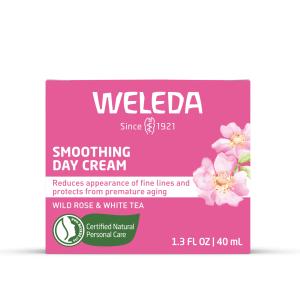
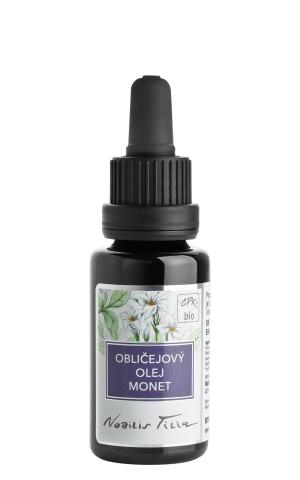
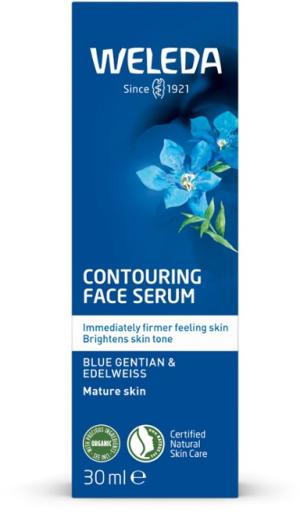
Try our natural products


What causes pimples around the mouth from cosmetics?
One of the most common causes of perioral dermatitis is, paradoxically, our own skincare. Modern cosmetic products are full of substances that can disrupt the natural balance of the skin – and the area around the mouth is particularly sensitive to these influences. The most common triggers include fluoride toothpastes, heavy moisturising creams containing paraffin or petroleum jelly, high-coverage foundations, and various types of sun protection with chemical filters.
Interestingly, the problem very often starts innocently. A person notices minor irritation, applies a stronger moisturising cream to calm the skin – and thereby inadvertently makes the situation worse. Dermatologists are well acquainted with this phenomenon: the more the skin is "pampered" with fatty and occlusive products, the more the pores become blocked and the natural microbial balance of the skin is disrupted. The result is inflammation, redness, and precisely those characteristic pimples that are typical of perioral dermatitis.
Corticosteroid creams – prescription products commonly used for various skin problems – also play an important role. When applied to the facial area, they can directly trigger or significantly worsen perioral dermatitis. This phenomenon is well documented in the scientific literature – the American Academy of Dermatology lists corticosteroids as one of the main triggers of this condition. The problem arises especially when the patient discontinues the cream: the skin reacts with a so-called rebound effect, meaning a sudden worsening of the condition, which leads the patient to use the product again. A vicious cycle develops that is difficult to break without professional help.
The influence of hormonal changes, stress, and a weakened immune system must also not be overlooked. Perioral dermatitis frequently worsens during periods of increased stress or hormonal fluctuations, for example during the menstrual cycle. Some experts also mention a possible connection with an overgrowth of certain yeasts or bacteria on the skin's surface, although the exact mechanism by which the condition develops has not yet been fully clarified.
How can perioral dermatitis be recognised? It typically manifests as small, clustered pimples and pustules around the mouth – while the narrow strip of skin immediately adjacent to the lip is paradoxically often clear. The rash can spread to the chin, the area under the nose, or around the nostrils. The skin is red, sometimes flaky, and patients complain of a burning or tight sensation. Unlike acne, deep cysts do not develop and comedones (blackheads) are minimal.
How to get rid of perioral dermatitis?
The first and most important step is visiting a dermatologist, who will establish the correct diagnosis. Perioral dermatitis is easily confused with acne, rosacea, or seborrhoeic dermatitis – and the treatment for each of these conditions differs significantly. An incorrect diagnosis can lead to the use of inappropriate products that only worsen the condition.
Treatment of perioral dermatitis usually involves so-called "zero therapy" – that is, completely discontinuing all cosmetic products in the affected area. No creams, no make-up, no corticosteroid products. The skin needs space to recover and restore its natural function. This approach can be challenging at first, especially for someone accustomed to daily make-up or intensive skincare. The condition may also appear to worsen in the first few weeks without cosmetics before it begins to improve – which requires patience.
A dermatologist may prescribe antibiotics – either topical (in the form of a gel or cream) or systemic (in tablet form). Metronidazole or tetracycline are most commonly used. Treatment typically lasts several weeks to months, and it is important not to discontinue it prematurely, even if the condition improves. In addition to antibiotics, preparations containing azelaic acid, which has anti-inflammatory and antibacterial properties, are sometimes prescribed.
One patient who had been dealing with perioral dermatitis for over a year described her experience as follows: "I tried practically everything – various creams, natural oils, home masks. The more I cared for my skin, the worse it looked. It was only when my dermatologist told me to stop using absolutely everything that it started to improve. It was psychologically difficult, but after two months my skin was clearer than it had been in years."
This experience is not exceptional. Many people with perioral dermatitis go through a similar process – first seeking solutions in further cosmetics, before realising that cosmetics are part of the problem. The key is the courage to simplify one's routine and place oneself in the hands of a specialist.
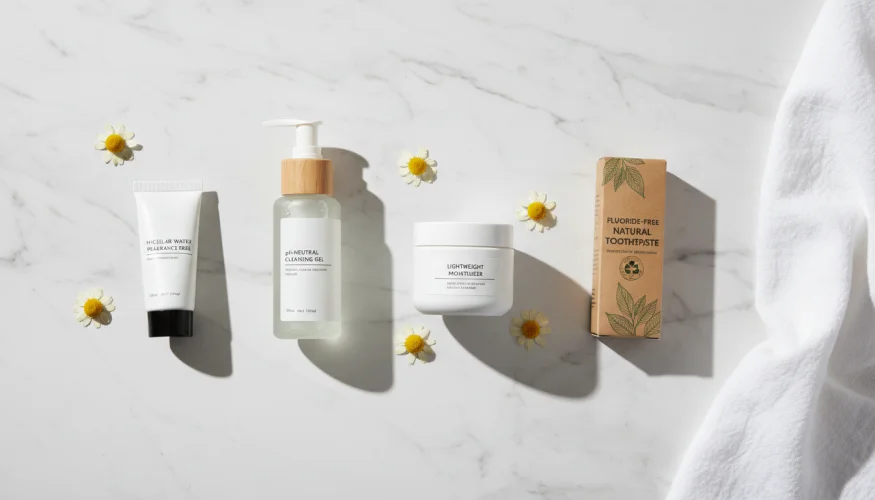
Regarding everyday care during and after treatment, dermatologists recommend switching to the simplest possible products with a minimum number of ingredients. Suitable options include gentle micellar waters or cleansing gels without fragrance, soaps with a neutral pH, and light moisturising creams free from paraffin, petroleum jelly, and silicones. Fluoride-free toothpaste can significantly help some patients – although the scientific evidence for a direct link between fluoride and perioral dermatitis is not entirely conclusive, clinical practice shows that changing toothpaste sometimes brings improvement.
When choosing cosmetics, it is worthwhile to carefully read the ingredients of products. Among the ingredients that people with sensitive skin and a tendency towards perioral dermatitis are advised to avoid are:
- Heavy emollients such as petroleum jelly (petrolatum), mineral oil, and paraffin
- Strong fragrance ingredients and essential oils in direct contact with the skin around the mouth
- Chemical UV filters such as oxybenzone or avobenzone
- Corticosteroids in facial products without a doctor's recommendation
- Sodium lauryl sulphate (SLS) in cleansing products and toothpastes
Switching to more eco-friendly and natural cosmetics with a shorter list of ingredients can bring genuine relief to people with perioral dermatitis. This is not merely a fashionable trend – the approach is backed by logic: fewer ingredients means fewer potential triggers. Certified natural cosmetic products avoid a number of problematic synthetic substances and offer alternatives that are gentle both on the skin and on the environment.
Prevention of recurring perioral dermatitis lies primarily in a long-term change of approach to one's cosmetic routine. After the acute phase has subsided, it is not advisable to immediately reintroduce all the original products. New products should be introduced gradually, one at a time, with a sufficient interval between each – only in this way can a potential trigger be identified. The skin around the mouth and nose is a permanently sensitive area that deserves a cautious approach.
Stress, sleep, and overall lifestyle play an equally important role in prevention. Research published in the Journal of the European Academy of Dermatology and Venereology has repeatedly confirmed that psychological stress worsens a wide range of skin conditions, including dermatitis. Adequate sleep, a balanced diet rich in antioxidants, and a reduction in processed foods can support skin health from within and reduce the likelihood of recurrence.
It is also worth knowing that perioral dermatitis is not contagious and is not a symptom of any serious systemic disease. Although it can be both cosmetically and psychologically burdensome, with appropriate treatment and adjustment of one's cosmetic routine, the vast majority of patients make a full recovery. It is important not to be discouraged by the initial worsening when cosmetics are discontinued and to persevere with the recommended treatment plan.
Perioral dermatitis is in many ways a condition of our times – a product of an overloaded cosmetic routine, an excess of products, and the belief that more care always means a better result. The experience of many patients, however, shows quite the opposite: sometimes the best skincare is one that allows the skin to breathe, to rest, and to return to its natural balance. And that is a lesson that extends beyond the boundaries of a single skin condition.