
Try sugar-free apple butter made from windfall apples
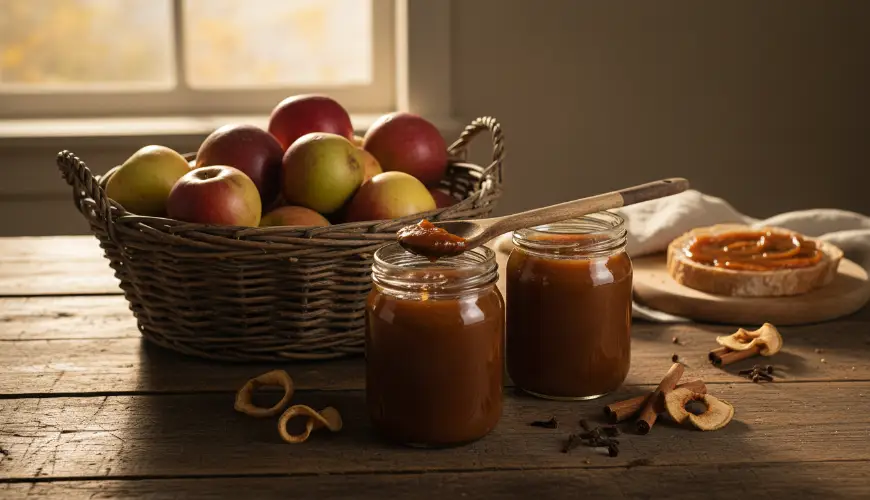
Every autumn, the same story repeats itself. Gardens bend under the weight of ripe apples — some end up in a basket, some in the cellar, but the rest — fallen on the ground, nibbled by wasps, a little bruised — usually head straight to the compost. Yet it is precisely from these "imperfect" fruits that something exceptional can be made: apple butter without added sugar, thick, fragrant and surprisingly versatile. It's a recipe with history, with character and with plenty of good reasons to try it.
Apple butter is not butter in the true sense of the word — it contains no dairy fats. The name comes from its consistency: after long, slow cooking, the apple pulp transforms into a smooth, spreadable mass reminiscent of butter itself. In English it's called apple butter, and in countries such as Germany, Belgium and the United States it has a tradition stretching back hundreds of years. In the Czech context it is less well known than classic apple jam or povidla, but it deserves far more attention — especially at a time when more and more people are interested in reducing their sugar intake and making meaningful use of food that would otherwise go to waste.
Try our natural products

Why fallen apples in particular?
Fallen apples have a reputation among gardeners as problematic waste. They are ripe, sometimes overripe, and may have bruises or a partially damaged skin. Yet it is precisely this overripeness that is an advantage when making apple butter. The fruits are softer, sweeter and contain more natural pectin, which helps the finished product thicken. Overripe apples are the ideal ingredient for this recipe — what is a drawback in other recipes becomes an asset here.
Of course, the basic rule applies: an apple must be healthy for at least the greater part of it. Areas with mould or rot must always be cut out thoroughly. If the damaged area is larger than half the fruit, that apple has no place in production. But an apple with a single bruise, a small worm hole or a slightly wrinkled skin? That is perfectly fine and it would be a shame to throw it away.
From a sustainability perspective, this is a very meaningful step. Food losses represent a global problem — according to the Food and Agriculture Organization of the United Nations (FAO), approximately one third of all food produced for human consumption is wasted worldwide. Processing fallen apples at home is a small but concrete way of confronting this problem.
How is apple butter made, and why without sugar?
Making apple butter is fundamentally simple, but it requires patience. The apples are first washed, cored and cleared of any damaged spots — peeling is not necessary, because the skin softens during cooking and everything is later puréed. The chopped apples are placed in a pot or slow cooker, a little water or apple juice is added to prevent burning, and then the long, slow cooking begins.
It is precisely the length and slowness that are the key to the result. Whereas apple jam is cooked quickly and preserves the freshness of the fruit, apple butter is cooked for hours — sometimes four to six hours over a low heat. During that time, excess water evaporates, the natural sugars in the apples caramelise, and the mass gradually darkens and thickens. The resulting colour ranges from golden brown to dark brown, and the flavour is deep, complex and naturally sweet.
And that is precisely why added sugar is not needed. Apples themselves contain enough natural sugars — fructose and glucose — which, during long cooking, create a pronounced, full flavour without any supplementary sweetening. This approach will be appreciated by anyone monitoring their sugar intake, by diabetics, or by parents looking for healthier alternatives to sweet spreads for children. As nutritional consultant and healthy-eating author Jessie Inchauspé, known as the Glucose Goddess, puts it: "The way we eat fruit matters more than we think — whole fruit or fruit cooked slowly is a completely different experience for the body than juice or sweetened products."
Spices are traditionally added to the apples — cinnamon is almost obligatory, but cloves, allspice, ginger or cardamom also work wonderfully. These spices not only add flavour but also have beneficial effects on metabolism and digestion, making apple butter a treat that is not only delicious but also beneficial.
Once the apples are sufficiently cooked and soft, it is time for a blender or fruit press. The resulting mass is returned to the heat and cooked further until it reaches the desired consistency. The right consistency is easy to check: a drop of apple butter placed on a cold plate should stay in place, not spread and not form a watery rim.
Apple butter in practice: from breakfast to the festive table
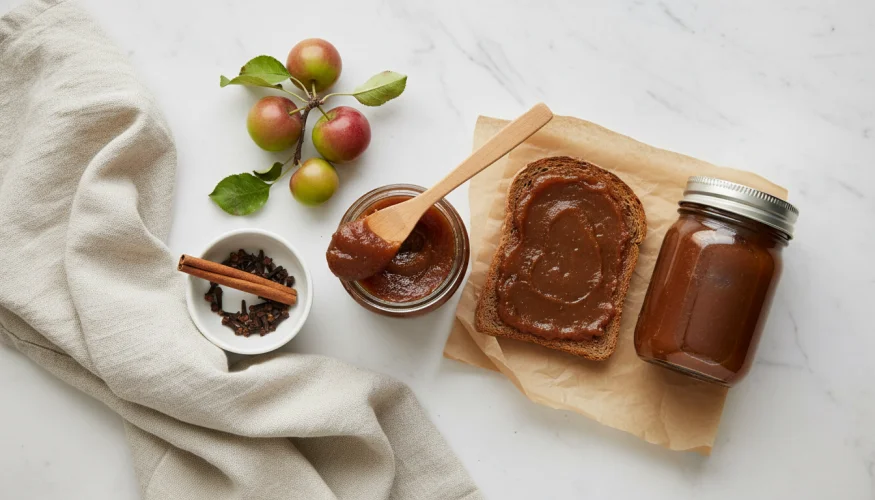
You may be wondering what apple butter is actually used for. The answer is surprisingly varied. Most classically, it is served on bread or toast — in place of ordinary jam or honey. On wholegrain sourdough with a little goat's cheese, it creates a combination that can easily outshine even more sophisticated breakfast variations.
It also works excellently in the kitchen as an ingredient in sauces — particularly with pork or game. A little apple butter added to a salad dressing gives it depth and natural sweetness. It can be stirred into porridge, used as a filling in pastries or added to yoghurt. Sugar-free apple butter is also suitable for very young children who are beginning to eat solid food — it is naturally sweet, soft and free from added ingredients.
One particular situation that illustrates the potential of this product well: a family from the South Bohemian countryside had a problem every year with surplus apples from an old orchard. They gave some to neighbours, pressed some into juice, but the fallen apples rotted on the ground every year. Three years ago they tried making apple butter in a slow cooker overnight for the first time. In the morning they were greeted by a full container of fragrant, dark-brown mass smelling of cinnamon and cloves. Since then, making apple butter has become their annual autumn ritual, and jars travel as Christmas gifts to friends and family.
Apple butter can be preserved without any difficulty. Filled sterilised jars are sealed and processed in a water bath in the same way as jam. Properly preserved apple butter will keep in a dark, cool place for up to one year. Once opened, it is stored in the refrigerator and consumed within two to three weeks. If you do not want to preserve it, it can also be frozen in smaller portions.
For those who want to get started, it is worth knowing that making apple butter requires no special equipment. A large pot, a wooden spoon, a stick blender or a classic fruit press and some jars are all you need. A slow cooker is admittedly practical because it allows overnight cooking without the need to watch over it, but it is not essential. Apple butter can be successfully made on the hob at a low temperature too — you just need to stir it occasionally and make sure it does not burn.
When it comes to choosing varieties, apples with a pronounced flavour give the best results — sharper varieties such as Bohemia Gold, Šampion or various older regional varieties give the finished butter an interesting flavour complexity. Sweeter varieties such as Golden Delicious are also usable, but the result tends to be less distinctive. Ideally, several varieties should be combined — each brings a slightly different character, and the result tends to be more interesting in flavour than when a single variety is used.
From a nutritional standpoint, apple butter without added sugar is very favourable. Apples are rich in fibre, vitamin C and various antioxidants. Some vitamins are lost during cooking, but fibre and polyphenols are retained. Apple butter is virtually fat-free, has a low calorie content and, thanks to the absence of added sugar, has a significantly lower glycaemic index than ordinary jams and marmalades. Studies published in the specialist journal Nutrients have repeatedly confirmed that consuming apple products rich in polyphenols is associated with positive effects on the gut microbiome and cardiovascular health.
Apple butter is also one of those products that carries within it the story of a place and a season. Each year it is a little different — it depends on what the harvest was like, how ripe the apples were, what spices were to hand. It is precisely this variability that sets it apart from industrially produced spreads, which are identical year after year. It is a product that bears the mark of a specific orchard, a specific autumn and the specific hands that cooked it.
At a time when more and more people are returning to traditional methods of food processing, when interest in fermentation, preserving and home production is growing, apple butter fits naturally into this trend. It is not demanding, it is not expensive, it requires no exotic ingredients. All it needs is apples — even the ones that have fallen in the garden —, a little spice, time and a willingness to be surprised by what such a simple combination can produce.
Next autumn, when apples are falling to the ground again and you are wondering what to do with them, it is worth giving this old recipe a chance. Sugar-free apple butter made from fallen apples is proof that the best things in the kitchen sometimes come from what would otherwise end up in the compost.