

The butterfly hug technique will help you tame stress in minutes

There are moments when anxiety or stress seems insurmountable – the heart beats faster, thoughts race one after another, and the body is tense, as if waiting for a danger that never comes. It is precisely in such moments that something unexpectedly simple can help: one's own hands placed on the chest and rhythmic tapping that resembles the gentle embrace of butterfly wings. This technique, known as the butterfly hug, has in recent years been gaining wider awareness not only among therapists, but also among people seeking effective ways to manage everyday stress without medication and without complex tools.
The butterfly hug is not just a charming name for a calming gesture. It is a specific method that utilises the principle of bilateral stimulation – the alternating activation of the left and right brain hemispheres through rhythmic sensory stimuli. This technique has firm roots in psychotherapy and is part of a broader approach called EMDR (Eye Movement Desensitization and Reprocessing). EMDR was originally developed by American psychologist Francine Shapiro in the late 1980s, and today the World Health Organization recommends it as an effective method for treating post-traumatic stress disorder.
The butterfly hug was first described as a standalone technique by Mexican therapist Lucina Artigas, who began using it when working with survivors of Hurricane Pauline in 1997. She found that this simple method could quickly bring relief and a sense of safety to people in crisis – even when no therapeutic tools or quiet environment were available. Since then, the technique has spread around the world and is now used by both professional therapists and people who have learned to manage their stress on their own.
Try our natural products
How the butterfly hug works and why it is so effective
To understand why this technique works, we need to pause for a moment and consider what happens in the brain during stress or anxiety. When a person experiences intense stress, the amygdala is activated – the part of the brain responsible for processing emotions and triggering the "fight or flight" response. The prefrontal cortex, which is the centre of rational thinking and self-regulation, becomes suppressed in such moments. The result is a state in which emotions take control and the rational mind struggles to find a way out.
Bilateral stimulation acts as a bridge between the two brain hemispheres. Rhythmic, alternating stimuli – whether eye movements, sounds alternating between the left and right ear, or tapping on both sides of the body – activate both hemispheres simultaneously and help the brain process stressful information more effectively. Research suggests that this process mimics the mechanism that naturally occurs during sleep in the REM phase – that part of sleep when the eyes move rapidly and the brain processes emotional experiences from the previous day.
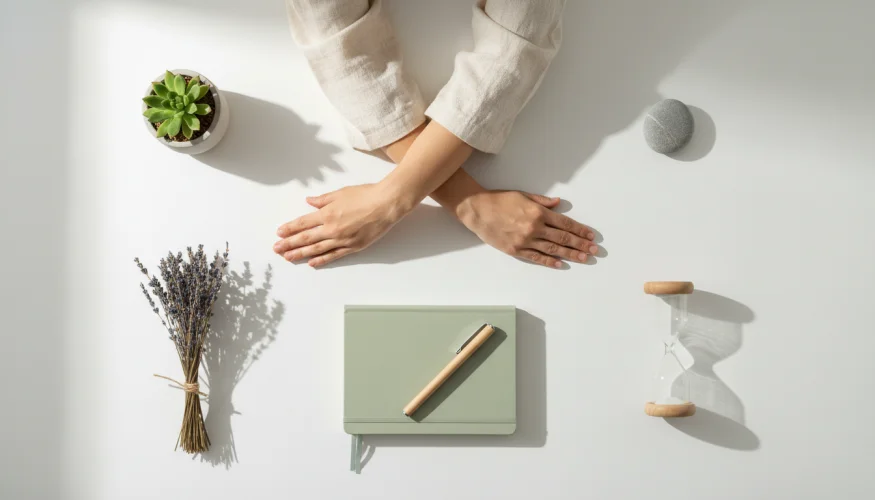
The butterfly hug technique itself is surprisingly simple. A person crosses their arms over their chest so that the fingers of one hand rest below the collarbone on the opposite side – the right hand points to the left and the left hand to the right. They then alternately, slowly and rhythmically tap their palms or fingers on their chest, as if imitating a heartbeat or the fluttering of butterfly wings. At the same time, they focus on their breathing, and may mentally picture a calm, safe place. The entire process takes only a few minutes, but its effect can be surprisingly profound.
As an example, consider Martina, a thirty-four-year-old teacher who suffered from chronic stress related to a demanding job and family situation. Every morning before leaving for school, she was overcome by a wave of anxiety that paralysed her. On the recommendation of her therapist, she began practising the butterfly hug – at first just two to three minutes a day, always before breakfast. Gradually, she found that she felt calmer in the mornings, handled challenging situations in the classroom better, and fell asleep in the evenings without being troubled by thoughts about the next day. She herself says that this technique changed her daily routine – without a single pill or expensive equipment.
Interestingly, bilateral stimulation does not always have to take the form of tapping on the chest. There are a whole range of ways to achieve this effect. Some people prefer alternating tapping on their knees or thighs, while others use auditory stimuli – for example, music or sounds played alternately into the left and right ear through headphones. There are even specialised apps and devices that automate bilateral stimulation. Nevertheless, the butterfly hug remains one of the most popular variations precisely because it is immediately accessible, requires no tools, and can be practised anywhere – in the office, on public transport, or at home on the sofa.
The science behind the technique: What research says
A sceptical reader might ask: is this really science, or just another wellness trend? The answer is not straightforward, but the research base is more solid than it might seem. Studies published in academic journals such as the Journal of EMDR Practice and Research repeatedly confirm that bilateral stimulation has measurable effects on reducing emotional arousal and the intensity of negative memories. A 2013 meta-analysis encompassing more than 24 randomised controlled trials demonstrated that EMDR – and therefore techniques based on it – is an effective method for treating trauma and anxiety disorders.
It is important, however, to distinguish between the therapeutic use of these techniques in the hands of a professional and their self-help use in everyday life. The butterfly hug as a tool for managing everyday stress is safe and accessible to virtually everyone. However, if a person suffers from serious trauma, post-traumatic stress disorder, or other psychological difficulties, bilateral stimulation should be part of comprehensive therapeutic care under the guidance of a qualified professional, rather than a replacement for it.
As Francine Shapiro, the founder of EMDR, said: "The brain has a natural ability to heal itself, much like the body. Our task is to create the conditions that support this ability." This is precisely where the power of techniques like the butterfly hug lies – they bring nothing artificial from the outside, but help to activate what is already within us.
Stress is almost inevitable in the modern age. According to data from the Czech Statistical Office and international surveys, work overload, uncertainty, and the fast pace of life are among the most common sources of psychological burden in adults. Yet many people are still searching for effective yet simple tools to cope with this burden. Meditation, breathing exercises, movement in nature – all of these are paths that work. The butterfly hug belongs among them as an unassuming yet surprisingly powerful complement.
Also noteworthy is the connection between physical and mental health that this technique naturally utilises. Physical contact – even with oneself – triggers the release of oxytocin, the hormone associated with feelings of safety and trust. Crossing one's arms over the chest evokes a gesture of protection and self-compassion that the brain perceives as a signal that everything is all right. In this way, bilateral stimulation combines with another powerful tool: conscious bodily awareness, which is the foundation of many modern approaches to mental health care.
For those who wish to try the technique, it is recommended to begin in a quiet environment, ideally sitting or lying down. Closed eyes help to focus on the inner experience. The tapping pace should be slow and steady – approximately one tap per second on each side. If strong emotions or memories surface during the exercise, it is advisable to pause for a moment, take a deep breath, and then continue. An entire session may last only two to five minutes, but even such a brief practice can bring noticeable relief.
It is also important to keep context in mind. The butterfly hug is not a magic cure for all problems and does not replace professional care where it is genuinely needed. It is, however, a tool that everyone always has at hand – literally. At a time when the importance of mental health care is increasingly discussed and interest in approaches that connect body and mind is growing, this technique offers something precious: simplicity, accessibility, and a scientifically grounded foundation.
The world of wellness and healthy living brings dozens of new trends every year – some endure, others quickly disappear. Bilateral stimulation and the butterfly hug technique, however, are not the product of a passing fashion. They are backed by decades of research, thousands of satisfied users, and a firm place in modern psychotherapy. And that is precisely why they are worth getting to know – whether as a complement to therapy, as part of a morning routine, or simply as a lifeline in a moment when stress has become overwhelming and help is needed immediately, here and now.