
# Where to Take Used Frying Oil and Why It Matters
Frying is one of those kitchen techniques that can transform ordinary ingredients into perfectly crispy delicacies. Whether it's homemade chips, fried chicken or doughnuts, the result is usually unforgettable. What comes after the feast, however, is not quite so pleasant – a litre or two of dark, burnt oil slowly cooling in a pan on the hob. What should you do with used oil from a deep fryer to make it safe, eco-friendly and ideally meaningful? This question troubles far more households than one might think, yet the answer is not as complicated as many people believe.
The problem starts with the very nature of used frying oil. After several frying cycles, the oil changes both chemically and physically – it darkens, thickens, begins to smell and contains a whole range of substances produced by the breakdown of fats at high temperatures. These include potentially harmful compounds such as acroleins and trans fatty acids, which are mentioned by the World Health Organization in the context of food safety, for example. But even if the oil is "only" slightly used and still relatively clear, the fact remains that improper disposal can cause serious problems – both in the home and in nature.
Try our natural products



Why you should never pour oil down the drain
The most widespread mistake that home cooks make is pouring oil down the sink or toilet. At first glance, this seems like the quickest and most convenient solution, but the consequences are far-reaching. Oil solidifies in the pipes, creates greasy deposits and gradually blocks the drainage system – first the domestic one, then the public one. The costs of repairing a blocked drain can be enormous, not to mention what happens further along the line at the wastewater treatment plant.
Treatment plants are designed to process biological waste, but they can only handle fats and oils to a limited extent. Large amounts of oil in the sewage system disrupt the biological water treatment processes and, ultimately, some of the pollution ends up in natural waterways. One litre of oil can contaminate up to one million litres of water – this figure is cited by numerous European water management organisations as a cautionary example of how a small domestic decision can have an enormous environmental impact. Pouring oil onto the garden or into the compost is similarly problematic. While a small amount of vegetable oil won't harm the soil, a larger volume creates an impermeable layer in the ground that prevents air and water from reaching plant roots and microorganisms.
So how should you proceed correctly? There are several approaches, each with its own specifics, depending on how much oil you have, what condition it's in and what options are available where you live.
How to properly dispose of used oil
The best option for larger quantities of used frying oil is to take it to a collection centre. Most Czech towns and municipalities operate collection centres that accept used edible oils and fats as a special category of waste. The oil is collected there in special containers and then sent for processing – most commonly to biogas plants or for the production of biodiesel. This route is the most ecologically sound and also contributes to the circular economy, as waste is turned into new energy or fuel.
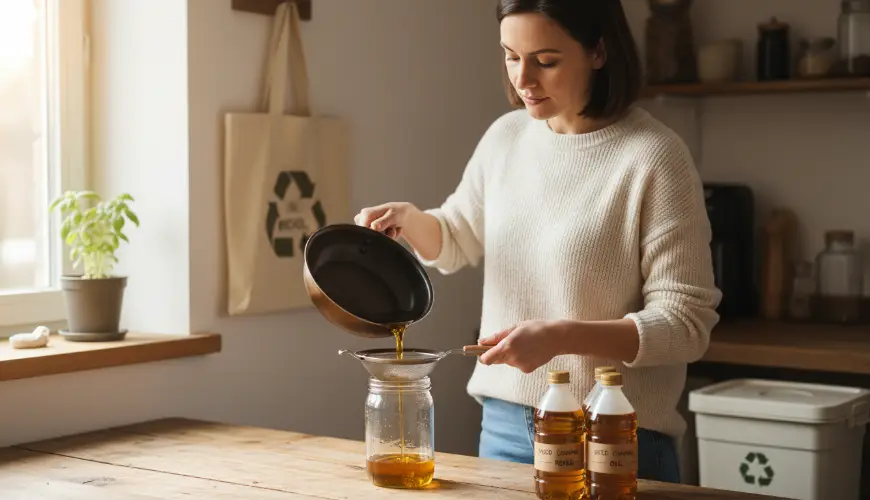
A practical example: a family from Brno who regularly bake Christmas biscuits and fry carp can easily accumulate three to four litres of used oil during December. Instead of pouring it down the drain, they let it cool, pour it into plastic mineral water bottles or sealable containers and take it to the nearest collection centre. The whole process takes twenty minutes and the result is a clear conscience and a clear drain.
The second option, which is becoming increasingly popular especially in larger cities, is special containers for used oil placed in shopping centres, near supermarkets or on the streets themselves. Prague, Brno, Ostrava and other Czech cities are gradually expanding this infrastructure. Simply pour the oil into a sealed container – ideally the original oil bottle or a sturdy plastic bottle – and drop it into the container. The system works similarly to sorting paper or glass and requires no special preparation.
If you only fry occasionally and the amount of oil is small, there is also a solution for regular municipal waste – but with conditions. The oil must be tightly sealed in a leak-proof container, ideally mixed with an absorbent material such as sand, sawdust or old newspaper. Waste prepared in this way can then be placed in the general waste bin. This solution is acceptable as a last resort, but it is certainly not ideal from an ecological standpoint, as the oil's potential as a raw material for energy production is lost.
An interesting alternative that is increasingly discussed in the context of a sustainable lifestyle is making homemade soap or lubricant. Vegetable oil that has only been used once or twice and is not too burnt can, under certain conditions, be processed into soap using the cold or hot process method. This procedure requires lye, basic equipment and a little patience, but the result is a functional soap that can be used for cleaning or washing dishes. Similarly, lightly used oil can be mixed with sand or wood shavings to create a lubricant for garden tools or door hinges. These creative approaches are popular in zero-waste lifestyle communities and show that even apparent waste can have a second life.
As British chef and sustainable food advocate Hugh Fearnley-Whittingstall once remarked: "Waste in the kitchen is a failure of imagination, not a lack of ingredients." This thought applies to used frying oil too – it's simply a matter of looking at it differently.
When to reuse oil and when to stop
A separate issue is the question of whether and when frying oil can be used more than once. Many cooks filter the oil through a fine sieve or cloth after frying, remove food residues and return it to the fryer for next time. This practice is perfectly acceptable under certain conditions and is commonly recommended in cookbooks too. The key is to monitor the condition of the oil – its colour, smell and behaviour when heated.
Fresh vegetable oil is light yellow, odourless and does not foam when heated. Oil that is still usable may be slightly darker and have a faint nutty smell, but still behaves stably. Signs that it is time to discard the oil for good are a dark brown colour, a pungent or fishy smell, excessive foaming when heated or the formation of a thick sediment. In such a case, further use of the oil would not only impair the taste of the food but could also be a health risk.
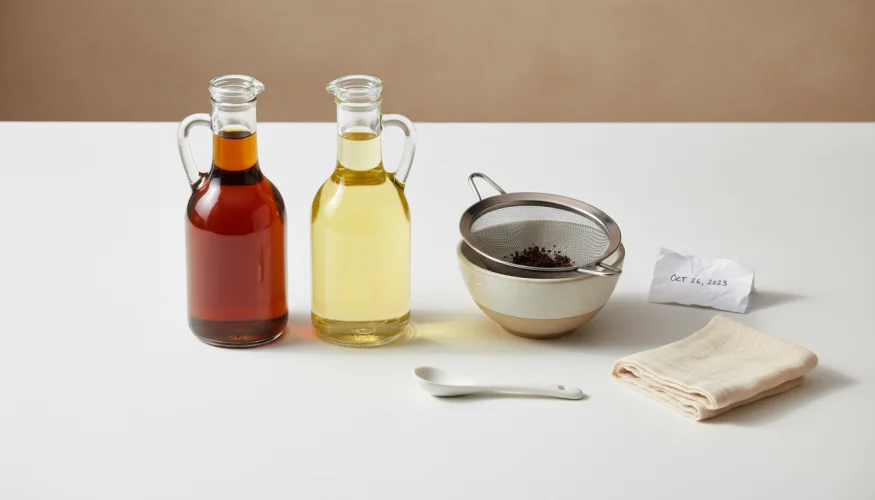
Experts in the field of food chemistry recommend changing frying oil after every four to eight uses, depending on what was cooked in the fryer. Fish and seafood degrade oil more quickly than vegetables or potato products. Similarly, higher temperatures and longer frying times shorten the life of the oil. If you fry regularly, it is worth keeping a simple notebook or marking the container with the date of first use.
The way the oil is stored between uses also plays an important role. Used oil should always be filtered, stored in a dark, sealed container and kept in a cool place away from light. Light and heat accelerate oxidation and shorten the life of the oil. Some cooks store the oil in the fridge, which is a very good idea, especially in summer.
Alongside the practical side of things, the economic dimension is also worth mentioning. Quality frying oil – whether sunflower, rapeseed or coconut – is not cheap. Proper care of the oil and its repeated use before final disposal therefore makes sense not only ecologically but also financially. And when the oil has finally run its course, taking it to a collection centre or a sorted waste container is the most logical and responsible step you can take.
A responsible approach to used frying oil is one of those small everyday decisions that together make a big difference. There is no need to change your entire cooking style or give up your favourite fried foods – you simply need to know what to do with the oil once it has done its job. And now you do.