

# Co znamenají čísla v trojúhelníku na plastu Čísla v trojúhelníku (symbolu recyklace) na plastovýc
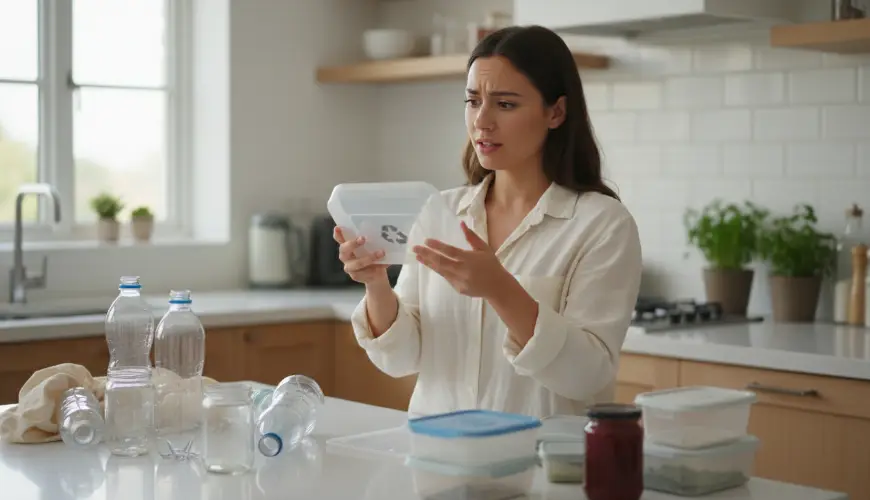
Have you ever picked up a plastic bottle, turned it over, and noticed a small triangle with arrows and a number inside? Most people overlook this symbol or consider it mere decoration. In reality, however, it is one of the most important information codes found on packaging – and understanding it can significantly affect both your health and the way you handle waste.
The numbers in the triangle on plastic indicate what is known as a recycling code, an internationally recognised system developed in 1988 by the American organisation Society of the Plastics Industry. Today it is used by virtually the entire world. Each number from 1 to 7 corresponds to a different type of plastic material, each with different properties, different uses, and different impacts on human health and the environment. The triangle itself does not mean that a given product is automatically recyclable – this is a misconception that persists and causes unnecessary confusion when sorting waste.
Try our natural products
A Guide to Numbers 1 through 7
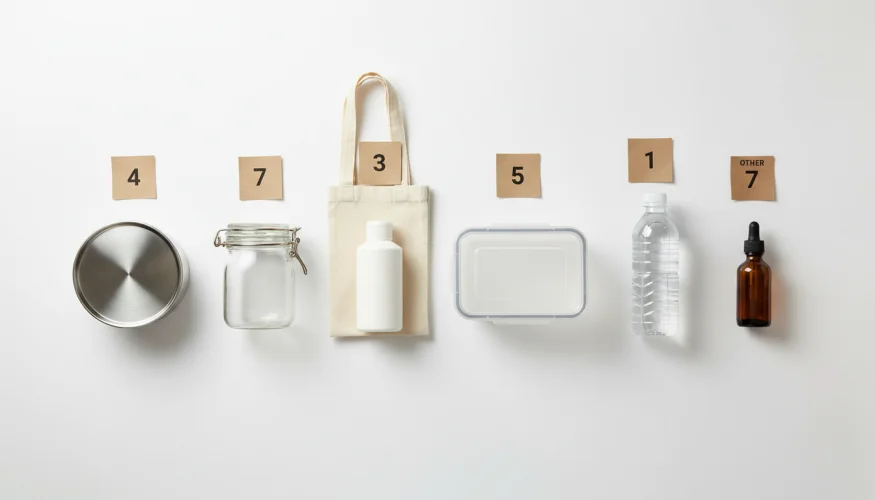
The number 1 indicates PET, or polyethylene terephthalate. This is the most widespread type of plastic, used to make beverage bottles, food packaging, and cosmetic products. PET is relatively safe for single use and is among the most easily recyclable plastics – used PET bottles are turned into fleece clothing, carpets, or new packaging, for example. Nevertheless, it is important to know that reusing PET bottles is not recommended, as the material degrades over time and may release unwanted substances.
The number 2 belongs to HDPE, or high-density polyethylene. This plastic is characterised by high durability and stability, which is why you will find it in packaging for cleaning products, shampoos, plastic bags, and milk containers. HDPE is generally considered one of the safer plastics and is also readily recyclable. Recycled HDPE is used to make garden benches, waste bins, and pipes, among other things.
The number 3 indicates PVC, or polyvinyl chloride – and here, caution is warranted. PVC is one of the most controversial plastics of all. It is used in pipes, floor coverings, food packaging, and toys. During production and when incinerated, it releases toxic substances including dioxins. Recycling PVC is technically demanding and in practice relatively rare. If you come across a triangle with the number 3, it is advisable to handle such a product carefully and certainly not to burn it under domestic conditions.
The number 4 belongs to LDPE, or low-density polyethylene. This soft and flexible plastic forms the basis of plastic carrier bags, food wraps, and bread bags. LDPE is considered relatively safe, but its recycling depends on the specific conditions in a given country or region – in many places it is still not fully utilised.
The number 5 belongs to polypropylene (PP), which is highly resistant to temperatures and chemicals. You will find it in plastic food containers, bottle caps, straws, and baby bottles. PP is generally considered safe even for contact with food, and its recycling has improved significantly in recent years. This is precisely why more and more manufacturers are turning to this material as a relatively acceptable alternative.
The number 6 indicates polystyrene (PS) – a material that most people know as foam polystyrene or as the hard transparent plastic in disposable coffee cups, cutlery, or egg cartons. Polystyrene is problematic for several reasons: its recycling is minimal in practice, it easily breaks down into microplastics, and when heated it can release styrene, a substance suspected of having carcinogenic effects. Health safety experts, including those associated with the Environmental Working Group, have long been drawing attention to the risks associated with using polystyrene packaging in contact with hot drinks or food.
Finally, the number 7 is a catch-all category indicating "other" plastics that do not fall into any of the previous groups. These include polycarbonate, bioplastics, and various multilayer materials. It is in this category that the controversial bisphenol A (BPA) is found – a substance that mimics hormones in the human body and whose harmful effects have been confirmed by numerous scientific studies. Products marked with the number 7 must therefore be assessed individually – not all of them are dangerous, but caution is appropriate.
Why It Matters More Than We Think
Understanding the numbers in the plastic triangle is not merely an academic matter for scientists or ecologists. It is a practical skill that touches everyday life. Take the example of Martina, a thirty-year-old mother from Brno, who began paying attention to these symbols after discovering that she had been serving food to her child in containers marked with the number 7. After reading several studies on BPA, she switched to stainless steel and glass cookware. She says the change did not place any significant financial burden on her, but gave her a greater sense of control over what her family consumes.
Such stories are becoming more common. People are increasingly aware that the choice of packaging material is not merely a matter of convenience, but has real implications for health. The World Health Organization repeatedly emphasises in its reports that exposure to chemical substances from plastics can have a cumulative effect – meaning that even small amounts of harmful substances ingested regularly over a long period of time can have serious consequences.
At the same time, it must be said that not all plastics are equally problematic. Materials marked with the numbers 2, 4, and 5 are generally considered safer options, while the numbers 3, 6, and 7 deserve greater attention. Number 1 is safe for single use, but repeatedly refilling PET bottles – as many of us do for reasons of economy – is genuinely not recommended.
As American scientist and environmental author Sandra Steingraber aptly noted: "Our bodies are part of the ecosystem, and what we put into the environment, we ultimately put into ourselves." This thought precisely captures why it is important to pay attention even to seemingly small details, such as the number on the bottom of a plastic container.
Another dimension of the whole issue is recycling and waste sorting. Many people tend to throw everything made of plastic into the yellow bin – regardless of what type it is. In reality, however, different types of plastic require different recycling processes, and mixing them can complicate or even undermine the entire recycling cycle. Information about what specifically belongs in the yellow bin varies from municipality to municipality, but the general rule is: the higher the number, the more complex the recycling. PET and HDPE (numbers 1 and 2) can be processed relatively easily by the recycling industry, whereas polystyrene or multilayer materials with the numbers 6 and 7 end up in many cases at a landfill or in an incinerator.
It is also useful to know that the triangle symbol itself with three arrows – known as the Möbius loop – originally indicated the recyclability of the material. Over time, however, its use became so loosely applied that today it serves primarily as an identification code for the type of plastic, rather than as a guarantee that the product can actually be recycled. Consumers should therefore not confuse these two things: the presence of the triangle does not mean that the product will end up in the recycling process.
If you want to reduce your dependence on plastic packaging in general, there are a whole range of practical steps that do not require radical lifestyle changes. Switching to glass containers for food storage, using fabric shopping bags, or choosing products in paper packaging are steps that anyone can manage. The key is conscious consumption – that is, making deliberate decisions about what we buy and what it comes in.
The world of plastics is complex and simple solutions do not exist. Plastic as a material has brought civilisation enormous benefits – from medical devices and safety features in cars to lightweight packaging that extends the shelf life of food. The problem is not with plastic itself, but with its uncontrolled and unreflective use. Knowing what the individual numbers in the triangle mean is the first step towards being able to make more informed decisions – for ourselves, for our families, and for the planet.
Next time you go shopping, it is worth picking up a bottle or container, turning it over, and looking at what number is hidden inside that small triangle. You may be surprised by what you find.