
Bamboo or plastic toothbrush, how to decide
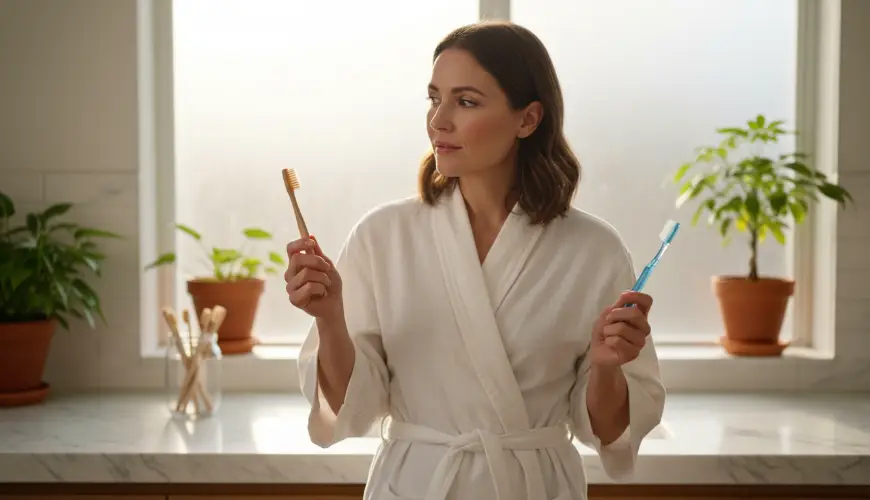
Every morning, most of us automatically reach for our toothbrush without giving a moment's thought to what it's made of or what will happen to it when it's worn out. And yet this seemingly insignificant choice can have a surprisingly large impact – both on the environment and on our health. The debate over whether a bamboo or plastic toothbrush is better has become part of a broader conversation about sustainable living in recent years, and it's time to look at it honestly and without embellishment.
The plastic toothbrush has only accompanied humanity since the 1930s, when DuPont introduced the first model with nylon bristles. Since then, it has become an absolute staple in bathrooms around the world. But being commonplace doesn't mean being the best choice. According to estimates, approximately one billion plastic toothbrushes are thrown away every year in the United States alone, ending up in landfills or oceans. On a global scale, this number reaches staggering heights – figures of up to 4.7 billion units per year are cited. Plastic doesn't decompose in nature; it merely crumbles into microplastics that penetrate soil, water, and ultimately the food chain. This problem is mapped in detail by organisations such as Plastic Oceans International, which has long been drawing attention to the devastating impact of plastic waste on marine ecosystems.
Try our natural products
Bamboo as an alternative: a fashionable fad or a genuine solution?
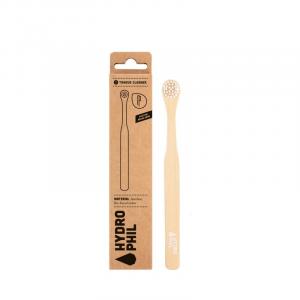
Bamboo toothbrushes appeared on the market as a direct response to growing environmental awareness among consumers. Bamboo is one of the fastest-growing plants in the world – some species can grow up to 90 centimetres in a single day – and requires no pesticides or artificial fertilisers to grow. At the end of its useful life, the bamboo handle naturally decomposes in compost, while a plastic toothbrush will persist in the soil for hundreds of years. This fact alone gives the bamboo option a clear ecological advantage.
However, the situation is not as black and white as it might seem. Most bamboo toothbrushes still use nylon bristles, just like their plastic counterparts. Fully compostable toothbrushes with bristles made from natural materials, such as boar bristle, do exist, but they are not widely available, and not everyone is willing to reach for an animal-derived product for ethical reasons. So before buying a bamboo toothbrush with the feeling of doing the maximum for the planet, it's worth reading the ingredients – and ideally finding out whether it's possible to easily remove the bristles before composting the handle. Many manufacturers actively recommend this and include instructions directly on the packaging.
Another argument that advocates of plastic toothbrushes like to raise is the emissions associated with the production and transport of bamboo products. Bamboo is grown primarily in China and Southeast Asia, so its journey to European bathrooms is not exactly short. Nevertheless, the overall carbon footprint of a bamboo toothbrush is more favourable than that of the plastic variant, largely because bamboo actively absorbs carbon dioxide as it grows. According to a study published in the Journal of Cleaner Production, bamboo products generally have lower environmental impacts compared to plastic across their entire lifecycle.
The practical side of things also plays a significant role in this comparison. Plastic toothbrushes are cheap, available in every drugstore, and come in an endless variety of options – different bristle hardness, different head shapes, versions for sensitive gums or whitening effects. Bamboo toothbrushes, by contrast, offer an ever-wider range, but their price tends to be slightly higher. On the other hand, it's worth bearing in mind that a toothbrush should be replaced approximately every three months – as recommended by the World Health Organization – so the additional annual cost is not particularly dramatic. We're talking about a difference of a few tens of crowns, not hundreds.
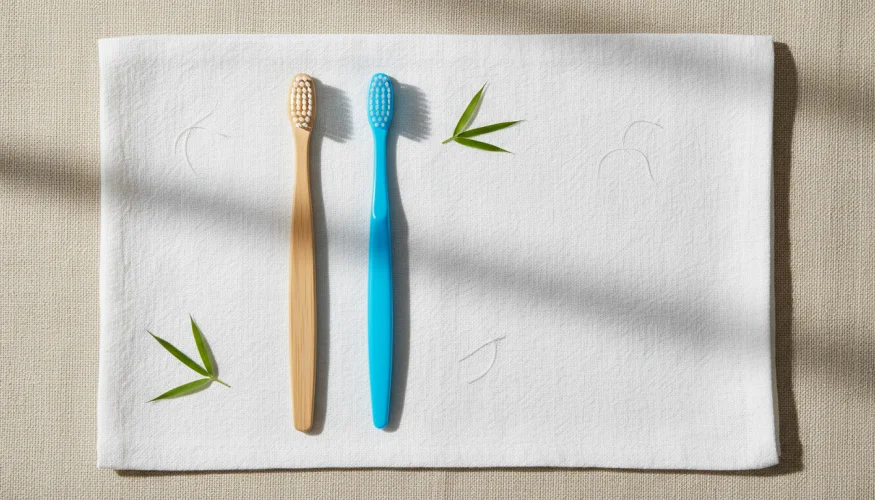
The perspective of hygiene and dental health is also interesting. The bamboo handle is naturally antimicrobial due to the properties of bamboo, which can be an advantage especially in the humid environment of a bathroom. Plastic, on the other hand, can absorb bacteria over time if the surface becomes scratched. That said, it must be noted that both options are hygienically comparable when used correctly and replaced regularly. The key is to rinse the toothbrush thoroughly after each use and allow it to dry freely – this applies regardless of the material.
Let's look at a specific example. Jana, a thirty-year-old teacher from Brno, switched to a bamboo toothbrush two years ago after watching a documentary about plastic waste in the oceans. "At first I was worried about whether the toothbrush would be just as effective," she says. "But after the first week, I didn't notice any difference at all. My dentist told me at my next check-up that my teeth were fine, so I stopped worrying." Jana's story is not unique – a growing number of people share a similar experience after taking their first step towards a more eco-friendly bathroom, only to find that the sacrifice in terms of comfort or hygiene is minimal or non-existent.
So what really matters when making a choice?
The answer to the question of whether a bamboo or plastic toothbrush is better depends on what a person considers their priority. If it's purely about price and availability, the plastic toothbrush still leads. But if the impact on the environment enters the equation – and today it is only honest that it should – the bamboo option gains a clear advantage. This is not naive ecological idealism, but a sober assessment of the facts: plastic is a problem whose full scale we are only beginning to understand.
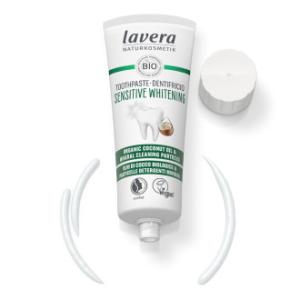
It is also important to mention that the choice of toothbrush is not an isolated decision. Toothpaste in a plastic tube, disposable interdental brushes, plastic mouthwash containers – the bathroom is actually one of the biggest producers of plastic waste in the home. Switching to a bamboo toothbrush can be the first step towards a broader reassessment of purchasing habits, a kind of symbolic start on the path to a more sustainable way of life. As environmental activist and author Anne-Marie Bonneau says: "We don't need a handful of people doing zero waste perfectly. We need millions of people doing it imperfectly."
When choosing a specific bamboo toothbrush, it's worth paying attention to several parameters. Certifications such as FSC (Forest Stewardship Council) guarantee that the bamboo was grown sustainably. Packaging is also important – ideally paper or completely plastic-free. Bristles should be labelled as BPA-free, and the manufacturer should clearly communicate how to dispose of the toothbrush at the end of its life.
- Handle: look for certified bamboo without toxic surface treatments
- Bristles: BPA-free nylon or a natural alternative; check whether they can be easily removed before composting
- Packaging: give preference to paper or compostable packaging over plastic
- Certification: FSC, compostability certificate or other verified eco-labels
- Manufacturer: transparency regarding the origin of materials and production conditions
Switching to a bamboo toothbrush is not a revolution. It is a small, everyday choice – but it is precisely such choices that together form a bigger whole. While one person with a bamboo toothbrush will hardly save the planet on their own, millions of people making the same decision create real pressure on manufacturers, retailers and legislators alike. And that is a force that truly changes things.
Plastic toothbrushes will continue to dominate the shelves of drugstores and supermarkets for a long time to come. But their hegemony is slowly but surely beginning to crumble – much like plastic itself crumbles into microparticles in the oceans, with the difference that this particular breakdown is welcome. The bamboo toothbrush is not a perfect solution, but for now it is the best option available to most of us. And sometimes it is good to start with the best available, even when the perfect does not yet exist.