

# Why Dark Circles Under Eyes Form and What Causes Them Dark circles under the eyes are a common ae
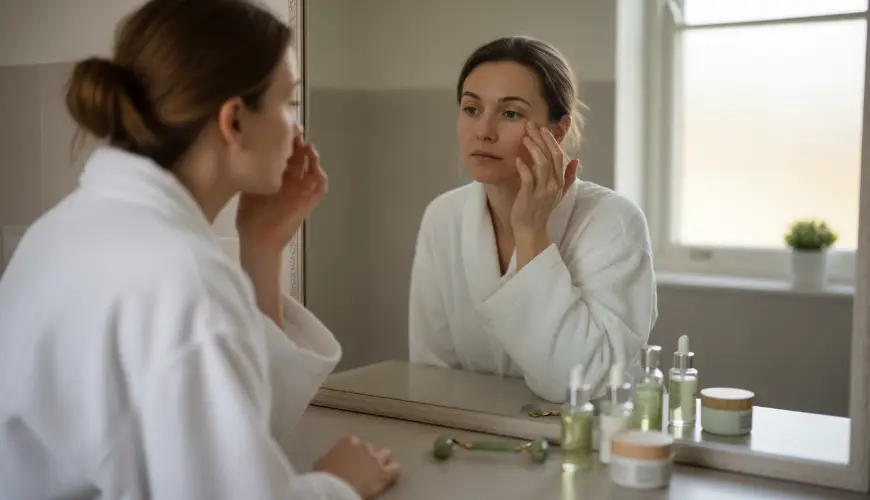
Dark circles under the eyes are among those cosmetic problems that trouble people across age groups, genders, and lifestyles. Sometimes they appear after a single sleepless night, other times they persist despite adequate sleep and no amount of concealer seems to be enough. Why do dark circles under the eyes actually form and why are they so stubborn in some people? The answer is not as simple as it might seem.
The area under the eyes has some of the thinnest skin on the entire body – its thickness is approximately ten times less than the skin on other parts of the face. This anatomical peculiarity means that anything happening beneath the surface – whether it's dilated blood vessels, accumulated fluid, or loss of fatty tissue – immediately manifests externally. This is precisely why the eye area is so sensitive to changes in the body and to external influences.
Try our natural products

The Most Common Causes of Dark Circles Under the Eyes
One of the most widespread causes is lack of sleep, but it would be a mistake to consider it the only cause. Sleep deprivation causes the skin to pale and lose tension, making subcutaneous blood vessels significantly more visible. At the same time, fluid accumulates under the eyes, creating shadows and optically deepening the dark discoloration. The World Health Organization has long warned that chronic sleep deprivation has serious consequences for overall health – and the eye area is just one of many warning signals the body sends.
But sleep is just one piece of the puzzle. A very common, yet overlooked cause is genetic predisposition. If dark circles troubled parents or grandparents, it is very likely that this trait will manifest in the next generation as well. In some ethnic groups – particularly in people with darker skin of Mediterranean, Asian, or African origin – there is a higher concentration of melanin in the area under the eyes, causing naturally darker pigmentation. This type of dark circles is the most difficult to address with cosmetic products, as it has a purely biological basis.
Another culprit that tends to be forgotten when looking for causes of dark circles under the eyes is allergies. An allergic reaction triggers the release of histamine, which causes blood vessel dilation and itching. Many people rub or scratch the eye area in response to the discomfort, which irritates the sensitive skin and worsens the visibility of subcutaneous blood vessels. Seasonal allergies, sensitivity to dust, or pet dander can thus directly affect the appearance of the skin.
Dehydration also plays an equally important role. When the body doesn't receive enough fluids, the skin under the eyes begins to look dull, sunken, and grayish. Blood vessels become more prominent and the overall facial expression appears tired. Yet the solution in this case is surprisingly simple – increase water intake and reduce beverages that promote dehydration, such as alcohol or excessive coffee.
Aging is another factor that cannot be ignored. As we age, the skin loses collagen and elastin, becoming thinner and more transparent. The fatty tissue that in youth ensured fullness and firmness of the eye area gradually diminishes or shifts. The result is more pronounced circles and deepening tear troughs, which optically amplify the entire problem. This is why dark circles can appear more pronounced in older people, even if their lifestyle remains unchanged.
Excessive exposure to sunlight also plays a role. UV radiation stimulates melanin production in the skin, and because the area under the eyes is particularly sensitive, uneven pigmentation can occur. Regularly using SPF protection in the eye area – which many people neglect – is therefore an important preventive step.
What Lies Behind Dark Circles That Are Reluctant to Disappear
Imagine a situation that is quite common: a thirty-year-old woman sleeps eight hours a day, drinks enough water, is not stressed, and yet wakes up every morning with pronounced dark circles. She visits a dermatologist who discovers that the cause is a combination of genetic pigmentation and mild atopic dermatitis – a chronic skin inflammation that causes thickening and darkening of the skin in the eye area. Such a situation is far more common than most people realize, and it shows how complex the diagnosis of an apparently simple cosmetic problem can be.
Chronic fatigue and long-term stress are other factors that contribute to the formation of dark circles. Cortisol, the stress hormone released in increased amounts during prolonged psychological pressure, negatively affects sleep quality, promotes inflammation in the body, and worsens skin condition. As writer and sleep researcher Matthew Walker aptly noted: "Sleep is the single most effective thing we can do to reset our brain and body health." These words apply to skin health as well – and dark circles are one of the first visible signs that the body is out of balance.
Iron also plays its role in this story. Iron deficiency anemia is one of the medically confirmed causes of dark circles. When red blood cells don't carry enough oxygen to tissues, the skin pales and subcutaneous blood vessels become more visible. If dark circles persist despite adequate sleep and hydration, it may be worth having a blood count checked with a general practitioner.
Similarly, vitamin K deficiency can also be a cause, as it plays a key role in blood clotting and vascular health. Some studies suggest that topical application of products containing vitamin K can help reduce the visibility of subcutaneous blood vessels in the eye area. The scientific portal Healthline provides an overview of various causes and treatment options for dark circles, from home remedies to dermatological procedures.
Lifestyle has a direct influence on how pronounced dark circles are. Smoking damages collagen and impairs skin circulation, contributing to premature aging and more pronounced circles. Excessive alcohol consumption acts similarly, causing dehydration and blood vessel dilation. A diet poor in antioxidants, vitamins C and E, or omega-3 fatty acids weakens the skin's natural defenses and impairs its ability to regenerate.
An interesting but less discussed factor is sleeping position. Sleeping on the stomach or side can contribute to fluid accumulation under the eyes, as gravity promotes its retention in the eye area. Sleeping on the back with the head slightly elevated can mitigate this effect – a simple trick that costs absolutely nothing.
How to Approach Solving Dark Circles
Because dark circles have various causes, there is no single universal solution. The key is to first understand what specifically lies behind them. If they result from lack of sleep, improving it will help. If the cause is an allergy, focusing on its treatment will bring results faster than any eye cream. If the cause lies in genetics or aging, expectations from home care are necessarily more modest, and dermatological procedures may be a more effective solution.
In terms of everyday care, there are several approaches with scientifically supported backing. Cold compresses or chilled spoons applied to the eye area help constrict dilated blood vessels and reduce swelling. Caffeine found in many eye creams acts similarly – it constricts blood vessels and temporarily reduces the visibility of dark circles. Retinol, vitamin C, or hyaluronic acid are ingredients that, with regular use, can improve skin structure, support collagen production, and lighten pigmentation.
An important part of care is also sun protection. Daily use of sunscreen with SPF 30 or higher in the eye area is one of the most effective ways to prevent worsening of pigmentation caused by UV radiation. It is surprising how few people include this area when applying protection.
From a nutritional perspective, foods rich in vitamin C – citrus fruits, peppers, or broccoli – are worth noting, as they support collagen synthesis. Foods high in antioxidants, such as blueberries, green tea, or dark chocolate, help protect cells from oxidative stress. Omega-3 fatty acids found in fatty fish or flaxseed contribute to skin hydration and elasticity from within.
For those for whom home care is insufficient, dermatology offers a wide range of options. Chemical peels, laser therapy, or hyaluronic acid applied in the form of fillers can significantly improve the appearance of the eye area. These procedures are of course more financially demanding and should always be performed by a qualified professional, but for many people they represent a long-term effective solution.
Dark circles under the eyes are therefore much more than just an aesthetic problem – they are a window into the overall state of the organism. They draw attention to fatigue, stress, insufficient hydration, nutritional deficiencies, or genetic predispositions. Rather than being perceived as an enemy to be masked at all costs, they can serve as a useful signal that invites reflection on the overall approach to health and lifestyle. And that is precisely where their true value lies – not as a cosmetic flaw, but as a message from the body that deserves attention.