
Where Our Sorted Waste Really Ends Up
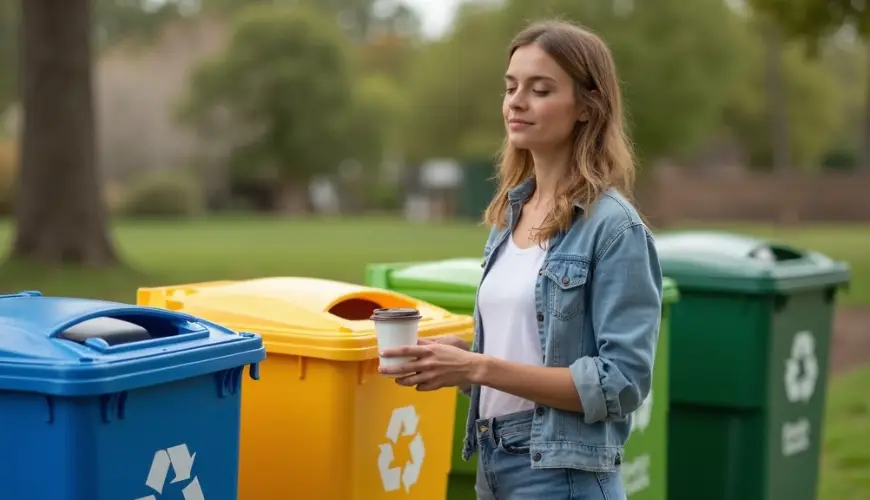
Each of us knows the feeling. You're standing by the colored recycling bins, holding a yogurt cup in your hand, wondering whether to toss it into the yellow bin or whether it's actually pointless. Somewhere in the back of your mind, a doubt creeps in: is this stuff really recycled, or does it all end up in one big pile? Surprisingly many people share this feeling of uncertainty, and it must be said that it's not entirely unfounded. Recycling in the Czech Republic actually works better than many skeptics think, but at the same time worse than the optimistic numbers that occasionally appear in the media would suggest. Let's take a look at what really gets recycled from our sorted waste, what ends up in landfills, and why it's important not to stop sorting, even when the system isn't perfect.
The Czech Republic is among the European countries with a relatively high rate of waste sorting. According to data from EKO-KOM, the company that operates the take-back and recycling system for packaging waste, the average Czech sorts over 70 kilograms of waste per year. This is a figure that places us above the European average and demonstrates that the habit of sorting waste has taken root quite well in Czech society. However, there is a gap between sorting and actual recycling that receives less attention. Sorted waste does not automatically mean recycled waste. Some of what we diligently sort into colored bins cannot be recycled for various reasons – whether due to contamination, unsuitable materials, or simply because there isn't sufficient processing capacity for a given type of waste.
Let's start with the material that fares best in terms of recycling – paper and glass. Paper is recycled in the Czech Republic with a high success rate; it is estimated that the actual recycling rate for paper waste exceeds 80 percent. Domestic paper mills have sufficient capacity and demand for collected paper is stable. Of course, there are exceptions here too. Greasy pizza boxes, paper coated with plastic film, or wet newspapers from a leaking container are materials that recycling lines will reject. But overall, paper is an example of a relatively well-functioning recycling cycle. Glass is in a similar position. Both colored and clear glass is successfully recycled in the Czech Republic and is used in the production of new bottles, jars, or even insulation materials. Glass also has the advantage that it can be recycled practically indefinitely without losing quality. The glass recycling rate in the Czech Republic reaches approximately 75 to 80 percent, which is a very solid result.
The situation becomes more complicated with plastics, and this is precisely where most doubts about the meaningfulness of sorting originate. Plastics are an enormously diverse group of materials. PET bottles, which make up a significant portion of the contents of yellow bins, are recycled relatively well – there are processing lines in the Czech Republic that turn them into fibers for the textile industry, films, or new bottles. The recycling rate for PET bottles is relatively high and this material has a stable market value. But the yellow bin isn't just about PET bottles. It also includes polystyrene packaging, films, bags, cups, tubes, and a whole range of other plastic products. And this is where the problems begin. Many types of plastics are technically very difficult or economically unviable to recycle. Multi-layer packaging that combines plastic with aluminum or paper is a classic example of a material that recycling technologies struggle to handle. Similarly problematic are food-contaminated packaging or small plastic items that fall through the screens of sorting lines.
According to estimates based on data from the Ministry of the Environment and expert studies, approximately 30 to 40 percent of sorted plastic waste in the Czech Republic is actually recycled. The rest often ends up as so-called solid recovered fuel in cement plants or heating plants, meaning it is used for energy recovery, which is better than landfilling but still isn't recycling in the true sense of the word. And a portion – though smaller than in the past – does indeed end up in landfills. Is it frustrating? Undoubtedly. But it's important to understand the context. Even the portion of plastics that is used for energy recovery represents a better option than if it ended up in a landfill, where it would decompose over hundreds of years.
An interesting chapter is the sorting of metal packaging, which in the Czech Republic is still not as widespread as the sorting of plastics or paper. Yet metals are among the materials with the highest recycling rates in the world. Aluminum cans can be recycled with virtually no loss of quality, and their reproduction from recycled material uses up to 95 percent less energy than production from primary raw materials, as stated for example by the European Environment Agency. In many cities and municipalities, metal packaging is sorted together with plastics into yellow bins and then separated at sorting lines using magnets and eddy currents. The system works, but it could work better if more people knew about it.
But let's look at the other side of the coin – at what really ends up in landfills. The largest share of landfilled waste in the Czech Republic is not poorly sorted packaging but mixed municipal waste, meaning what we throw into black bins. And it is precisely in mixed waste that enormous potential for improvement lies hidden. Analyses of mixed municipal waste composition repeatedly show that roughly 40 to 60 percent of its contents consist of materials that could have been sorted – bio-waste, paper, plastics, glass, textiles. In other words, even people who sort often throw things into mixed waste that don't belong there. And then, of course, there is a significant portion of the population that doesn't sort at all or sorts only sporadically.
An example from everyday life illustrates this perfectly. Imagine a family that diligently sorts PET bottles, paper, and glass. But they throw potato peels, coffee grounds, and food scraps into mixed waste. Old clothes that they could take to a textile collection bin end up in the black bin. Broken plastic toys that could theoretically go into the yellow bin also get tossed into mixed waste. The result? Despite good intentions, this family sends dozens of kilograms of waste to landfill each year that didn't have to end up there. And we're talking about a family that's trying.
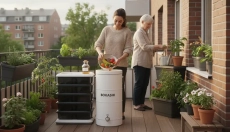
A crucial role in the entire system is played by bio-waste, which constitutes the largest component of mixed municipal waste. In recent years, the situation has been improving – more and more municipalities are introducing brown bins for bio-waste, and since 2024, municipalities are required to ensure year-round bio-waste collection. This is an important step because biodegradable waste in landfills produces methane, which is a significantly more potent greenhouse gas than carbon dioxide. According to the Czech Statistical Office, approximately 45 percent of municipal waste in the Czech Republic is still sent to landfills, although this share is gradually declining.
As the famous naturalist and conservationist David Attenborough said: "No one can solve all the world's problems, but everyone can contribute to the solution." And that applies precisely to recycling as well. The system isn't perfect, but that doesn't mean sorting is pointless.
Try our natural products
So what actually gets recycled and what doesn't?
For clarity, the situation can be summarized fairly simply. Paper, glass, PET bottles, metal packaging, and beverage cartons are recycled well (the latter are processed in specialized facilities, although there aren't many in the Czech Republic). Multi-layer plastic packaging, contaminated plastics, polystyrene, and small plastic items are recycled less successfully. Landfills primarily receive mixed municipal waste, which contains large amounts of bio-waste, textiles, and materials that could have been sorted but weren't.
The future of recycling in the Czech Republic depends on several factors. The first is legislation. The European Union is pushing member states toward ambitious targets – by 2035, at least 65 percent of municipal waste should be recycled and a maximum of 10 percent should go to landfills. For the Czech Republic, this means an enormous change, as we are currently quite far from these goals. The Waste Act of 2020 is gradually increasing landfill fees, which should motivate municipalities and companies to manage waste better. The second factor is the development of processing technologies – chemical recycling of plastics, which is still in its infancy, could significantly increase the share of recyclable plastics in the future. And the third, perhaps most important factor, is the people themselves and their willingness to sort correctly and consistently.
Why sorting makes sense even when the system isn't perfect
It's understandable that when a person learns that part of their carefully sorted waste doesn't end up at a recycling line but in a cement plant or even a landfill, they feel frustrated. But giving up on sorting would be the worst possible solution. First, a large portion of waste is actually recycled and returned to circulation. Second, even energy recovery is better than landfilling. And third, the more people sort and the better they sort, the greater the pressure to develop processing capacities and technologies. Demand for recycled materials is growing, and with it grows the economic motivation to invest in better recycling processes.
But there is yet another dimension that is discussed less often. Sorting waste changes the way we think about the things we buy and use. When a person realizes how much waste they produce and how complex it is to process, they naturally begin to think about whether they need another plastic package, whether they could use a cloth bag instead of a plastic one, or whether they could choose products with simple packaging over those wrapped in three layers of plastic. This shift in thinking toward more sustainable consumption is perhaps just as important as recycling itself.
In closing, one practical tip. If you want to sort truly effectively, learn to recognize recycling symbols on packaging and use the Kam s ním app from EKO-KOM, which advises which bin a specific package belongs in. Pay attention to ensuring that packaging is at least roughly cleaned – it's enough to rinse out a yogurt cup; you don't need to scrub it to a shine. And don't forget about bio-waste, textiles, and electronic waste, which have their own collection systems. Every correctly sorted piece of waste is a small step in the right direction. And as the data shows, millions of those small steps are taken in the Czech Republic every day – we just need to take even more of them and do them better.