

# What is micro-movement and why you need it
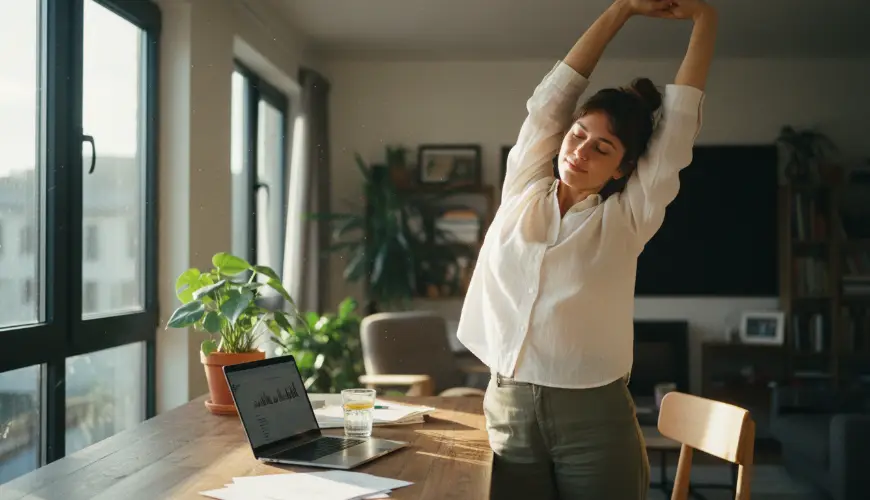
Modern humans sit. They sit in cars, at computers, at lunch, on the couch. According to data from the World Health Organization, approximately 31% of the world's adult population does not meet the recommended amount of physical activity – and this proportion has been steadily growing over recent decades. Yet the solution doesn't have to involve signing up for a gym or painfully getting up before dawn for a morning run. There is an approach that works quietly, but all the more effectively – it's called micro-movement.
Micro-movement, referred to in English as micro movement or incidental movement, is physical activity accumulated in small doses spread throughout the entire day. It's not sport in the traditional sense. It's a conscious decision to take advantage of everyday opportunities to move – whether that's choosing the stairs over the lift, stretching while waiting for coffee, or taking a short walk during a phone call. Research shows that this approach can have a comparable, and in some respects even greater, impact on health than a single one-hour visit to the gym.
Why does this matter? Because training three times a week alone is not enough to compensate for the damage caused by eight to ten hours of sitting per day. Scientists refer to this phenomenon as sedentary behaviour and study it as an independent risk factor – regardless of whether a person exercises or not. In other words, even an active athlete who otherwise sits all day faces an increased risk of metabolic disease, cardiovascular problems, or chronic back pain.
Try our natural products




Why small movements make a big difference
The human body was not evolutionarily designed for continuous sitting. For thousands of years, our ancestors walked, carried, bent down, climbed and stood up – and these movements naturally wove through the entire day. The modern environment has largely eliminated this natural variability and replaced it with static postures. Micro-movement is essentially an attempt to return to this original pattern – not through artificial exercise, but by restoring movement as a natural part of life.
From a physiological standpoint, every small movement activates muscles that would otherwise remain passive. The engagement of muscle tissue triggers a whole cascade of metabolic processes – insulin sensitivity improves, lipoprotein lipase responsible for fat processing is activated, and blood flow to the brain improves. A study published in the British Journal of Sports Medicine showed that brief breaks from sitting every 30 minutes significantly improve blood glucose levels and blood pressure in people with sedentary jobs – without any structured training whatsoever.
Also interesting is what happens to the mind. Movement stimulates the release of neurotransmitters such as dopamine and serotonin, increases the flow of oxygenated blood to the prefrontal cortex, and supports neuroplasticity. In short – a brief walk around the office or a few squats while waiting for a meeting will improve not only physical fitness, but also concentration, mood and creativity. This is confirmed by a popular quote attributed to the philosopher Friedrich Nietzsche: "All truly great thoughts are conceived while walking."
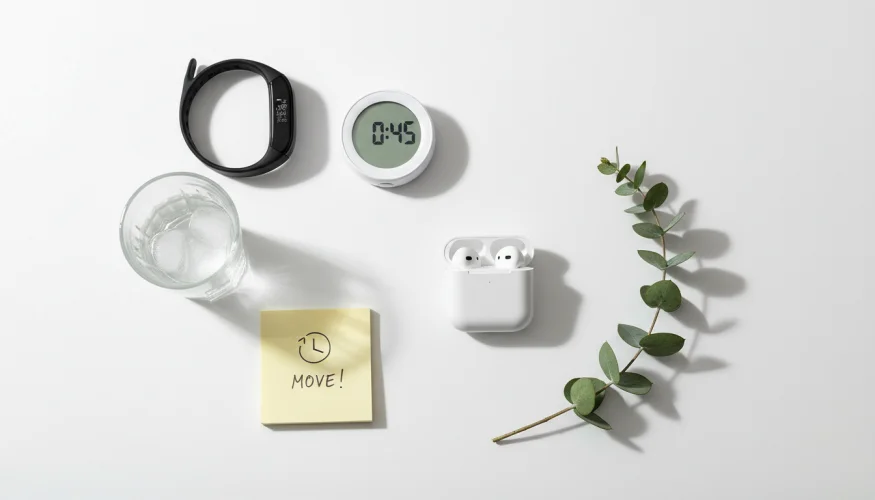
A real-life example might be Jana, a forty-year-old project manager who works from home and had long struggled with chronic fatigue and neck pain. She didn't start exercising – instead, she set a reminder every 45 minutes to stand up, walk around her flat, do a few shoulder rolls and take the dishes to the kitchen. After three weeks, she described a significant improvement in her afternoon energy levels and the disappearance of headaches that had troubled her nearly every day. No training plan, no gym – just consciously accumulated movement throughout the day.
The principle of micro-movement is therefore accumulation. Ten minutes of movement here, five minutes there – and by the end of the day, the total can approach or even exceed the WHO's recommended 150 minutes of moderate-intensity activity per week. The key advantage over a single training session lies in the regular interruption of sedentary behaviour, which in itself brings health benefits.
How to consciously incorporate micro-movement into everyday life
Moving from theory to practice isn't complicated, but it does require a degree of intentionality – at least in the beginning, before new habits become automatic. It's not about a revolution in lifestyle, but about a series of small decisions that gradually layer into a new pattern of behaviour.
You can start very simply by changing the way you travel or move around within a building. Taking the stairs instead of the lift is a classic, but it works. Parking a few streets away, getting off a stop early, walking to a meeting instead of joining a video call – all of these are movement opportunities that require neither getting changed nor extra time. Research from Harvard consistently shows that walking is one of the most accessible and effective forms of physical activity for maintaining health.
The work environment offers a surprising number of opportunities. Phone calls can be taken standing up or while moving – all you need is earphones or a hands-free device. Meetings with colleagues can be moved from the conference room to a walk around the building, if the nature of the discussion allows. A standing desk or a height-adjustable desk does require an initial investment, but even without one, you can simply introduce a rule: stand up every hour, walk to get a glass of water, and return. These small breaks from sitting have a demonstrably positive effect on metabolism and productivity alike.
The home is another untapped source of movement. Vacuuming, washing windows, gardening, washing dishes by hand instead of using the dishwasher – all of these activities engage muscle groups and raise the heart rate. It's no coincidence that older generations, who carried out these tasks without modern appliances, had statistically lower rates of obesity and metabolic syndrome. Movement was a natural part of their day, not a separate activity.
Particularly effective is making conscious use of so-called waiting moments – times when you're waiting for a bus, for coffee, for a page to load, or for food to heat up in the microwave. These brief pauses, which we typically fill by scrolling on our phones, can easily be turned into a minute of squats, lunges, calf raises, or trunk rotations. None of this requires special clothing or equipment. All it takes is the conscious decision that this minute belongs to your body, not to a screen.
For parents of young children, micro-movement is almost natural – playing on the floor, carrying a child, chasing them around the playground. The problem arises when children grow older and parents slip back into sedentary patterns. This is precisely when it's useful to consciously seek out family activities that bring movement without the need for formal exercise: walks, cycling trips, mushroom picking, playing ball games in the garden.
Technology can be an ally in this regard. Smartwatches and fitness trackers remind you when you've been sitting too long, track your step count, and motivate movement through gamification. Apps such as standing reminders or a simple step counter can be enormously helpful in the early stages of building new habits. The goal, however, is not dependence on technology, but the gradual internalisation of a movement mindset – a state in which a person naturally and without prompting chooses the more active option.
It's also important to design your environment so that movement is the easier choice rather than inactivity. Behavioural economists talk about choice architecture. If you work at a height-adjustable desk, you're more likely to stand. If your shoes are ready by the door, you're more likely to go outside. If you have a balance ball instead of a regular chair in your office, you naturally engage your stabilising muscles throughout the day. These small adjustments to your environment require neither willpower nor discipline – they simply work in the background.
A special category is micro-movement in the area of flexibility and mobility. Prolonged sitting shortens the hip flexors, weakens the deep spinal stabilisers, and creates tension in the thoracic spine and neck. Regular stretching – even for just 60 seconds – can significantly reduce these negative effects. Stretching while brushing your teeth, doing a few hip circles while cooking, or performing a deep squat when picking something up off the floor – these are micro-movements that work specifically on mobility and have a direct impact on the prevention of pain and injury.
Accumulating daily activity without formal training is therefore neither a utopia nor an excuse for the lazy. It is a scientifically supported strategy that respects the reality of modern life – full of commitments, time pressure, and mental exhaustion. Movement doesn't have to be a dedicated slot in your calendar. It can be the fabric of the entire day, subtle but unceasing. And it is precisely this continuity that makes micro-movement such a powerful tool for long-term health.
A healthy lifestyle isn't just about what we do at the gym or on the jogging trail. It's about how we move between those moments – how we get up from our desks, how we walk to the shops, how we spend our breaks. Micro-movement is a quiet revolution in the approach to health – unassuming, accessible to everyone, and surprisingly effective.