

# Legume Recipes That Won't Cause Bloating
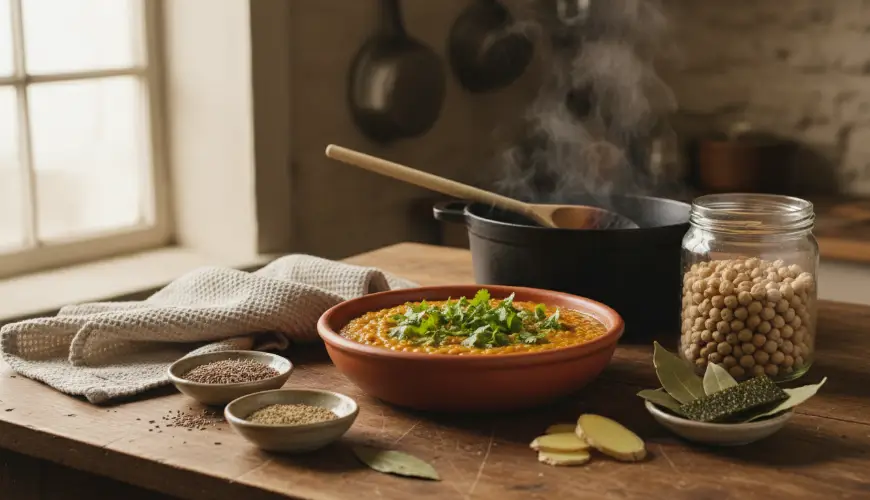
Legumes are among the oldest and most valuable foods known to humanity. Lentils, peas, beans, chickpeas, and soybeans are all sources of protein, fiber, iron, and a whole range of minerals that modern nutrition repeatedly recommends including in one's diet. And yet many people instinctively resist legumes. The reason? The dreaded feeling of bloating, which can ruin the rest of the day. However, the problem usually lies not in the legumes themselves, but in how they are prepared. Knowing a few tried-and-tested techniques is all it takes to transform legumes from a feared food into a natural and welcome part of everyday cooking.
Try our natural products






Why legumes cause bloating and what can be done about it
To solve the problem, it helps to first understand why bloating occurs in the first place. Legumes contain so-called oligosaccharides – specifically raffinose and stachyose – which are complex sugars that the human body cannot break down on its own. These substances travel to the large intestine, where they are fermented by gut bacteria, and it is precisely this process that produces gas. This is therefore a completely natural biological process, not an allergy or intolerance. Research published by the Harvard T.H. Chan School of Public Health confirms that regular consumption of legumes gradually adapts the gut microbiome, so that bloating problems significantly decrease or disappear entirely over time.
The key to ensuring that legumes do not cause digestive discomfort after cooking is proper preparation. And that begins long before the stove is turned on.
Soaking is the foundation that many people skip. Dried legumes should be soaked in a sufficient amount of cold water – ideally for eight to twelve hours, i.e. overnight. During soaking, some of the oligosaccharides pass into the water, thereby reducing their content in the legume itself. This water should always be discarded and the legumes rinsed under running water before cooking. Many people underestimate this simple step, yet it is probably the most effective way to reduce gas production before the meal even reaches the table.
There is also a so-called quick-soaking method, which is useful when there is no time to wait overnight. The legumes are covered with water, brought to a boil, cooked for approximately two minutes, then removed from the heat and left to stand for an hour. The water is then discarded again, the legumes are rinsed, and cooked in fresh water. The result is not entirely identical to classic soaking, but this method also helps significantly.
Spices and herbs that change everything
Once the legumes have been properly soaked and rinsed, the most interesting part begins – the cooking itself and the choice of ingredients. This is where enormous potential lies, capable of transforming a simple legume dish into a culinary experience that also causes no discomfort to the body.
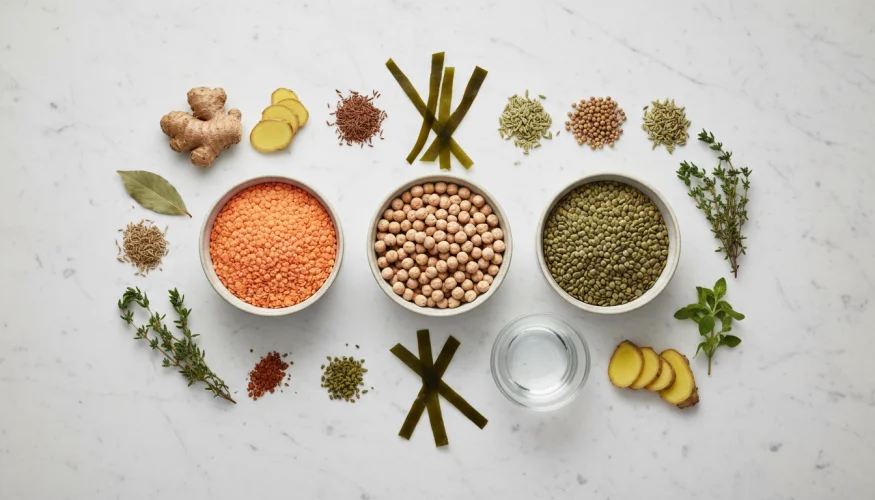
In many traditional cuisines around the world, herbs and spices exist that are deliberately added to legumes – not just for flavor, but precisely to reduce their bloating effects. One of the most well-known is cumin, whether whole or ground. Adding cumin to a pot of cooking lentils or beans is a practice deeply rooted in Indian, Middle Eastern, and Central European cuisine. Coriander, fennel, and anise work similarly – all of these plants have carminative properties, meaning the ability to release gas and calm the digestive tract.
A special place is held by kombu seaweed, which originates from Japanese cuisine and has been gaining followers in Europe in recent years. Simply adding a small piece of dried kombu seaweed directly to the pot while cooking legumes is enough – it contains enzymes that help break down precisely those problematic oligosaccharides. After cooking, the seaweed is removed or blended in; it does not significantly affect the taste of the dish, but its impact on digestion is remarkable.
Ginger, fresh or dried, is another excellent aid. Not only does it support digestion in general, but it also helps release intestinal gas. Adding a few slices of fresh ginger to the pot when cooking chickpeas or white beans is a habit worth trying. Thyme, marjoram, and bay leaves work similarly – these classic Central European herbs are not just aromatic additions, but have a genuine physiological effect on digestion.
Interestingly, salt should be added only at the end of cooking, not at the beginning. Salt added to the water too early causes the skin of the legume to harden, making cooking take longer. The result is legumes that are not soft enough – and it is precisely undercooked legumes that are one of the main causes of digestive problems. Legumes should be cooked until completely soft, so they can easily be mashed between two fingers.
A similar logic applies to adding acidic ingredients such as tomatoes, lemon juice, or vinegar – these should also be added toward the end of cooking or afterward, because acid, like salt, extends cooking time and can cause legumes to remain tough.
What to cook with legumes to avoid bloating – practical kitchen tips
Theory is one thing, but practice is another. Take a specific example: Jana, a thirty-year-old mother from central Bohemia, decided to switch to a more plant-based diet, but after every serving of beans or chickpeas she suffered from uncomfortable bloating that prevented her from functioning normally. She stopped eating legumes altogether – and thus lost a valuable source of nutrients. It was only when she began soaking legumes overnight, discarding the water, adding cumin and bay leaves, and gradually increasing portion sizes that she found the problems had almost disappeared. Today, lentil dahl or chickpea hummus is a firm part of her diet.
This story is not an exception. Many people think their body "can't tolerate" legumes, when in fact it is simply a matter of preparation and gradual adaptation of the gut.
When it comes to specific dishes, there are recipes that are naturally gentler on digestion. Red lentils are among the most easily digestible legumes of all – unlike green or brown lentils, they have no skin, which contains the most fiber that causes bloating. Red lentils do not even need to be soaked and cook very quickly. They are the basis of Indian dahl, but also work wonderfully in soups, spreads, or as a side dish.
Canned chickpeas are another practical solution – canned legumes are pre-cooked and some of the oligosaccharides pass into the brine, which should always be discarded and the chickpeas rinsed. The result is then more digestible than home preparation from raw chickpeas, although home preparation with soaking and proper seasoning can yield comparable results.
As German gastroenterologist and science communicator Dr. Giulia Enders once noted in her book Gut: The Inside Story of Our Body's Most Underrated Organ: "The gut is a patient organ – it will adapt to almost anything, if you give it time." This thought applies equally to introducing legumes into one's diet. Starting with small portions – say, two tablespoons of lentils in a soup – and gradually increasing the amount is a far more sensible strategy than switching overnight to large servings of bean stew.
Legume-based spreads, such as hummus or lentil spread with garlic and lemon, are also an excellent choice for those who have trouble digesting legumes. Blending disrupts the cellular structure of the legume, making digestion easier. Similarly, adding legumes to soups, where they cook for a longer time and become softer and more digestible, works well.
Fermented legume products, such as tempeh or miso, are even a step further in terms of digestibility. Fermentation naturally breaks down oligosaccharides, so these foods cause only minimal bloating even in more sensitive individuals. Tempeh is exceptionally rich in protein and can be prepared in countless ways – fried, baked, added to a wok, or tossed into salads.
What we combine legumes with also has a significant impact. A heavy combination of legumes with large amounts of fatty foods or raw vegetables can unnecessarily burden digestion. By contrast, combining them with cooked vegetables, quality grains, or fermented foods such as kefir or kimchi can support digestion. The probiotic cultures found in fermented foods help maintain a healthy gut microbiome, which is then better equipped to handle oligosaccharides.
Legumes therefore certainly do not have to be synonymous with digestive problems. With a little patience, proper preparation, and appropriate seasoning, they become a food that gives the body exactly what it needs – protein, fiber, minerals, and a feeling of fullness that lasts a long time. Moreover, legumes are one of the most sustainable foods on the planet: their cultivation requires significantly less water and energy than animal proteins, and they naturally enrich the soil with nitrogen. As confirmed by the FAO report on the sustainability of legumes, for example, including legumes in one's diet is beneficial not only for people, but also for the planet. So next time, before reaching for another source of protein, it may well be worth giving legumes one more chance – this time, properly prepared.