

# What does natural care for baby's skin and healthy tummy involve?

When a baby is born, parents find themselves overwhelmed by products, advice and recommendations that contradict each other. One doctor recommends one brand of cream, the neighbour swears by grandma's chamomile recipe, and advertisements promise miracles in shiny tubes. Yet the answer to the question of how to properly care for a baby's skin and digestion is often surprisingly simple – and nature has been offering it for centuries.
A baby's skin is not just a smaller version of adult skin. It is thinner, more sensitive and far more permeable, meaning it absorbs far more substances from the surrounding environment and from the products we apply to it. According to research published in the specialist journal Journal of Investigative Dermatology, a newborn's skin barrier is not fully functional until several weeks to months after birth. Until then, a baby's skin is literally an open gateway – and that is why the composition of every cream, oil or soap that comes into contact with it should matter.
Chemical preservatives, synthetic fragrances, parabens or sulphates are substances that may extend the shelf life or enhance cosmetic products, but bring nothing beneficial to a baby's body. On the contrary, they can cause irritation, allergic reactions or disrupt the skin's natural microbial environment. And this is precisely where natural care comes into play, drawing on ingredients that humanity used long before laboratories full of synthetic compounds existed.
Try our natural products
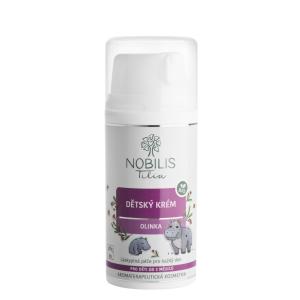
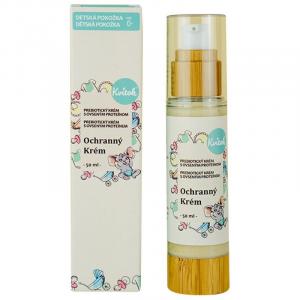
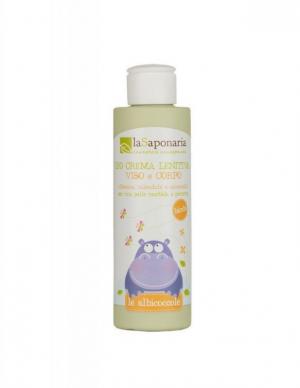
What natural baby skincare actually means
Natural care does not simply mean that a product's packaging is decorated with a picture of a leaf or flower. Truly natural products are those whose composition consists of plant oils, herbal extracts, natural waxes and essential oils – in the purest, least processed form possible. The key is to read labels and understand what each ingredient does.
Chamomile is one of the most tried-and-tested herbs in baby care. Its anti-inflammatory and soothing properties are appreciated by every parent whose baby suffers from red or irritated skin. Calendula works in a similar way and has traditionally been used for nappy rash, eczema or minor injuries. These herbs are not a passing trend – their effectiveness is confirmed both by traditional folk medicine and by modern phytotherapeutic research.
The choice of oils is equally important. Sweet almond oil is one of the most popular for baby skincare – it is light, absorbs well and is rich in vitamin E, which supports natural hydration. Coconut oil, meanwhile, stands out for its natural antibacterial properties and is particularly suitable for babies suffering from nappy rash or fungal infections. Rosehip oil, though less common, is an excellent choice for skin prone to irritation or scar tissue following minor injuries.
When choosing natural cosmetics for children, it is worth looking for certifications such as COSMOS Natural or Ecocert, which guarantee a composition free from synthetic additives. These standards are not merely a marketing tool – they represent independent verification that tells the consumer a product genuinely meets strict criteria for natural and sustainable composition.
A practical example? A mother named Tereza from Brno described her experience as follows: she stopped using commercial baby shampoo after her three-month-old daughter's scalp began to redden. She switched to a natural oil with chamomile and calendula, and within two weeks not only had the redness disappeared, but so had the flaky scales that the paediatrician had identified as common cradle cap. Of course, every baby is different, but this story is far from unique.

The baby's tummy: a delicate balance that deserves attention
While skincare is relatively visible and easy to measure, caring for a baby's digestive system is a somewhat different discipline. A newborn's and infant's tummy is in constant development – the gut microbiome is still forming, digestive enzymes are not yet fully active and the entire system is gradually learning to process food.
Colic, bloating, constipation and diarrhoea are problems faced by the vast majority of families with young children. And it is precisely here that parents are increasingly turning to natural solutions rather than immediately reaching for chemical preparations. This is not blind faith in an alternative – it is a pragmatic decision supported by a growing body of scientific evidence that natural substances can be equally effective while being gentler.
Fennel is an absolute classic in this regard. Fennel seed tea has been used to relieve colic and bloating for generations, and modern research confirms its effectiveness. A study published in the journal Alternative Therapies in Health and Medicine showed that fennel extract was more effective than a placebo in infants with colic. Of course, before giving any herbal preparation to an infant, consultation with a paediatrician is always advisable.
Chamomile is once again present here too. Chamomile tea in small quantities can help soothe a cramping tummy, thanks to its spasmolytic effects – that is, its ability to relax muscle spasms in the intestines. Lemon balm works in a similar way, although it tends to be used in baby care for older infants and toddlers.
Alongside herbal preparations, physical care of the tummy plays a key role. Tummy massage is one of the simplest and most effective methods of supporting digestion and relieving colic. Circular movements in a clockwise direction mirror the natural direction of intestinal movement and help to release trapped gas. A natural oil is ideal for massage – again, sweet almond oil, or a specially formulated massage oil containing fennel or chamomile.
One must not overlook the influence of a breastfeeding mother's diet on her baby's digestion. Although scientific consensus on this topic is not absolute, many mothers confirm that after eliminating certain foods – most commonly cow's milk, cruciferous vegetables or caffeine – their children's colic improved significantly. It is an individual matter, but one worth paying attention to.
As American paediatrician and author William Sears once said: "A baby who is fed, carried, massaged and loved has the best foundation for healthy development." These words apply equally to the approach to tummy care – it is not just about specific preparations, but about an overall approach to the child as a being who needs not only proper nutrition, but also physical contact and calm.
An important component of digestive care is also probiotic support. An infant's gut microbiome begins forming from the very first hours of life – through natural birth, breastfeeding and contact with the surrounding environment. If for any reason breastfeeding is not possible or birth was by caesarean section, it may be appropriate to supplement with probiotics. Preparations containing strains such as Lactobacillus reuteri or Bifidobacterium infantis are increasingly recommended in paediatric practice, and their effectiveness in reducing colic is confirmed by clinical studies available in the PubMed database.
Natural care for a baby's tummy therefore does not rest on herbs alone – it is a combination of proper nutrition, physical contact, massage and, where appropriate, probiotic support that together create an environment in which a baby's digestive system can develop healthily.
How to choose products and what to avoid
Navigating the range of natural baby cosmetics and supplements can be confusing at first. There is an enormous number of products on the market that appear natural, but on closer inspection of the ingredients reveal synthetic additives or unnecessary fillers. A few practical rules can make the selection process considerably simpler.
- Read the ingredients, not just the front of the packaging. Ingredients are listed from highest to lowest concentration. If synthetic substances appear at the top of the list, the natural ingredients are merely a marketing pretence.
- Less is more. The shorter the list of ingredients, the lower the risk of an allergic reaction or irritation.
- Look for certifications. COSMOS Natural, Ecocert or NaTrue are guarantees that a product meets strict standards for natural composition.
- Avoid artificial fragrances. Even if a fragrance itself is not necessarily harmful, synthetic fragrance substances are among the most common allergens in cosmetics.
- Test on a small area. Before first use of any new product, apply a small amount to the inside of the wrist or behind the ear and monitor the reaction for 24 hours.
When choosing products for baby tummy care – whether herbal teas, massage oils or probiotics – it is always sensible to consult a paediatrician. Not because natural preparations are dangerous, but because every child is an individual and what helps one may not be suitable for another.
It is also worth mentioning that natural care is not just about the products themselves. It is an overall approach to life with a child – choosing cotton clothing over synthetic, reducing chemical cleaning products in the home, naturally ventilating rooms or using natural laundry detergents. A baby's skin is in constant contact with its environment, and every detail plays a role.
Caring for a baby's skin and tummy the natural way is not a return to the past, nor a rejection of modern medicine. It is a conscious decision to favour ingredients that are time-tested, gentle on a baby's organism and, at the same time, kinder to the planet on which our children will grow up. And that is reason enough.