

# What Causes a Puffy Face in the Morning and How to Prevent It Waking up with a swollen, puffy fac

Everyone knows it – the alarm goes off, you drag yourself to the bathroom, turn on the light, and staring back at you in the mirror is someone with a puffy face, swollen eyelids, and bags under their eyes. Morning facial puffiness is one of those everyday phenomena that can thoroughly ruin your mood before you even have time to make coffee. Yet it's rarely talked about – as if it were something embarrassing or unusual. In reality, it's a very widespread problem with specific causes and, fortunately, specific solutions.
The question is why it happens at all. After all, your face spends the whole night at rest, going nowhere, exerting no effort. Yet it wakes up puffy in the morning. The answer lies in how the human body functions during sleep – and what we offer it throughout the preceding day.
Try our natural products



Why the face swells in the morning: what's happening beneath the surface
During the day, gravity helps the body drain excess fluid downward, into the lower limbs. Once you lie down, this natural drainage stops and fluids begin to redistribute evenly throughout the body – including the face. This is one of the fundamental mechanisms behind why morning facial puffiness affects practically everyone occasionally. It's a completely normal physiological process that typically resolves on its own within an hour or two of waking.
However, for many people, a puffy face in the morning persists longer or recurs regularly. This is where specific triggers come into play. One of the most common is excessively high salt intake the previous day. Sodium retains water in the tissues, and the body deals with this more slowly than you might expect. Evening crisps, fast food, ready meals, or soy sauce – all of these can literally show on your face the next morning.
Alcohol is another culprit that gets less attention than it deserves. It acts as a diuretic, dehydrating the body, while simultaneously causing inflammatory reactions in the tissues that manifest as swelling – typically in the face and eye area. A lack of sleep or poor sleep quality has a similar effect. The body doesn't have time to complete all its regenerative processes, and the result is a tired, puffy face that makes no secret of it.
Allergies also play their part. Spring or contact with household allergens such as dust and dust mites can cause the immune system to activate during the night, manifesting as swollen eyelids or overall facial puffiness by morning. Food intolerances work similarly – sometimes even a seemingly harmless food can trigger a mild inflammatory reaction in sensitive individuals that presents as puffiness overnight.
Sleeping position must not be overlooked either. Sleeping on your stomach or on your side with your face pressed into the pillow significantly contributes to fluid accumulation in the face. In this case, gravity works against drainage rather than in its favour. Research shows that sleeping on your back with the head slightly elevated is considerably more effective at reducing morning puffiness than other positions.
Hormonal fluctuations, particularly in women throughout the menstrual cycle, are another factor. Just before or during menstruation, the body naturally retains more fluid, which also shows in the face. The same applies during pregnancy or when taking certain hormonal medications.
Quick relief: what actually works
Knowing why it happens is useful, but what you need at seven in the morning is specific, fast help. The good news is that there are several tried-and-tested ways to quickly reduce morning facial puffiness and look fresh even when the night wasn't ideal.
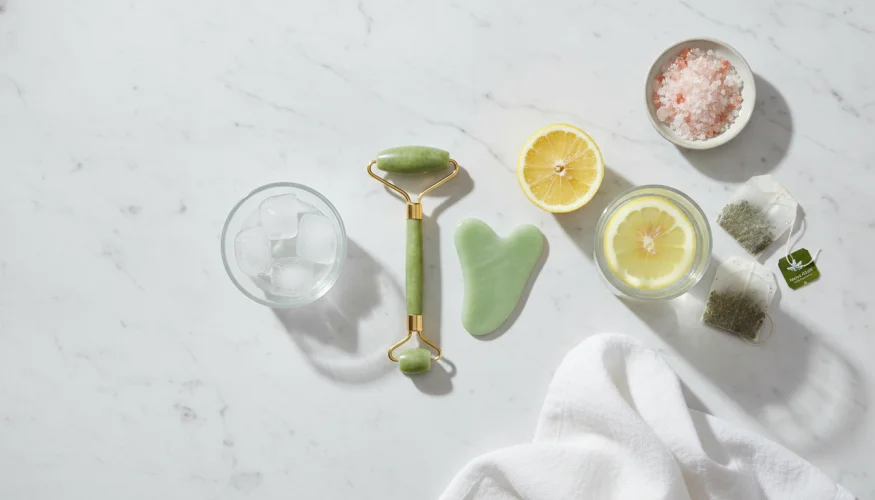
The first and simplest step is cold water. Washing your face with ice-cold or at least very cold water causes blood vessels to constrict and immediately helps reduce swelling. For greater intensity, try pressing a cold wet towel or ice cubes wrapped in cloth against your face. Cold is a natural vasoconstrictor – it narrows the blood vessels and thereby reduces fluid seeping into the tissues.
Facial massage is another tool that has been enjoying great popularity recently – and for good reason. Lymphatic massage gently stimulates the lymphatic system, which is responsible for draining excess fluid from the tissues. No specialist is required – gentle finger movements from the centre of the face toward the ears and down to the jawline are sufficient. This ritual takes just two minutes and the results are often surprisingly noticeable. The same purpose is served by popular tools such as the gua sha or a cooling jade roller, which have become popular not only in the beauty community but also among people seeking natural approaches to skincare.
Hydration plays a paradoxically key role – even though it might seem that if the problem is excess fluid, drinking water would make things worse. The opposite is true. Adequate hydration helps the kidneys excrete excess sodium more efficiently, thereby reducing water retention in the tissues. A glass of water immediately upon waking – ideally with lemon – is a simple but effective way to kickstart the metabolism and support the natural drainage of fluids.
Caffeine, found in green tea or coffee, has a mild diuretic effect and can help speed up the elimination of excess water. Green tea also contains antioxidants with anti-inflammatory properties. Cold green tea bags placed on the eyelids are an old trick used by models and actresses before important events – and they work.
As dermatologist and skincare author Dr. Whitney Bowe says: "What we eat and drink literally shows on our face – and morning puffiness is one of the most direct signals our body sends us." This thought illustrates how closely skincare is connected to overall lifestyle – and how small changes can have a major impact.
Long-term prevention and natural approaches
Quick relief is great, but real change comes with long-term habits. One of the most effective strategies is reducing salt intake, particularly in the evening hours. Switching to fresh foods instead of industrially processed ones can have a surprisingly significant impact on your morning appearance. People who have tried this step often describe their face looking different in the morning – less puffy, fresher, with more defined features.
Equally important is caring for sleep quality. A regular sleep schedule, a well-ventilated bedroom, and sleeping on your back are factors that won't solve everything on their own, but together form the foundation for the body to regenerate effectively overnight. According to World Health Organization recommendations, quality sleep has a direct impact on overall health, including the body's ability to regulate fluids.
Natural substances with anti-inflammatory properties also play an interesting role. Curcumin found in turmeric, quercetin in onions and apples, or omega-3 fatty acids in flaxseed and fish – these are all substances that have been scientifically proven to help reduce inflammatory processes in the body, thereby indirectly contributing to healthier-looking skin. It's not magic – it's biochemistry.
Consider the story of Markéta, a thirty-year-old marketing manager from Brno who struggled for years with morning facial puffiness. She tried expensive creams and various tricks, but nothing helped in a lasting way. It wasn't until she cut back on salty evening snacks, started sleeping on her back, and introduced a morning lymphatic massage with a cooling roller that she noticed a lasting change. "At first I didn't believe it, but after three weeks I realised I wasn't dreading the mirror in the morning," she says. Her story shows that the solution doesn't lie in a single miracle product, but in the interplay of small, consistent steps.
Caring for your face and combating morning puffiness is therefore a far more complex topic than it first appears. It's not just about cosmetics or genetics – it's about what you eat, how you sleep, how you move, and how well you listen to your body's signals. A puffy morning face isn't an enemy, but information – a reminder that the body needs care not only from the outside, but from within. And that care doesn't have to be complicated or expensive. Cold water, a glass of lemon water, two minutes of massage, and a little less salt in the evening – these are steps anyone can manage, and their effect will come sooner than you might expect.