

Stretch discreetly and quickly between meetings
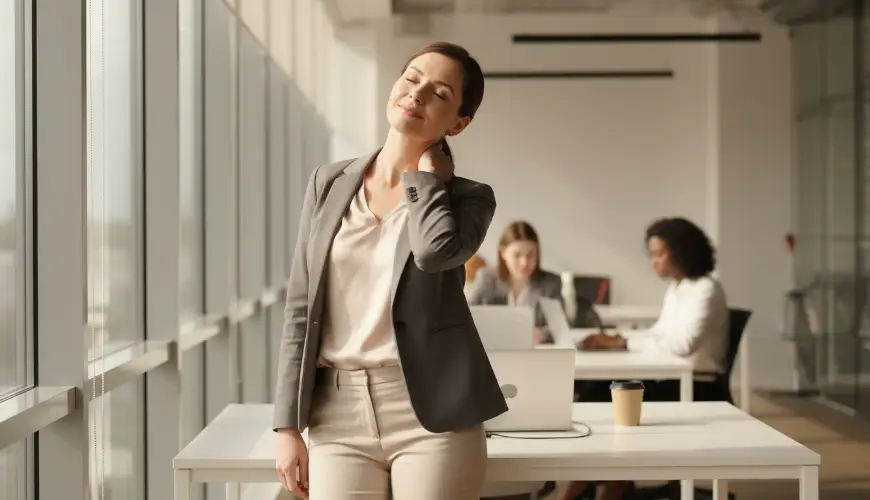
Office life has its own rhythm – and it can be relentless
One meeting follows another, the calendar is bursting at the seams, and the only movement you make during the day is the walk from one conference room to another. Yet the human body simply isn't designed to sit for eight or ten hours a day without a break. Back pain, a stiff neck, eye strain, and the feeling that your brain has stopped functioning properly – these are consequences that most office workers know all too well.
The good news is that the situation isn't as hopeless as it seems. There are ways to give your body movement and stretching even in the middle of a packed working day – and so discreetly that your colleagues won't even notice what's happening. This isn't about acrobatic feats or doing squats in the middle of meetings. It's about smart, subtle movements that can easily be incorporated into everyday work situations.
Try our natural products





Why movement between meetings matters so much
The science on this is clear. According to the World Health Organization, physical inactivity is one of the leading risk factors for a range of chronic diseases, including cardiovascular disease, type 2 diabetes, and musculoskeletal disorders. Regular sitting without breaks slows metabolism, impairs circulation in the lower limbs, and increases tension in the muscles along the entire spine.
What may be more surprising, however, is that prolonged sitting also negatively affects cognitive performance. Research shows that short movement breaks improve concentration, creativity, and overall productivity. In other words, five minutes of stretching between meetings can save you thirty minutes of struggling with a task you otherwise couldn't crack.
Imagine Martina, a project manager at a mid-sized IT company. Her working day looks like this: from nine to four, she has virtually back-to-back meetings – stand-ups, retrospectives, client presentations. She comes home in the evening with such severe back pain that she can't even focus on light reading. After she started consciously incorporating short stretches into the transitions between meetings, things began to change. The pain eased, her sleep improved, and – what surprised her most – she started concentrating better in meetings because she arrived at them physically "reset".
This isn't an exceptional story. It's an experience shared by a growing number of people who have decided not to neglect their body's needs just because they work in an office.
Discreet stretches that work truly anywhere
The key to unobtrusive stretching is a simple rule: the movement should look natural in the context you're in. No one will notice you're stretching if it looks like part of a natural motion – standing up, walking to the coffee machine, waiting for the lift, or simply sitting at your desk.
The neck and shoulders are among the areas that suffer most from computer work. Slowly rolling your shoulders backwards – say, while waiting for a video conference to load – will go unnoticed by anyone. Equally subtle are gentle side-to-side head tilts, which stretch the lateral neck muscles. They look completely inconspicuous yet bring immediate relief from the tension that builds up in these areas after hours of sitting.
The back is another critical area. While sitting in a chair, you can very discreetly perform what's known as a cat-cow stretch – a gentle arch and rounding of the spine that activates the entire core and relieves pressure on the intervertebral discs. If you're sitting at a desk, simply lean back slightly against the chair back, place your hands in your lap, and consciously lengthen your spine. This movement looks like nothing more than settling comfortably into your seat, yet it's a genuine gift to your back.
A greatly underestimated area is the wrists and forearms, which bear enormous strain from keyboard work. Simple wrist circles or stretching the palm with fingers extended backwards can be done perfectly well during a phone call – the other person can't see you, and colleagues will notice it at most as a fidgety hand movement that bothers no one.
The transition between two rooms or a trip to the bathroom offers an excellent opportunity to stretch the calves and thighs. Walking on tiptoe along the corridor, consciously lengthening each stride, or a brief stop at a wall where you can prop one foot up and stretch the front of the thigh – all of these movements look completely normal in an office setting. As physiologist and movement expert Kelly Starrett once observed: "Sitting is the new smoking – the less of it you do, the better for your body."
A special category consists of stretches you can do while sitting in your chair without having to stand up. Crossing your legs and gently pressing the knee downwards stretches the piriformis – a small muscle deep in the buttocks that tends to become chronically shortened with prolonged sitting and can cause pain radiating all the way down the leg. Equally effective is sitting with a straight spine and consciously squeezing your shoulder blades together – a movement that corrects the typical office-induced forward rounding of the shoulders and strengthens the deep back muscles.
How to turn stretching into a habit, not a chore
The biggest obstacle isn't a lack of suitable exercises, but a lack of habit. Most people know they should move more, but in practice they forget or put it off until a "better moment" that never comes. The solution is to attach stretching to already existing rituals in the working day.
In concrete terms, this might look like: whenever you're waiting for everyone to join an online meeting, use that time to roll your shoulders or stretch your neck. Whenever you go to get coffee or water, consciously add a few extra steps and try walking on tiptoe on the way back. Whenever you put down the phone after a call, take three deep breaths with a deliberate chest stretch. These small rituals may seem insignificant, but they add up to make an enormous difference.
Your physical environment helps too. If you have an ergonomic footrest at your desk, for example, you automatically sit differently and your body receives different stimuli than it does from classic flat-footed sitting. Working standing up for at least part of the day operates similarly – height-adjustable desks or laptop stands are now accessible even for smaller offices and home workspaces. The goal isn't to be on your feet all day, but to alternate positions, allowing the body to work more dynamically.
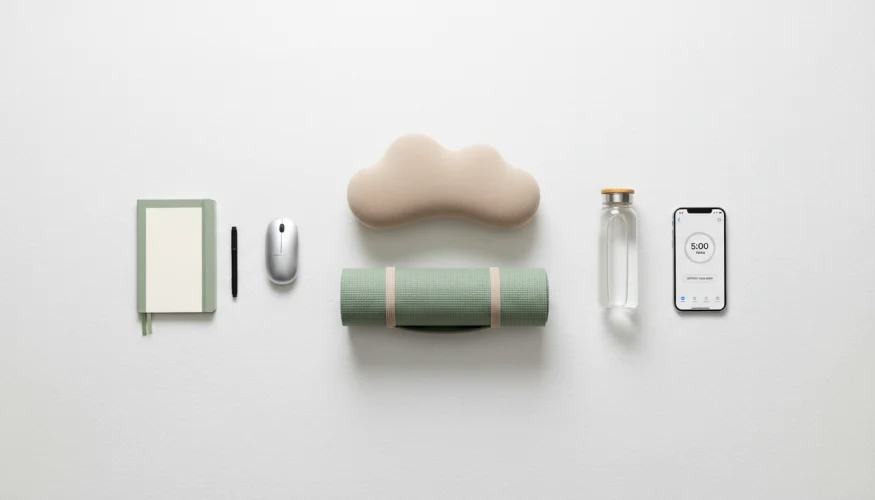
Another practical tool is reminders. Apps like Stretchly or simple phone timers can prompt you every forty-five minutes to stand up and stretch for a minute. It may feel disruptive at first, but after a few days these breaks become a natural part of your working rhythm.
It's also important to distinguish between stretching and exercising. Stretching requires no change of clothes, no sports equipment, and no special space. All it takes is two minutes, a bit of free space, and an awareness of what you're doing and why. That's precisely what makes it such a democratic health tool – accessible to everyone, regardless of how packed their work calendar is.
An interesting perspective comes from a study published in the British Journal of Sports Medicine which found that just eleven minutes of moderate physical activity per day can significantly reduce the risk of premature death associated with prolonged sitting. Eleven minutes. That's less than the average coffee break lasts.
The approach to workplace stretching is also gradually shifting at the level of corporate culture. A growing number of companies – particularly those committed to the principles of a sustainable and healthy working environment – are incorporating short movement breaks into their meetings as a standard agenda item. A five-minute "movement break" in the middle of a longer presentation is nothing unusual in modern companies, and research confirms that participants concentrate better afterwards than those who sit uninterrupted throughout.
The truth is that the body demands movement regardless of how busy the mind happens to be. And if we don't consciously provide it, the body will demand it on its own terms – through pain, fatigue, or that unpleasant feeling of stiffness that anyone who has stood up from their desk after three hours of intensive work will recognise. The choice is therefore simple: either we meet the body's need for movement proactively, or we wait until it forces us to – in a way we wouldn't choose.
Stretching discreetly and effectively between meetings is neither rocket science nor a privilege reserved for those with flexible working hours. It's a skill that can be acquired within a few days, and an investment that pays off in the form of better health, higher energy levels, and – paradoxically – better work performance too. All it takes is a start. Perhaps right now, at your next meeting, while you're waiting for everyone else to join.